



 Home / News & Events /
 -
Share
-

-

-

-

Updated 2 weeks ago
Wholesale 4x6 Thermal Labels and RFID: Building a Smarter Logistics Label System
admin
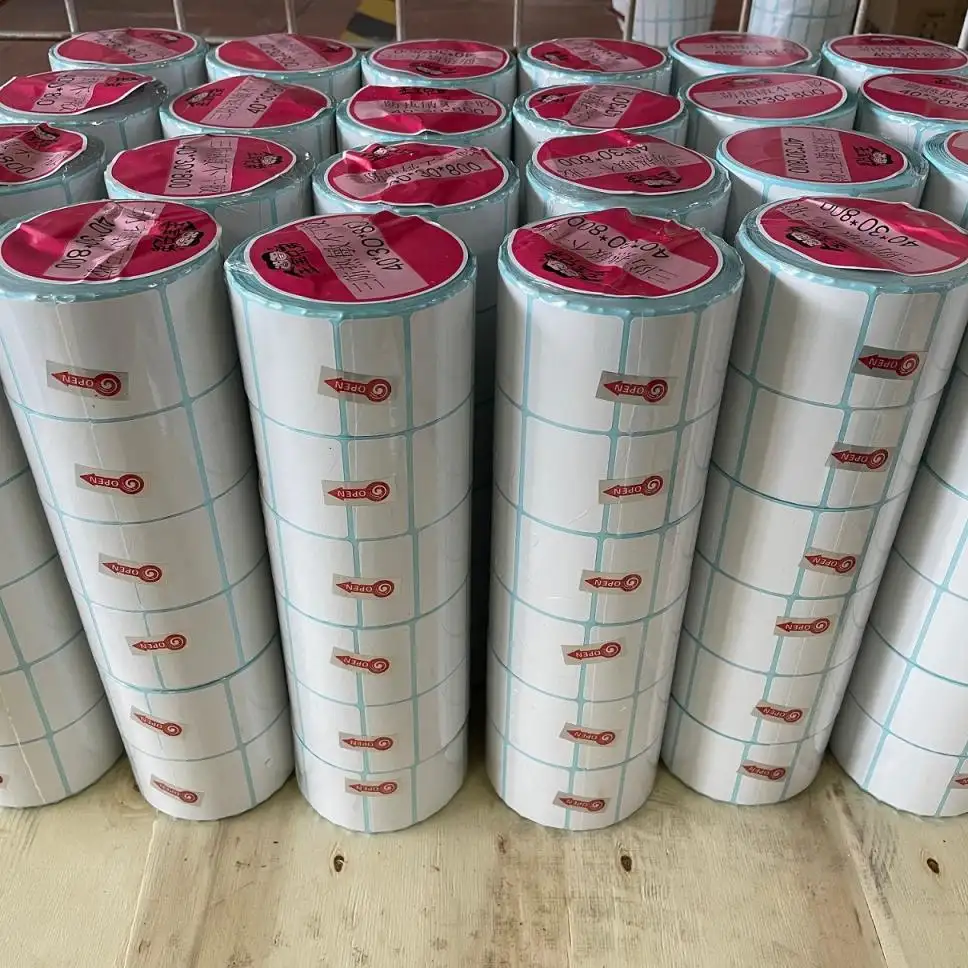
In modern logistics, a shipping label is becoming a data interface between parcels, operators, scanners, RFID readers and warehouse systems. From Jinbao Brother's manufacturing perspective, this changes how buyers should specify Wholesale 4x6 Thermal Labels: print quality and adhesive strength still matter, but label geometry, barcode layout, substrate choice and future RFID integration increasingly need to be considered together.
GS1 identifies 4 × 6 inch and A6 as compact logistic-label formats, especially when the SSCC and limited additional data are required.
4x6 Thermal Labels and RFID Solve Different Problems
A standard thermal label provides visible text and machine-readable barcodes. RFID adds a radio-frequency data carrier that can be read without optical line of sight. In smart logistics, the technologies can coexist rather than compete.
| Layer | Primary Role | Typical Function |
| Printed thermal surface | Human-readable ID | Address, SKU, handling data |
| Barcode / 2D code | Optical AIDC | SSCC, GTIN, tracking data |
| RFID inlay | RF identification | EPC / serialized ID |
| WMS / ERP / EPCIS | Data management | Inventory and movement events |
GS1's RFID/barcode interoperability guidance describes a logistics workflow in which the same SSCC can be encoded in a GS1-128 barcode and programmed into an EPC RFID tag. This helps explain why Wholesale 4x6 Thermal Labels remain relevant as RFID adoption grows: the printed label remains the visible and barcode-readable layer while RFID supports automated identification.
What Changes When RFID Is Added?
A RFID smart label is more than a standard bar code label with an RFID chip added on. Designs for both the printers/encoders and labels/inlays affect the performance of an RFID system. Zebra publishes documents describing the appropriate placement of RFID inlays for different printers.
Be aware of the following when thinking of RFID technology to make Thermal Bar Code Labels for order fulfillment:
•Data Carrier: Bar code labels can be printed to include UHF RFID tags.
•Hardware: Similar to bar code printers, thermal bar code label printers are available. In addition, an encoding device for RFID tags will be required.
•Material: Bar code labels can be printed and permanently attached to various surfaces using a thermal printer.
•Configuration: There may be restrictions in the software to prevent a user from printing labels that overlap.
•Design: There may be restrictions based on the size and shape of the core to print an RFID tag's antenna.
•Assessment: The conclusion and/or sensitivity of the interaction of the RFID tag.
Direct Thermal or Thermal Transfer?
For Wholesale 4x6 Thermal Labels, printing technology should follow the required label lifecycle—not the RFID decision alone.
| Requirement | Direct Thermal | Thermal Transfer |
| Ribbon | No | Yes |
| Typical use | Parcel and shipping labels | Longer-life industrial labels |
| Durability | Moderate | Generally higher |
| Consumables | Lower complexity | Ribbon required |
| RFID integration | Possible with engineered media | Possible with engineered media |
RFID is the identification layer; direct thermal or thermal transfer is the print layer. They should be specified separately.
Jinbao Brother's Manufacturing View
Jinbao Brother has manufactured paper products since 1992. Its published manufacturing capabilities include in-house thermal-paper coating, jumbo-roll slitting, finished-product packaging, OEM/ODM, custom printing, and in-house printing and slitting.
For its current waterproof thermal label product, Jinbao Brother publishes the following specifications:
| Item | Specification |
| Model | JBB-2025 |
| Facestock | Thermal paper |
| Sizes | 4" × 6", 100 × 150 mm, A6, custom sizes |
| Resistance | Waterproof, oil-proof, alcohol-proof |
| Adhesive | Permanent / strong adhesive backing |
| Colors | White and multi-color options |
| Roll Count | 220 labels/roll |
| MOQ | 10,000 rolls |
| Application | Logistics, shipping labels, thermal printing |
One specification detail is easy to overlook: 4" × 6" (101.6 × 152.4 mm), 100 × 150 mm and A6 (105 × 148 mm) are not identical dimensions.
For high-volume Wholesale 4x6 Thermal Labels, buyers should therefore confirm the exact die size, gap, sensor method, core ID and maximum roll OD against the printer specification instead of relying on a generic "4x6/A6" description.
Why Converting Quality Matters in Smart Labels
RFID may provide the electronic intelligence, but the physical label still has to:
•Feed through the printer without skewing or jamming;
•Produce sufficient contrast for barcode scanning;
•Release consistently from the liner;
•Maintain adhesion during transport;
•Preserve barcode quiet zones and print registration;
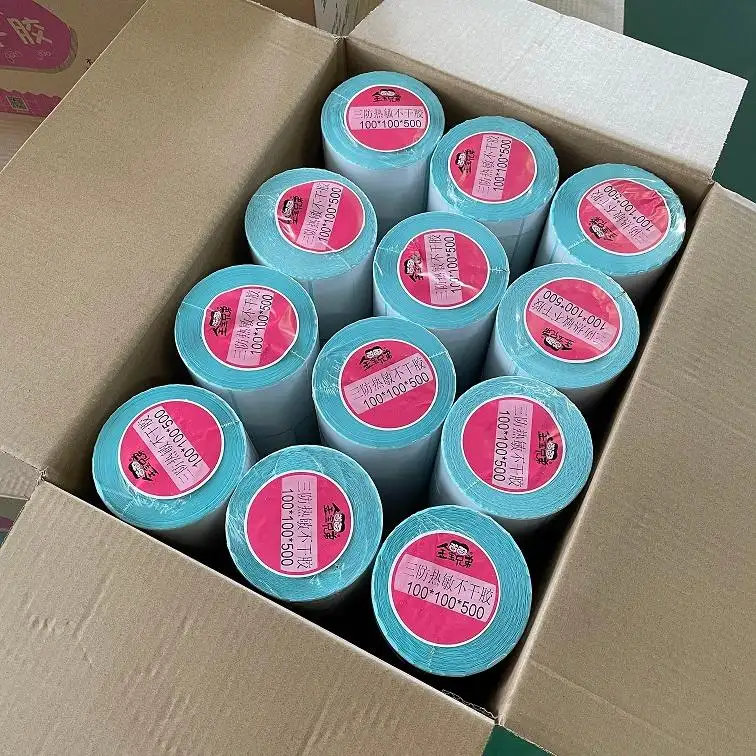
•Maintain dimensional consistency around an RFID inlay.
Jinbao Brother states that its label QC covers adhesion and peel force, coating uniformity, roll width, thickness, diameter, cutting alignment, final size, adhesive strength and release performance.
These are not cosmetic parameters. In automated logistics, small converting inconsistencies can become printer stoppages, unreadable barcodes or unstable label placement.
Does Every Logistics Operation Need RFID?
No. Standard Wholesale 4x6 Thermal Labels are often sufficient when parcels are scanned individually, label life is short and the existing carrier workflow is barcode-based.
RFID becomes more relevant when operations require:
•Bulk or non-line-of-sight reads;
•Faster receiving and dispatch;
•Automated inventory verification;
•Returnable-asset tracking;
•Higher warehouse visibility;
•Closed-loop logistics.
The better question is not "RFID or thermal labels?" It is:
Which identification layers reduce handling friction without adding unnecessary system cost?
Buyer Specification Checklist
Before requesting samples or pricing for Wholesale 4x6 Thermal Labels, provide:
•Exact label width × height and gap;
•Direct thermal or thermal-transfer facestock;
•Application surface;
•Temperature, moisture and chemical exposure;
•Permanent or removable adhesive;
•Printer model and DPI;
•Roll/fanfold format, core ID and maximum OD;
•Barcode or 2D-code layout;
•Expected monthly volume;
•RFID inlay and encoding requirements, if applicable.
For RFID projects, sample validation should include both mechanical tests—printing, feeding, peeling and adhesion—and data-capture tests such as barcode verification, encoding success and RFID read performance.
Final Takeaway
Smart logistics does not make Wholesale 4x6 Thermal Labels obsolete; it raises the engineering standard for them. A reliable label must still print cleanly, scan consistently, feed smoothly and remain attached throughout distribution. RFID can then provide an additional identification layer where the workflow justifies it.
For buyers developing Wholesale 4x6 Thermal Labels for e-commerce, warehousing or future smart-label projects, Jinbao Brother can support the thermal-label material, converting, sizing, adhesive and custom-printing side of the specification.
Rather than starting with a generic label quotation, it is worth defining the printer, application surface, operating environment and required data carriers first. Explore Jinbao Brother's manufacturing and customization capabilities and use those requirements as the basis for sample validation before moving into bulk production.
FAQs
Q1. What sizes of thermal labels does Jinbao Brother offer?
Jinbao Brother offers common formats including 4" × 6", 100 × 150 mm and A6, as well as customized label dimensions. These sizes should be specified separately because they are not dimensionally identical.
Q2. What material is used for Jinbao Brother 4x6 thermal labels?
The standard products use direct thermal paper / thermal paper facestock, designed for thermal printing without an ink cartridge or toner.
Q3. Are Jinbao Brother thermal labels waterproof?
Selected thermal label products are offered with waterproof, oil-proof and alcohol- or scratch-resistant coatings, depending on the specification.
Q4. What adhesive options are available?
Jinbao Brother lists permanent, removable and freezer-grade adhesive options for different packaging surfaces and operating environments.
Q5. Can Jinbao Brother customize Wholesale 4x6 Thermal Labels?
Yes. Jinbao Brother supports OEM/ODM, custom sizes, adhesives, printed designs and packaging configurations for wholesale and distributor projects.
We'll Get Back Within 24 Hours
Related Articles
Cash Register Roll Quality Testing: 7 Technical Parameters Buyers Should Check
2026-09-30

Custom Carbon Copy Paper Technology | Jinbao Brother
2026-09-30
How Long Do A4 Thermal Paper Rolls Last? Image Durability and Storage Explained
2026-09-29
Eco-Friendly A4 Thermal Printing Paper: Sustainability Trends and Recyclability
2026-09-29
