



 Home / News & Events /
 -
Share
-

-

-

-

Updated 2 weeks ago
Why Retail and Logistics Are Moving Towards Linerless Thermal Printer Roll
admin
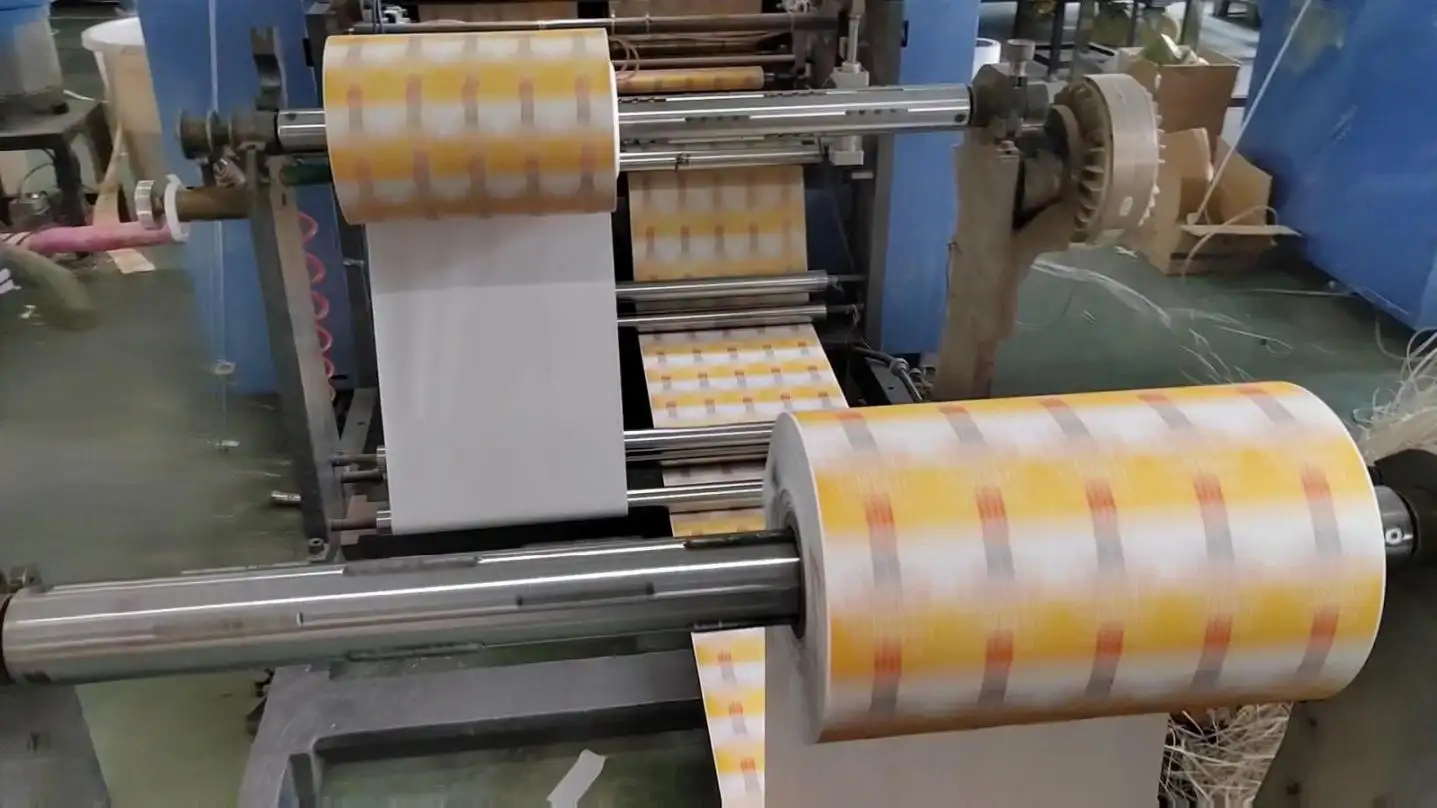
At Jinbao Brother, we view a linerless Thermal Printer Roll as a system component—not simply a paper roll without backing. Removing the release liner changes how the media is coated, wound, fed, cut, and applied. It also changes how the Thermal Printer Roll interacts with the printhead, platen roller, cutter, adhesive, package surface, and operating environment.
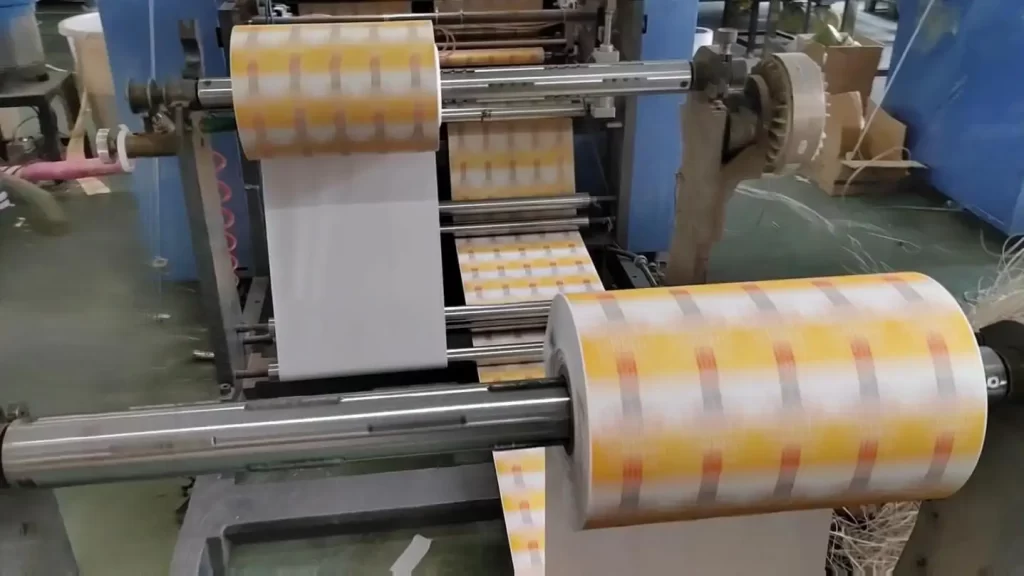
For retail and logistics, the main attractions are less liner waste, more usable media within a given roll diameter, and variable-length labels. Those benefits, however, depend on correctly matching the media construction to the printer.
How Is a Linerless Thermal Printer Roll Built?
A traditional pressure-sensitive thermal label consists of a facestock, adhesive, and release liner. A Linerless Thermal Printer Roll emulates this design by using release coating on the label face and adhesive on the back.
This design creates several challenges:
• Thermal Imaging: The release coating obstructs the heating element from activating the thermal image layer, and as a result, must be removed.
• Release: A roll of label face may expand and contract, and the release force may vary. This may lead to label face delamination, label face blocking, and other release issues.
• Adhesive: Adhesive bonding may lead to transfer of the label face to the platen or media guides and/or cutter of the printer.
This is why linerless media cannot automatically be used in every direct thermal printer. Zebra notes that linerless systems may require non-stick platen surfaces, dedicated cutting mechanisms, and media-specific validation because adhesive directly contacts parts of the media path.
Why Retail and Logistics Use Linerless Media
Retail: One Roll, Different Label Lengths
Retail labels may contain very different amounts of information:
• Product name and price;
• Weight and unit price;
• Ingredients and allergen information;
• QR codes or barcodes;
• Preparation or expiry information.
With a suitable cutter, a continuous linerless Thermal Printer Roll can produce different label lengths from one media format. This can be useful for deli counters, fresh-food labeling, takeaway orders, click-and-collect, and price-marking systems.
Eliminating the backing liner also reduces waste around the workstation and leaves more of the roll diameter available for usable media. Epson identifies variable-length printing, reduced liner waste, and fewer roll changes as practical advantages of linerless printing.
Logistics: The Label Must Survive After Printing
For logistics, printing a sharp barcode is only the first step. A Thermal Printer Roll may need to perform through conveyors, sorting equipment, humid loading areas, cold storage, stacking, and repeated manual handling.
The media therefore needs to balance:
• Print density;
• Barcode readability;
• Adhesive tack;
• Surface compatibility;
• Abrasion resistance;
• Moisture resistance;
• Service temperature.
We recommend evaluating linerless media as part of the complete printing and application process rather than selecting it only because it eliminates liner waste.
Technical Decision Matrix
| Factor | What Should Be Verified? | Why It Matters |
| Printer | Linerless compatibility, platen, sensor system | Controls feeding and adhesive pickup |
| Cutter | Linerless-rated mechanism | Helps control adhesive buildup |
| Thermal coating | Sensitivity, density, image stability | Determines text and barcode contrast |
| Release coating | Release force and curing | Affects unwinding and printhead cleanliness |
| Adhesive | Permanent, removable, freezer-grade | Must match substrate and temperature |
| Roll geometry | Width, OD, core, winding direction | Determines printer fit and tracking |
| Environment | Heat, cold, oil, moisture, abrasion | Affects adhesion and image life |
| Barcode | Scan quality after handling | Verifies real-world performance |
Engineering Risks Buyers Should Check
A linerless Thermal Printer Roll can still fail even when its dimensions are correct.
Adhesive Buildup
Because there is no release liner between the adhesive and printer mechanism, adhesive contamination can develop around the platen roller, guide surfaces, or cutter.
Thermal Energy and Print Density
The printhead must transfer sufficient heat through the release-coated surface. Incorrect thermal sensitivity or printer darkness settings can reduce image density and barcode contrast. Zebra notes that linerless media can require different print-energy settings from standard direct thermal labels.
Winding and Edge Alignment
Uneven roll tension, telescoping, poor edge alignment, or incorrect core positioning can create tracking and feeding problems. Linerless material is particularly sensitive to winding quality because the adhesive and release surfaces remain in direct contact.
Adhesive Selection
Carton, PE/PP film, glass, chilled packaging, and reusable totes do not present the same bonding conditions. Initial tack, peel strength, service temperature, and removability should be specified for the actual application.
How Jinbao Brother Approaches Thermal Printer Roll Design
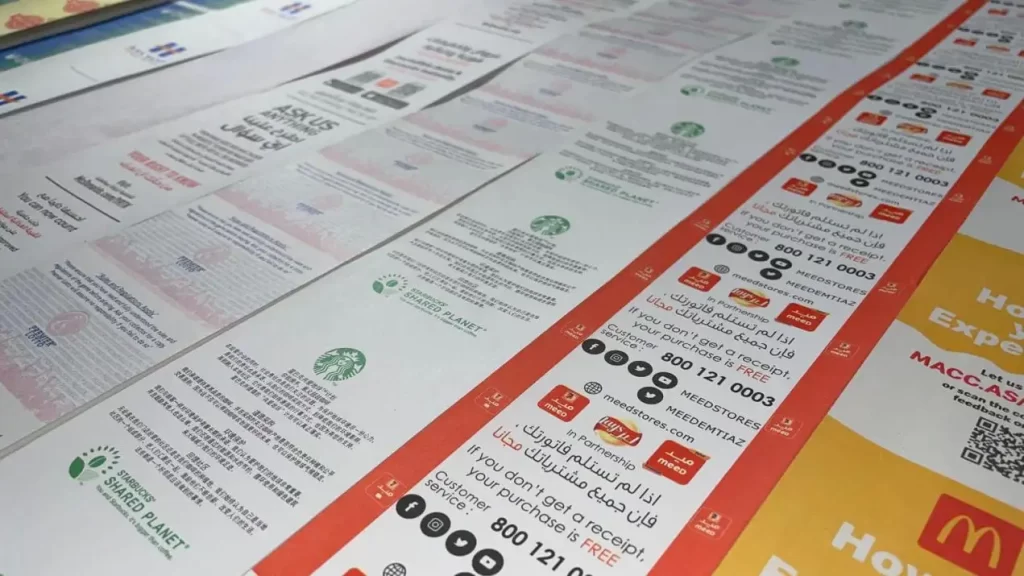
At Jinbao Brother, we provide thermal printing solutions from thermal coating to finished rolls. In addition, we provide OEM and ODM services, roll slitting and roll converting.
Precision is essential when designing thermal printer rolls. Some factors to consider include the evenness of the coating, the basis weight of the material, edge quality, rolls' tension, and the conditions under which the rolls will be used.
Some of our specifications for our POS thermal label rolls are as follows:
• Widths: 57mm and 80 mm (other widths are available.)
• Diameters: 30, 40, 50, 60, 70 and 80 mm.
• Thickness: 65 gsm. Other thermal products are available in the range of 65-85 gsm.
• Sizes of direct thermal labels: 4x6'', 100x150 mm, and 100x100 mm.
• Adhesives: permanent, removable, and freezer-grade.
• Freezer-grade adhesive: good service down to -20°C / -4°F.
Other constructions of labels are provided which are water, oil, and/or scratch resistant.
These specifications represent Jinbao Brother's existing thermal paper and label capabilities. A linerless project still requires printer-specific development and testing; it should not be treated as a drop-in replacement for a conventional Thermal Printer Roll.
Final Takeaway
A linerless Thermal Printer Roll can reduce liner handling, support variable-length labels, and improve media utilization. Its actual performance, however, depends on the interaction between thermal coating, release chemistry, adhesive, winding accuracy, printer hardware, cutter design, and end-use conditions.
From our perspective at Jinbao Brother, the better starting question is not simply, “Which linerless roll costs less?” It is:
Which Thermal Printer Roll construction will remain stable in the actual printer, on the actual package, and under the actual operating conditions?
If you are evaluating a custom Thermal Printer Roll for retail, logistics, POS, or direct thermal labeling, Jinbao Brother can help review roll dimensions, coating, adhesive, core, winding, printing, and converting requirements before sampling. Visit Jinbao Brother at https://www.jinbaopaper.com/ to explore current thermal paper and label capabilities or discuss a specification for your application.
FAQs
Q1. What Thermal Printer Roll sizes does Jinbao Brother offer?
Jinbao Brother offers common 57 mm and 80 mm Thermal Printer Roll widths, with roll diameters including 30, 40, 50, 60, 70, and 80 mm. Custom dimensions are also available.
Q2. What paper grammage is available?
Standard POS Thermal Printer Roll products include 65 gsm, while Jinbao Brother also lists thermal paper options from approximately 42–75 gsm and selected printed thermal rolls from 65–85 gsm.
Q3. Can Jinbao Brother customize Thermal Printer Roll dimensions?
Yes. Width, roll diameter, core size, roll length, coating, packaging, and other specifications can be customized according to printer and application requirements.
Q4. Does Jinbao Brother provide OEM and ODM services?
Yes. Jinbao Brother provides OEM/ODM manufacturing, including private-label printing, customized sizes, branded packaging, and bulk production.
Q5. Are Jinbao Brother Thermal Printer Rolls BPA- and BPS-free?
Jinbao Brother states that its thermal POS paper uses SGS-tested BPA/BPS-free thermal coating. Buyers should confirm the applicable specification for each product and destination market before ordering.
We'll Get Back Within 24 Hours
Related Articles
Cash Register Roll Quality Testing: 7 Technical Parameters Buyers Should Check
2026-09-30

Custom Carbon Copy Paper Technology | Jinbao Brother
2026-09-30
How Long Do A4 Thermal Paper Rolls Last? Image Durability and Storage Explained
2026-09-29
Eco-Friendly A4 Thermal Printing Paper: Sustainability Trends and Recyclability
2026-09-29
