



 Home / News & Events /
 -
Share
-

-

-

-

Updated 2 weeks ago
Eco-Friendly A4 Thermal Printing Paper: Sustainability Trends and Recyclability
admin
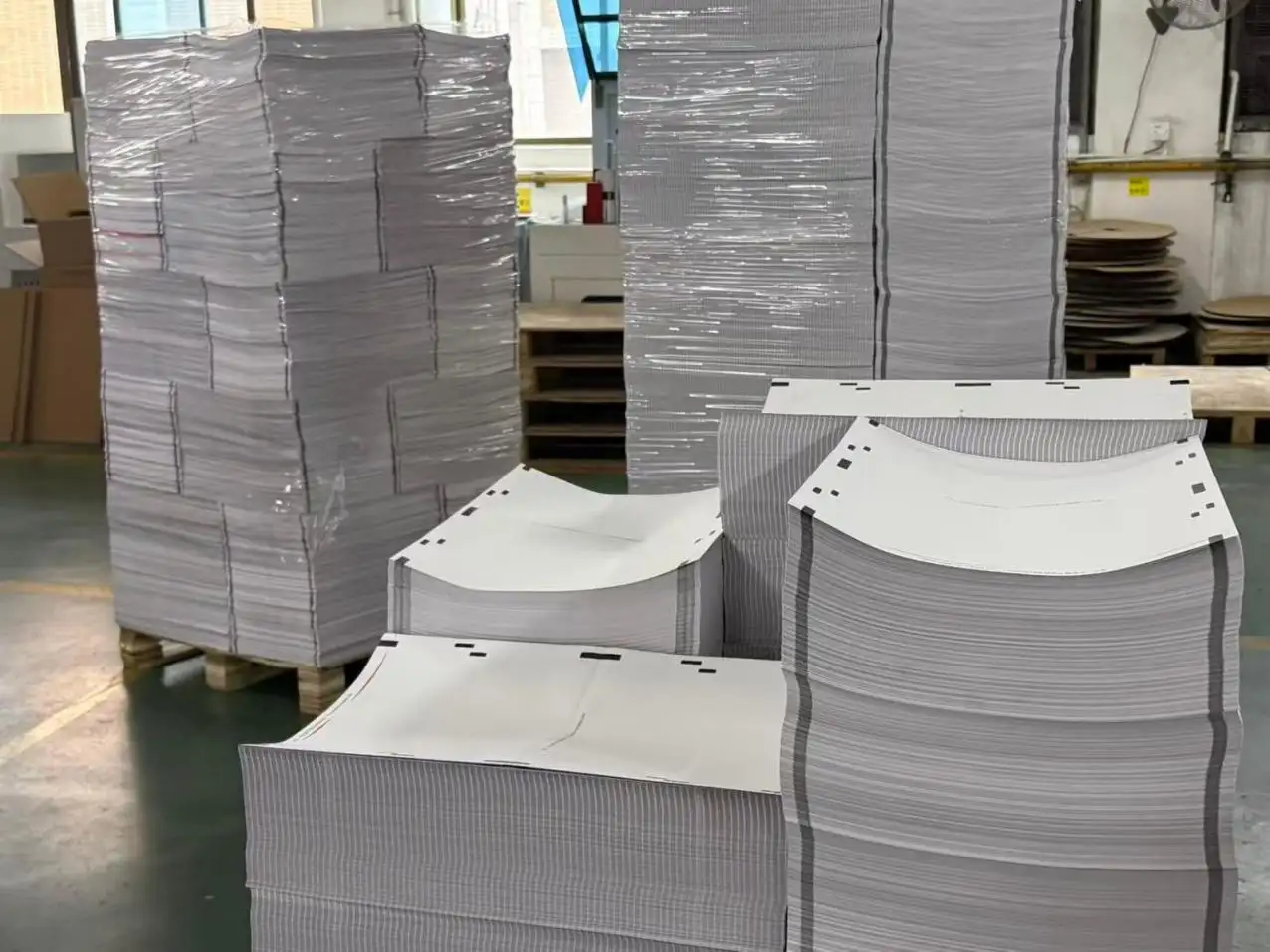
Sustainability in A4 Thermal Printing Paper is more complicated than choosing a product marked "BPA-free." From our manufacturing perspective at Jinbao Brother, the environmental profile of thermal paper is shaped by the base paper, thermal coating chemistry, grammage, coating efficiency, converting accuracy, packaging, and end-of-life route.
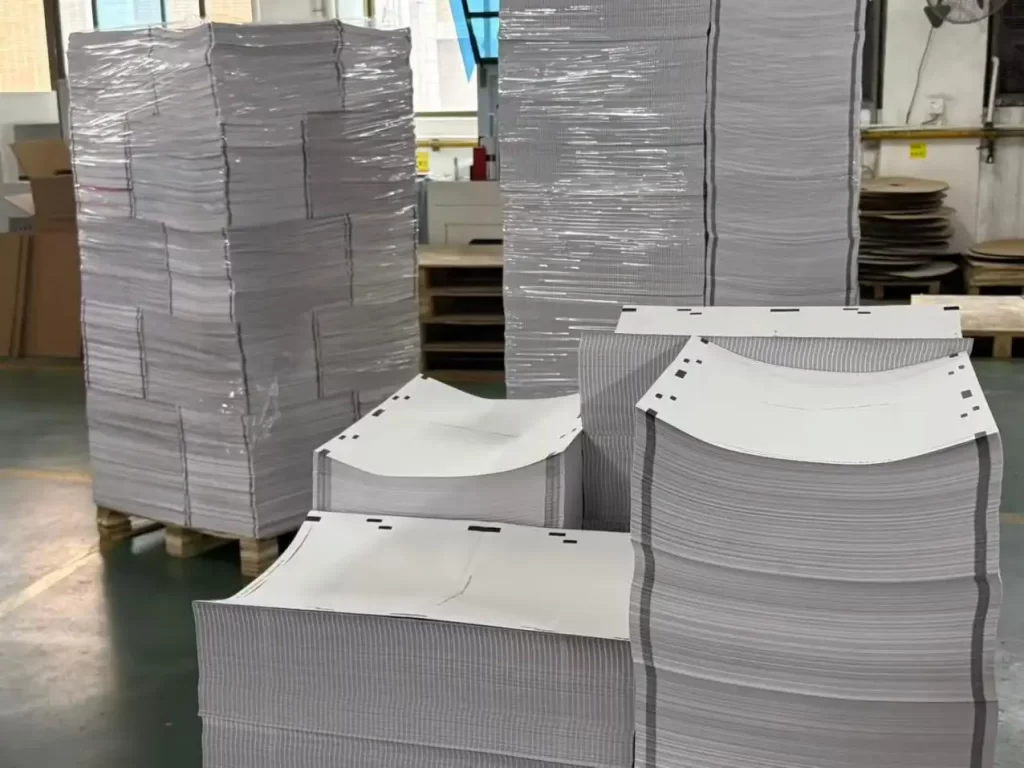
A4 Thermal Printing Paper has one clear operational advantage: direct thermal printing creates an image without ink, toner, or ribbon. However, eliminating consumables does not automatically make a paper sustainable. A better assessment starts with how the paper is engineered.
How A4 Thermal Printing Paper Is Constructed
Standard Thermal Paper has a specific dimensions of 210 mm wide by 297 mm long and is used in thermal printing. Unlike standard copy paper, thermal paper has multiple layers. The properties of these layers may vary between manufacturers but the functions of these layers usually stay the same. Standard layers of Thermal Paper are described below.
• Base Paper: Similar to a substrate, provides stiffness and shape to paper.
• Pre-coat layer: Improves uniformity of surface by providing a smoother surface for the thermal layer to adhere to.
• Thermal Layer: This layer is printed with dyes and/or chemicals which creates the image when paper is thermal energy is applied.
• Protective Layer: Improves papers resistance to external stimuli (acid, oil, water, etc..).
Jinbao Brother's A4 thermal paper program covers approximately 40–80 gsm, with customized OEM/ODM options commonly offered from 42–65 gsm.
This range is important because the weight of paper affects more than just the cost.
| GSM Range | Typical Characteristics | Sustainability Considerations |
| 40-55 gsm | Thin and flexible; used for short-term documents | Requires less fiber |
| 60-65 gsm | Provides better stiffness | Balances document durability |
| 70-80 gsm | Provides greater document durability | More material use |
We do not select the highest GSM for specification. Thermal printing paper must also be chosen based on the printer, expected life of the document and the conditions under which it will be handled. Long document handling life justifies the use of heavier paper; however, over specifying grammage does not improve the use of the paper in the process.
Coating Chemistry Is a Critical Sustainability Factor
The thermal layer is where sustainability discussions become more technical.
BPA was historically used as a developer in thermal paper. Its use in thermal paper has been restricted in the EU since January 2020. BPS became a common substitute, but European regulators have also raised concerns about BPS and other bisphenols.
As seen herein, different types of claims must be understood independently.
BPA Free ≠ Phenol Free
• BPA free: A product specification states that BPA is not permitted.
• BPS free: A specification states that BPS is not permitted.
• Phenol free: Sugars that are classified as phenolic developers are not permitted.
• FSC certified: Claim relates to the responsible sourcing of fibers.
• Recyclable: based on the local paper recycling infrastructure, paper type, and degree of integration.
BPA/BPS-free products are offered by Jinbao Brother. FSC certification and other ISO and SGS certifications are also available in our product portfolio.
Procurement staff must review these attributes independently. Staff should not consolidate these review attributes as "eco-friendly".
Is A4 Thermal Printing Paper Recyclable?
There is no universal yes-or-no answer.
The main issue is not the A4 size itself but the chemistry applied to the paper. Conventional thermal developers can create problems in recycled-fiber streams. Newer phenol-free or alternative imaging technologies may offer more suitable recycling routes, provided recyclability has been verified.
For example, Italy's Comieco states that certain phenol-free and new-generation thermal papers can enter paper recycling when appropriate recyclability requirements are met. It also specifically notes that a "BPA-free" label alone is not sufficient to establish recyclability.
For A4 Thermal Printing Paper, we therefore recommend checking three points:
• What developer chemistry is used?
• Is recyclability supported by relevant testing or documentation?
• Does the local waste-management authority accept that thermal paper grade?
Local recycling rules should always take priority over a generic supplier claim.
Manufacturing Control Also Reduces Waste
From a factory perspective, sustainability is not only a chemistry issue. Poor converting accuracy or unstable coatings can create waste long before the paper reaches recycling.
In-house production of thermal coating and jumbo-roll slitting at Jinbao Brother gives us the ability to control aspects of our process that affect final product yield.
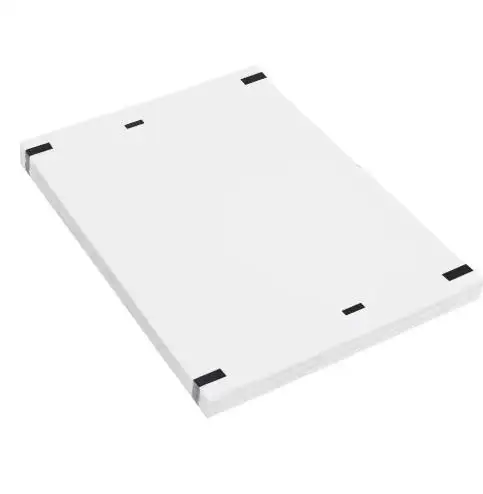
Coating Uniformity
Variations in the thickness of the thermal coating can cause bar codes to be illegible and images to be dark or missing. We maintain equilibrium within the coating process to minimize the necessity for re-runs and/or scrap.
Edge and Cutting Accuracy
Poorly cut A4 Thermal Printing Paper can curl, skew, generate dust, or feed inconsistently. Precision converting is therefore part of both printer compatibility and waste reduction.
Clean Paper Surface
Our thermal paper specifications include 100% pure wood-pulp options and dust-control requirements intended to support smooth feeding and reduce contamination around the thermal printhead.
Specification Before Mass Production
Through OEM/ODM projects, we can adjust materials, grammage, dimensions, printing and packaging. Samples can be confirmed for material, specification and performance before production, which helps identify printer-fit or performance problems before a full production run.
What Buyers Should Specify for A4 Thermal Printing Paper
When sourcing A4 Thermal Printing Paper, we recommend preparing a technical specification rather than requesting only "eco-friendly A4 thermal paper."
A useful RFQ should define:
• Size: 210 × 297 mm
• GSM: typically selected within the 40–80 gsm range
• Format: sheet or printer-compatible roll format
• Thermal sensitivity: matched to printer energy and speed
• Developer requirement: BPA-free, BPS-free or phenol-free where required
• Protection: moisture, oil, abrasion or light resistance if needed
• Fiber requirement: including FSC sourcing where applicable
• Image-life requirement: based on how long the document must remain readable
• Packaging: sheet count, carton quantity and private-label requirements
• Compliance documents: selected according to destination market and application
These parameters usually have more practical value than simply buying the thickest or most heavily coated paper.
Designing More Sustainable A4 Thermal Printing Paper
The direction of the market is moving from a single "green" label toward a lifecycle approach: safer coating chemistry, traceable fiber, optimized GSM, efficient converting, reduced production waste, and clearer end-of-life information.
At Jinbao Brother, we use that same approach when discussing an A4 Thermal Printing Paper project. With in-house thermal coating and converting, 40–80 gsm material options, BPA/BPS-free solutions, FSC-supported sourcing and OEM/ODM specification development, we can work with buyers to balance print density, durability, material consumption, compliance and packaging rather than treating sustainability as a single product feature.
If you are evaluating or developing A4 Thermal Printing Paper for portable printing, logistics, office documents or private-label distribution, visit JinbaoPaper.com to review Jinbao Brother's manufacturing capabilities and discuss a specification that fits your printer, market and sustainability requirements.
FAQs
Q1. What size is Jinbao Brother A4 Thermal Printing Paper?
Standard A4 size is 210 × 297 mm. Custom formats can also be discussed for specific thermal printers and applications.
Q2. What GSM options are available for A4 Thermal Printing Paper?
Jinbao Brother offers thermal paper options approximately from 40–80 gsm, with common customized grades including 42, 48, 52, 55, 60, and 65 gsm.
Q3. Does Jinbao Brother offer BPA-free A4 Thermal Printing Paper?
Yes. Jinbao Brother provides BPA-free and BPS-free thermal paper options for markets requiring safer thermal coating formulations.
Q4. Can Jinbao Brother provide FSC-certified thermal paper?
Yes. FSC-supported sourcing options are available for customers who require greater fiber traceability and responsible sourcing documentation.
Q5. Is Jinbao Brother A4 Thermal Printing Paper recyclable?
Recyclability depends on the thermal coating chemistry and local recycling regulations. Buyers should confirm the specific paper grade and local recycling requirements.
We'll Get Back Within 24 Hours
Related Articles
Cash Register Roll Quality Testing: 7 Technical Parameters Buyers Should Check
2026-09-30

Custom Carbon Copy Paper Technology | Jinbao Brother
2026-09-30
How Long Do A4 Thermal Paper Rolls Last? Image Durability and Storage Explained
2026-09-29
Eco-Friendly A4 Thermal Printing Paper: Sustainability Trends and Recyclability
2026-09-29
