



 Home / News & Events /
 -
Share
-

-

-

-


For buyers of Custom Carbon Copy Paper, copy clarity is not simply a matter of choosing a heavier sheet or adding more coating. The performance of a carbonless form depends on how the microcapsule coating, base paper, ply structure, pressure response, printing process, and converting accuracy work together.
At Jinbao Brother, we manufacture carbonless NCR paper for invoices, receipts, delivery forms, logistics documents, and computer forms. From a manufacturing perspective, the most important question is not "How much coating is on the paper?" but "How consistently does the coating respond under the actual pressure of use?"
Technical note: In this article, "Custom Carbon Copy Paper" refers to carbonless or NCR (No Carbon Required) paper, which creates copies through pressure-sensitive coatings rather than a separate carbon sheet.
How Does Custom Carbon Copy Paper Actually Work?
A carbonless set relies on two functional coating systems: a microencapsulated color former and a developer coating.
When handwriting, dot-matrix impact, or another pressure source acts on the top sheet:
- Pressure ruptures selected microcapsules;
- The encapsulated color-forming material is released;
- It contacts the developer layer on the sheet below;
- A chemical color reaction creates the copied image.
The coating arrangement depends on the sheet position:
| NCR Layer | Coating Structure | Technical Function |
| CB – Coated Back | Microcapsules on reverse side | Releases color former under pressure |
| CFB – Coated Front & Back | Developer on front, microcapsules on back | Receives one image and transfers pressure to the next ply |
| CF – Coated Front | Developer coating on front | Produces the final copy |
For multi-part Custom Carbon Copy Paper, maintaining this coating sequence is essential. A mismatch in coating, ply order, or converting can result in incomplete image transfer.
Why Microcapsule Control Determines Copy Clarity
1. Capsule Size Must Match Pressure Response
Microcapsules must survive coating, rewinding, slitting, printing, packing, and transportation without excessive premature rupture. At the same time, they must break reliably under intended writing or printing pressure.
For one of Jinbao Brother's specified NCR product ranges, our published technical data identifies a 4–6 μm microcapsule particle-size range. This is a product-specific manufacturing parameter rather than a universal specification for every NCR grade.
2. Coating Uniformity Matters More Than Excess Coating
Uneven coating distribution can create localized "dead zones" where insufficient color former reaches the developer layer.
In production, we therefore focus on:
•Microcapsule distribution across the web;
•Consistent coating coverage;
•Surface smoothness;
•Controlled moisture and dimensional stability;
•Clean conversion without damaging the coated surface.
Adding excessive coating is not an automatic solution. The objective is a controlled rupture response and uniform image density.
3. Pressure Falls Through Each Additional Ply
Bottom-copy fade is fundamentally a pressure-transfer problem.
A 2-part form has a shorter transfer path than a 4-part form. With every additional ply, part of the mechanical force is absorbed by the paper above it. For this reason, Custom Carbon Copy Paper used in multi-ply sets requires coordination between paper weight, coating sensitivity, surface properties, and intended printing method.
Key Specifications We Consider When Designing Custom Carbon Copy Paper
At Jinbao Brother, specification decisions start with the customer's document workflow rather than a single standard paper grade.
| Parameter | Jinbao Brother Options | Why It Matters |
| Paper weight | 50–80 GSM custom NCR range | Influences handling and pressure transmission |
| Ply structure | 2-part / 3-part / 4-part custom NCR | Determines copy depth and coating sequence |
| Computer forms | Selected products up to 1–7 plies | Supports continuous multi-copy workflows |
| Base material | 100% virgin wood pulp on listed NCR products | Supports smoothness and sheet consistency |
| Printing | Digital, offset; 6-color flexographic capability | Allows preprinted forms, logos and data fields |
| Finishing | Numbering, perforation, books/pads, precision slitting | Matches operational document workflows |
| Colors | White, yellow, pink, blue, green and others | Helps identify copy ownership and document sequence |
Our standard Carbonless NCR Paper listing also specifies 500 or 1,000 sheets per carton, while computer-form formats can be engineered for continuous and dot-matrix applications.
Why GSM Should Not Be Selected in Isolation
One common purchasing mistake is assuming that a higher GSM automatically gives better copies.
For Custom Carbon Copy Paper, GSM is only one part of the system.
A heavier intermediate ply can absorb more pressure before it reaches the sheet below. A lighter sheet may transmit pressure efficiently but still needs adequate stiffness, converting stability, and printer compatibility.
Our 50–80 GSM custom NCR range is therefore selected according to:
•Number of required copies;
•Handwriting or machine pressure;
•Printing process;
•Form size;
•Perforation and finishing requirements;
•Expected handling conditions.
The correct specification is application-dependent, not simply "the thickest paper available."
Copy Durability Is More Than Image Darkness
For Custom Carbon Copy Paper, durability has two separate dimensions.
Image durability
The developed copy should remain readable during normal document handling and storage.
Mechanical durability
The paper must tolerate printing, feeding, perforation, binding, transport, and repeated handling without creating alignment or feeding problems.
This is why base-paper quality and converting are as important as coating chemistry. Jinbao Brother's listed carbonless paper uses 100% virgin wood pulp, while precision slitting is used to control edge quality, width, and paper tension. Our custom-printing capability also includes 6-color flexographic printing for forms requiring logos, fields, numbering, or multi-color layouts.
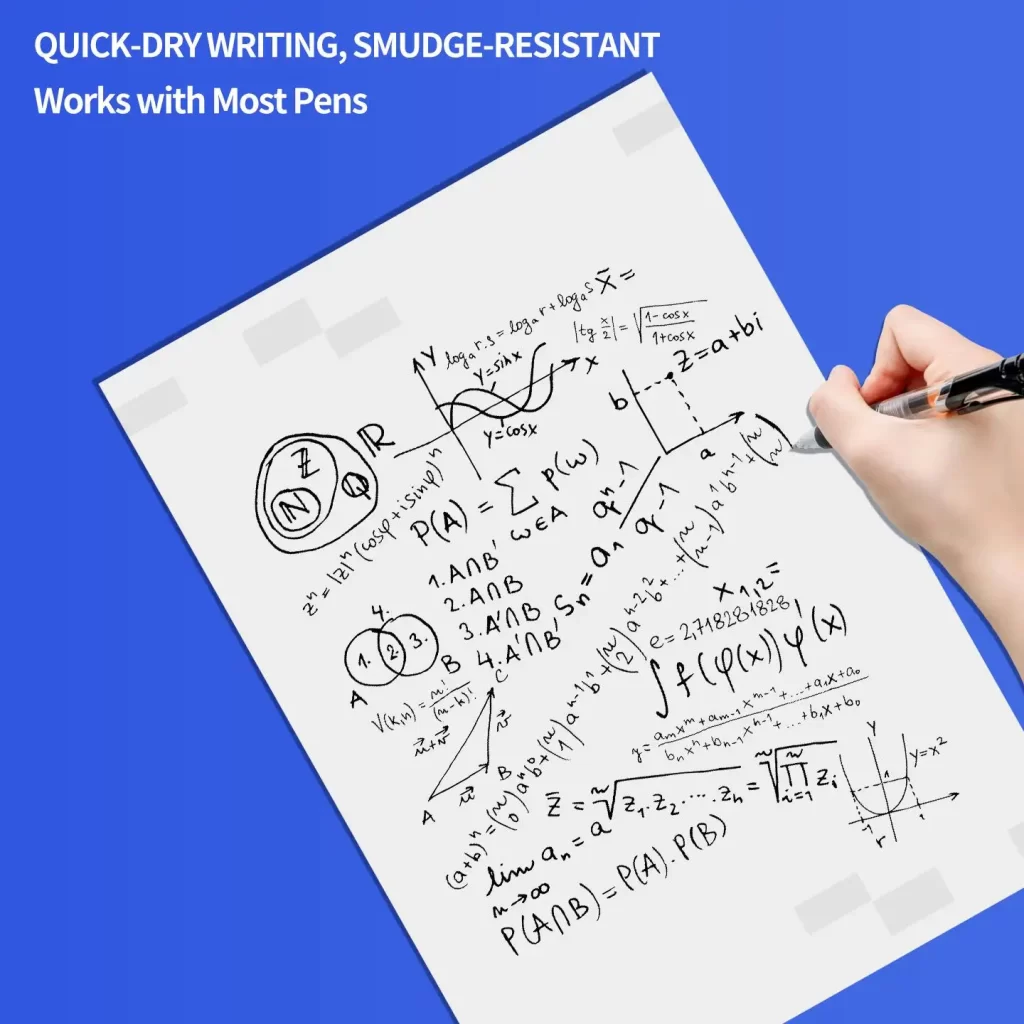
What We Check During Custom NCR Production
The production of Custom Carbon Copy Paper involves numerous steps and precision controls.
Our process controls consist of:
- Reviewing base paper and coating prior to print
- Verifying the art and layout and color specifications
- Reviewing a proof prior to large run production
- Assessing clarity and adequacy of print
- Reviewing registration
- Checking adequacy of print cutting and finishing
Precise process controls are important when the forms contain thin lines, sequential or repetitive element numbering, perforations or multiple plies.
How should Custom Carbon Copy Paper be Evaluated?
If a bulk order of Custom Carbon Copy Paper is being considered, we suggest the bottom or last form in the pack be evaluated as opposed to the top form or reviewing the carbon paper.
The last or bottom form should be evaluated to ensure that it is fully legible.
Other factors to consider include:
•Ward off Faintness: are there faint areas on the form?
•Registration: are all printed elements appropriately aligned?
•Tearing: does perforation allow for clean removal of the form from the pad?
•Storage: do forms in the pad create unwanted marks on the form?
•Printer type: is the printer type appropriate for form completion?
Engineering the Form as a Complete System
Reliable Custom Carbon Copy Paper is not produced by one specification in isolation. Microcapsule size and distribution, coating uniformity, CB/CFB/CF sequencing, GSM, paper smoothness, pressure transfer, printing registration, slitting, and finishing all contribute to the final copy.
At Jinbao Brother, we approach custom NCR projects from this complete-system perspective. Our published capabilities include 50–80 GSM custom NCR paper, 2/3/4-part configurations, selected 1–7-ply computer forms, 100% virgin wood pulp products, precision slitting, perforation, numbering, Pantone matching, and multi-color printing.
If you are developing invoices, delivery notes, receipts, logistics documents, or other multi-part forms, you can visit Jinbao Brother to discuss the required ply structure, GSM, size, printing method, coating configuration, and finishing details. A properly specified Custom Carbon Copy Paper should be designed around the real document workflow—not selected from GSM alone.
FAQs
Q1. What GSM options does Jinbao Brother offer for Custom Carbon Copy Paper?
Jinbao Brother offers custom NCR paper in the 50–80 GSM range, allowing buyers to select paper weight according to ply structure, printing method, and application.
Q2. What ply configurations are available?
Jinbao Brother provides 2-part, 3-part, and 4-part Custom Carbon Copy Paper. Selected computer-form products can also support 1–7 plies.
Q3. What coating structures are used in Jinbao Brother carbonless paper?
The main structures are CB, CFB, and CF:
•CB: coated back
•CFB: coated front and back
•CF: coated front
These layers work together to transfer images through pressure-sensitive microcapsule technology.
Q4. Can Jinbao Brother customize the size of carbonless paper?
Yes. Jinbao Brother can produce custom sheet and form sizes according to printing equipment, document layouts, and end-use requirements.
Q5. Can Custom Carbon Copy Paper include logos and branded layouts?
Yes. Customization can include logos, form fields, company information, Pantone colors, document layouts, and other printed elements.
We'll Get Back Within 24 Hours
Related Articles

Cash Register Roll Quality Testing: 7 Technical Parameters Buyers Should Check
2026-09-30
Custom Carbon Copy Paper Technology | Jinbao Brother
2026-09-30
How Long Do A4 Thermal Paper Rolls Last? Image Durability and Storage Explained
2026-09-29
Eco-Friendly A4 Thermal Printing Paper: Sustainability Trends and Recyclability
2026-09-29
