



 Home / News & Events /
 -
Share
-

-

-

-

Updated 2 weeks ago
How Long Do A4 Thermal Paper Rolls Last? Image Durability and Storage Explained
admin
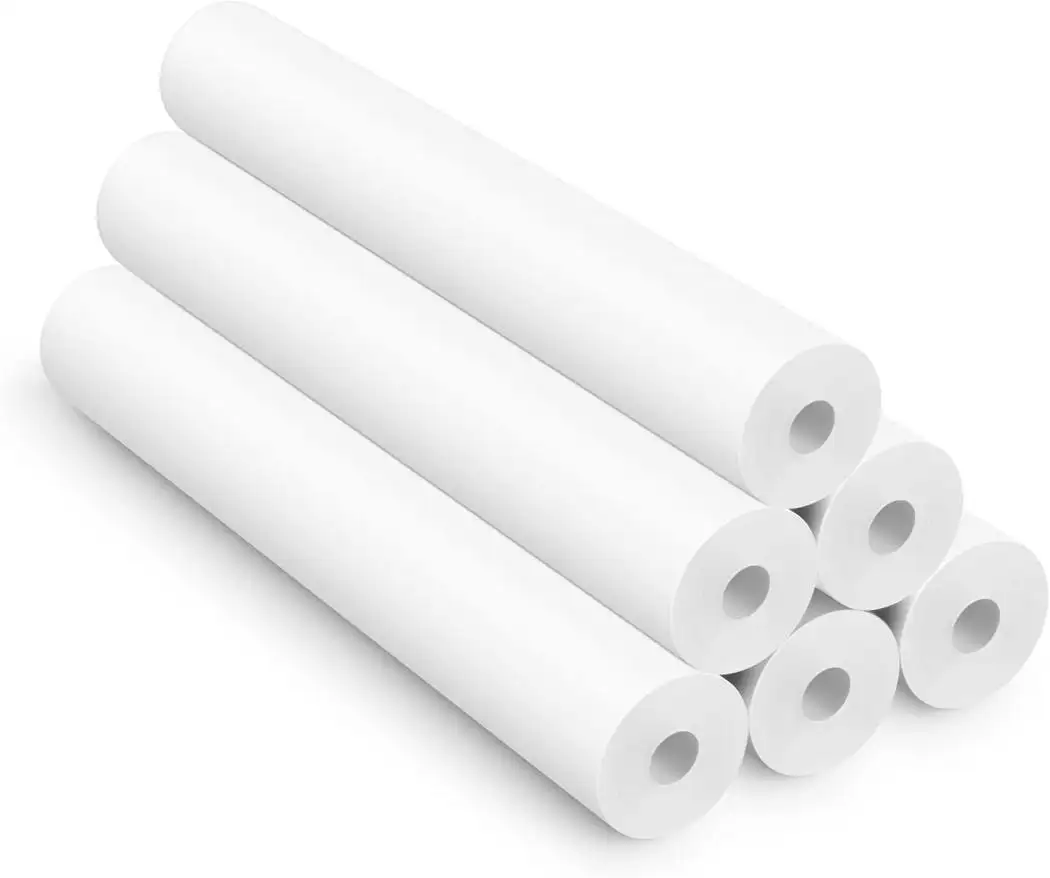
For buyers of A4 Thermal Paper Rolls, "How long will the print last?" sounds like a simple question. Technically, however, two different performance characteristics are involved: the storage stability of unused thermal paper and the image life after printing.
At Jinbao Brother, we evaluate thermal paper durability as a combination of coating formulation, thermal sensitivity, image density, base-paper quality, surface protection, printer settings, and storage environment. Paper weight alone does not determine whether a thermal image will remain readable.
How Long Can A4 Thermal Paper Rolls Remain Readable?
There is no universal five-year or ten-year specification for all A4 Thermal Paper Rolls.
As an industry reference, Koehler states that its conventional thermal papers provide at least two years of reliable functionality when stored at 18–25°C, 40–60% relative humidity, and protected from light. Under suitable document-storage conditions and with adequate initial optical density, its thermal printouts are specified as readable for ten years. These figures describe specific products and conditions, not every thermal paper on the market.
A more useful purchasing question is therefore:
"What image-retention performance does this paper grade provide under my actual printing and storage conditions?"
Why Do Thermal Images Fade?
Direct thermal printing works by transferring controlled heat from the printhead to a functional coating. Conventional thermal paper normally consists of:
• Base paper providing mechanical strength and dimensional stability.
• Pre-coat improving surface uniformity and reducing heat loss into the base sheet.
• Thermal coat containing heat-responsive image-forming components.
• Optional topcoat/backcoat providing additional environmental or mechanical protection.
When the printhead heats selected points, the thermal layer develops the image. Because that coating remains sensitive to its environment, excessive heat, moisture, light, solvents, and plasticizers can continue affecting it after printing.
What Most Affects the Life of A4 Thermal Paper Rolls?
| Factor | Technical Effect | Recommended Control |
| High temperature | Can accelerate background development and reduce contrast | Avoid long-term storage above normal room temperature |
| Humidity | Can affect coating stability and paper dimensional stability | Keep unopened rolls dry and protected |
| Sunlight/UV | Accelerates image degradation | Store printed documents away from direct light |
| PVC plasticizers | May migrate into the thermal layer | Avoid prolonged contact with PVC folders |
| Oil and grease | Can interfere with coating chemistry | Prevent direct surface contamination |
| Alcohol/solvents | May attack the image-forming layer | Keep cleaning chemicals away |
| Low initial density | Leaves less contrast margin as the image ages | Optimize printhead energy and pressure |
These effects are not always independent. High temperature combined with high humidity, for example, can be considerably more damaging than either condition alone.
Does Higher GSM Mean Longer Image Life?
Not necessarily.
Jinbao Brother supplies A4 thermal paper options in approximately 42–65 gsm, with the standard A4 format at 210 × 297 mm.
GSM mainly affects properties such as:
• Stiffness and feeding behavior;
• Roll yield and total paper length;
• Handling strength;
• Curl tendency;
• Perceived document rigidity.
Image durability depends more directly on thermal coating chemistry, coating uniformity, protective layers, initial optical density, and storage conditions.
For A4 Thermal Paper Rolls, a heavier grade may provide better mechanical handling, but buyers should not use GSM as a substitute for an image-retention specification.
Why Surface Quality Matters
Durability starts at the paper machine and coating stages.
For A4 thermal products, particularly important are:
Even Base-Paper
Unevenness of fibers, grammage, thickness and stiffness of base paper may result in irregular contact with the thermal printhead, thus adversely affecting its functioning.
Pre-Treatment and Thermal Coating
For Brother, the major concern areas in Jinbao's processing are:
• Evenness of pre-treatment coating;
• Weight of thermal coating;
• Variations in coating thickness;
• Evenness of dispersion of functional particles;
• The degree of adhesion of coating;
• Drying temperature;
• Calendaring pressure.
These factors influences the thermal protection layer, surface finish, image quality, coating integrity and other aspects.
Surface Smoothness
A smoother and more uniform thermal surface improves contact with the heating elements. Uneven coating, loose fibers, or excessive dust can cause incomplete fine lines, unstable density, barcode defects, and residue accumulation on the printhead.
However, "smoother" is not automatically "better." Excessive calendering or inappropriate surface friction can create feeding problems. A reliable A4 Thermal Paper Rolls specification balances smoothness, stiffness, friction, sensitivity, and coating adhesion.
Top-Coated vs. Standard Thermal Paper
A topcoat adds another protective layer over the thermal coating.
It is particularly useful when printed documents may encounter:
• Moisture;
• Oil or grease;
• Repeated handling;
• Abrasion;
• Chemical exposure.
Industry technical guidance identifies topcoating as an effective way to increase resistance to mechanical, chemical, and environmental influences.
For printing from mobile offices, standard A4 Thermal Paper Rolls should be sufficient. For activities such as logistics, warehouse, field service and some industrial work, a more protective grade may be prudent.
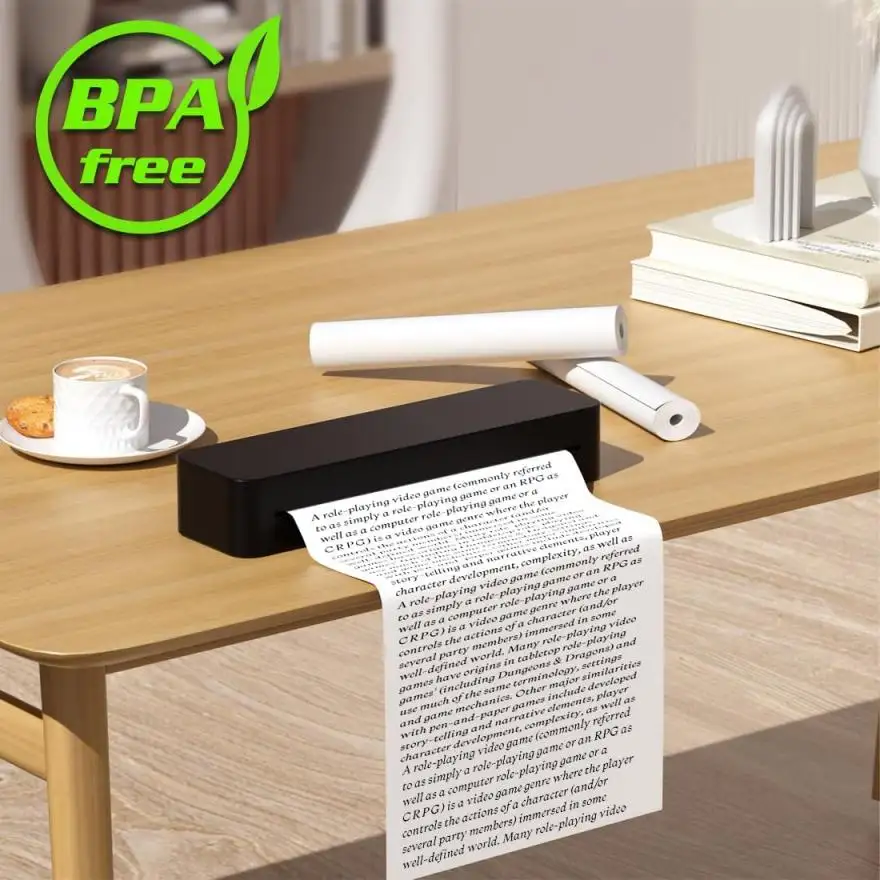
How to Store the A4 Thermal Paper Rolls?
For improved image persistence and a longer shelf life of the product, the following may be considered:
- The roll of paper should be left in its original wrapper.
- Store paper in a dry and cool location.
- Paper should not be stored in a location where it is exposed to a source of heat.
- Keep paper away from solvents and alcohols as well as other chemicals that are aggressive towards paper.
- Do not archive thermal prints in PVC sleeves.
- Use FIFO for inventory management of thermal paper.
- Store paper in a cool and dry location away from heat.
- Prints should be digitized, especially if retention is expected to be long.
Processes for Manufacturing A4 Thermal Paper by Jinbao Brother
Jinbao Brother was established in 1992, and has since specialized in thermal paper, label stocks, and copy paper. We manufacture jumbo rolls and other converted products. Our A4 thermal paper is manufactured in various combinations of 210×297 mm and a basis weight of 42-65 gsm. Other designs are also manufacturable.
We also manufacture A4 thermal paper made of 100% virgin wood-pulp, BPA/BPS-free, and are able to provide paper rolls that comply with the requirements of ISO 9001, ISO 14001, SGS, RoHS, and REACH.
Prior to finalizing a bulk order for A4 Thermal Paper Rolls, it is recommendable that you test the compatibility of your printer with the thermal paper, adjust the printer's settings and evaluate the condition of the feeding mechanism. It is also advisable that you take into consideration under what conditions the thermal paper is stored, and for how long the printed documents will be kept.
In conclusion,
The prices and GSM of A4 Thermal Paper Rolls do not reflect the service life of these rolls. Factors such as the type of paper used, the thermal sensitivity of the coating, the quality of the coating, print density, adjustment of the printer's settings, and the conditions of the storage of the rolls, affect the service life of thermal paper rolls.
Jinbao Brother can assess the above mentioned factors and help with the production of thermal paper rolls for different projects.
FAQs
Q1. What sizes of A4 thermal paper does Jinbao Brother supply?
Jinbao Brother supplies A4 thermal paper in 210 × 297 mm format, with additional sizes available for OEM and customized projects.
Q2. What GSM options are available for Jinbao Brother A4 Thermal Paper Rolls?
Available grammage depends on the product specification. Jinbao Brother offers thermal paper across multiple GSM ranges, with customized weights available for different printer and application requirements.
Q3. Are Jinbao Brother A4 Thermal Paper Rolls BPA-free?
Yes. Jinbao Brother states that its thermal paper is available with BPA/BPS-free thermal coatings, including SGS-tested options.
Q4. Can Jinbao Brother customize A4 Thermal Paper Rolls?
Yes. OEM and ODM services are available for paper size, grammage, roll dimensions, packaging, branding, and other specifications.
Q5. What raw material is used for Jinbao Brother thermal paper?
Selected Jinbao Brother thermal paper products use 100% virgin wood pulp, depending on the required specification and product grade.
We'll Get Back Within 24 Hours
Related Articles
Cash Register Roll Quality Testing: 7 Technical Parameters Buyers Should Check
2026-09-30
Custom Carbon Copy Paper Technology | Jinbao Brother
2026-09-30
How Long Do A4 Thermal Paper Rolls Last? Image Durability and Storage Explained
2026-09-29
Eco-Friendly A4 Thermal Printing Paper: Sustainability Trends and Recyclability
2026-09-29
