



 Home / News & Events /
 -
Share
-

-

-

-

Updated 2 weeks ago
Thermal Paper Coating Technology: Materials, Chemistry and Performance
admin
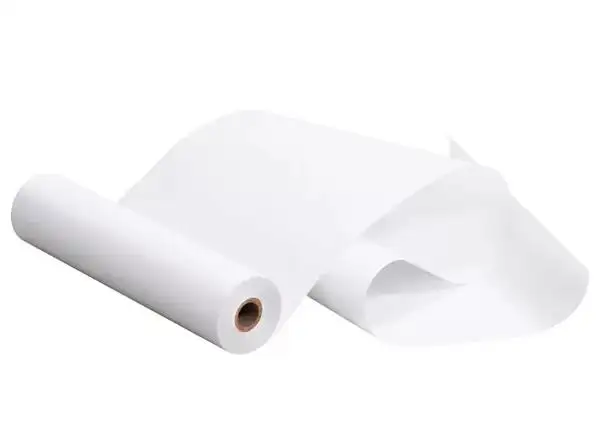
For buyers, converters and printer users, Thermal Paper is not simply "paper that turns black when heated." The real performance of Thermal Paper is determined by its coating structure, thermal chemistry, sensitivity profile, surface quality and compatibility with the printing system.
At Jinbao Brother, we view Thermal Paper as an engineered material rather than a commodity defined only by GSM, width or roll length. Two Thermal Paper products with the same grammage can behave very differently in terms of print darkness, background stability, barcode quality and image durability.
Understanding the coating system is therefore essential before comparing suppliers or approving a Thermal Paper specification.
Why the Same GSM Does Not Mean the Same Thermal Paper Performance
A common purchasing mistake is to compare Thermal Paper only by basis weight.
In practice, print performance can vary because of differences in:
• Base paper formation and smoothness;
• Precoat structure;
• Thermal coating weight;
• Leuco dye and developer chemistry;
• Dynamic and static sensitivity;
• Topcoat protection;
• Moisture and caliper control.
For example, two 55 gsm Thermal Paper grades may have similar weight but different thickness, coating composition and thermal response.
This affects:
• Roll length;
• Printer feeding;
• Print density;
• High-speed printing;
• Barcode definition;
• Storage stability.
For this reason, GSM should be treated as only one part of the Thermal Paper specification.
Inside the Thermal Paper Coating
Most direct Thermal Paper uses a multi-component heat-sensitive coating.
A typical structure can be simplified as:
Base Paper → Precoat → Thermal Layer → Optional Topcoat
The thermal layer normally contains several functional components.
| Component | Main Function | Performance Impact |
| Leuco dye | Forms the visible image | Print color and density |
| Developer | Activates color formation | Sensitivity and image stability |
| Sensitizer | Reduces energy needed for reaction | High-speed printing performance |
| Binder | Holds coating materials together | Surface strength and coating integrity |
| Pigments / fillers | Control surface and coating structure | Smoothness and print uniformity |
| Stabilizers | Improve image retention | Heat and storage resistance |
When the thermal printhead heats selected areas, the coating undergoes a localized chemical reaction and produces the printed image.
The objective is not simply to make the Thermal Paper "react faster." The coating must balance fast image development with acceptable background stability and long-term readability.
Static and Dynamic Sensitivity: Two Different Performance Indicators
One of the most important technical distinctions in Thermal Paper is between static sensitivity and dynamic sensitivity.
Dynamic Sensitivity
Dynamic sensitivity describes how efficiently Thermal Paper responds to short-duration energy from the printhead.
It is particularly important for:
• High-speed POS printers;
• Logistics printers;
• Ticketing systems;
• Barcode applications.
A Thermal Paper grade with suitable dynamic sensitivity can reach the required optical density with limited heating time.
However, excessively high sensitivity is not automatically better. If the paper is too reactive for a specific printer setting, background development or image distortion may occur.
Static Sensitivity
Static sensitivity describes how Thermal Paper reacts to sustained heat.
This parameter matters during:
• Warehouse storage;
• Container transportation;
• Exposure near heat sources;
• High-temperature application environments.
The key engineering goal is therefore:
fast response during printing, but controlled response during storage.
Top-Coated vs. Non-Top-Coated Thermal Paper
Not every application requires top-coated Thermal Paper.
Standard non-top-coated Thermal Paper may be suitable for ordinary POS receipts or short-term records.
Top-coated Thermal Paper is more appropriate when the printed surface may be exposed to:
• Water;
• Oils;
• Grease;
• Abrasion;
• Plasticizers;
• Chemicals;
• Repeated handling.
A topcoat acts as a protective layer over the thermal coating, but it should not automatically be described as "waterproof."
Actual resistance depends on the formulation and test conditions.
At Jinbao Brother, we recommend selecting the coating structure according to the real application environment rather than assuming that more coating layers always mean better performance.
BPA-Free, BPS-Free and Phenol-Free Are Different Specifications
Chemical terminology is another area where Thermal Paper buyers should be precise.
These claims are not interchangeable:
• BPA-Free Thermal Paper does not automatically mean BPS-free.
• BPS-Free Thermal Paper does not automatically mean phenol-free.
• Phenol-Free Thermal Paper should be supported by an appropriate analytical scope.
For European applications, BPA in Thermal Paper is restricted under REACH, which limits BPA concentrations at or above 0.02% by weight in Thermal Paper placed on the market.
When changing developer chemistry, buyers should also verify whether print sensitivity, optical density and image stability remain suitable for the intended printer and application.
Chemical compliance and printing performance should always be evaluated together.
Match Thermal Paper to the Printing System
A high-quality Thermal Paper grade can still perform poorly if it is mismatched with the printer.
Important variables include:
• Print speed;
• DPI;
• Printhead energy;
• Printhead condition;
• Printing pressure;
• Barcode requirements.
For example, increasing printing speed reduces the time available for heat transfer. This makes dynamic sensitivity more important.
Similarly, barcode printing requires more than dark images. Good thermal paper should also provide:
• Sharp edges;
• Uniform dot formation;
• Low background density;
• Limited voids;
• Stable contrast.
A barcode that looks visually dark may still perform poorly if edge definition or symbol contrast is insufficient.
Thermal Paper Troubleshooting: Paper, Printer or Environment?
Not every print defect comes from the Thermal Paper itself.
| Problem | Possible Paper Cause | Possible System Cause |
| Light print | Low dynamic sensitivity | Low energy or dirty printhead |
| Grey background | High thermal response | Excessive heat setting |
| White lines | Coating defect | Damaged or contaminated printhead |
| Poor barcode scan | Surface or coating inconsistency | Wrong energy or printer resolution |
| Image fading | Low environmental resistance | Heat, sunlight or chemical exposure |
Before rejecting a Thermal Paper batch, the printer, printhead and operating conditions should also be checked.
What Buyers Should Verify Before Approving Thermal Paper
At Jinbao Brother, we recommend evaluating Thermal Paper under controlled and repeatable conditions.
Key parameters include:
• Grammage — basis weight of the paper.
• Caliper — actual paper thickness.
• Dynamic sensitivity — response to printhead energy.
• Maximum optical density — developed image darkness.
• Background density — unwanted coloration before printing.
• Surface smoothness — affects printhead contact.
• Image stability — resistance to heat, humidity and chemicals.
• Barcode quality — important for logistics and retail applications.
Grammage and thickness should be measured separately. ISO 536 covers grammage, while ISO 534 covers paper thickness and related properties.
The broader rule is simple:
A Thermal Paper specification is only meaningful when the test method and conditions are also defined.
From Thermal Paper Coating to Purchasing Decision
For standard POS applications, the priorities may be printer compatibility, stable print density and cost efficiency.
For logistics or barcode applications, buyers should place more emphasis on:
• Dynamic sensitivity;
• Surface uniformity;
• Barcode definition;
• Environmental resistance.
For longer-retention documents, image stability becomes more important than initial print darkness.
At Jinbao Brother, we manufacture and convert Thermal Paper with in-house coating, jumbo-roll slitting and finished roll processing. Our approach is to match the Thermal Paper specification to the customer's printer, application environment and converting requirements rather than treating GSM as the only purchasing criterion.
If you are evaluating Thermal Paper for POS, labels, ticketing or customized roll applications, you can learn more about Jinbao Brother's Thermal Paper capabilities and product options at HERE.
FAQs
Q1. Does Jinbao Brother manufacture Thermal Paper?
Yes. Jinbao Brother is a paper manufacturer established in 1992 and supplies Thermal Paper, Thermal Paper jumbo rolls, finished rolls, labels and other paper products.
Q2. Does Jinbao Brother have its own Thermal Paper coating capability?
Yes. Jinbao Brother states that its manufacturing operations include in-house Thermal Paper coating and slitting, allowing coating and converting processes to be integrated within its production system.
Q3. Can Jinbao Brother supply Thermal Paper jumbo rolls?
Yes. Thermal Paper jumbo rolls are available for converters, distributors and customers that perform their own slitting or finished-roll production.
Q4. Does Jinbao Brother offer finished Thermal Paper rolls?
Yes. Jinbao Brother supplies finished Thermal Paper rolls for POS, receipt printing and other direct thermal applications, with standard and customized roll specifications available.
Q5. What Thermal Paper sizes can Jinbao Brother provide?
Common finished-roll widths include 57 mm and 80 mm, while customized widths and roll diameters can also be produced according to customer requirements.
We'll Get Back Within 24 Hours
Related Articles

Cash Register Roll Quality Testing: 7 Technical Parameters Buyers Should Check
2026-09-30

Custom Carbon Copy Paper Technology | Jinbao Brother
2026-09-30
How Long Do A4 Thermal Paper Rolls Last? Image Durability and Storage Explained
2026-09-29
Eco-Friendly A4 Thermal Printing Paper: Sustainability Trends and Recyclability
2026-09-29
