



 Home / News & Events /
 -
Share
-

-

-

-

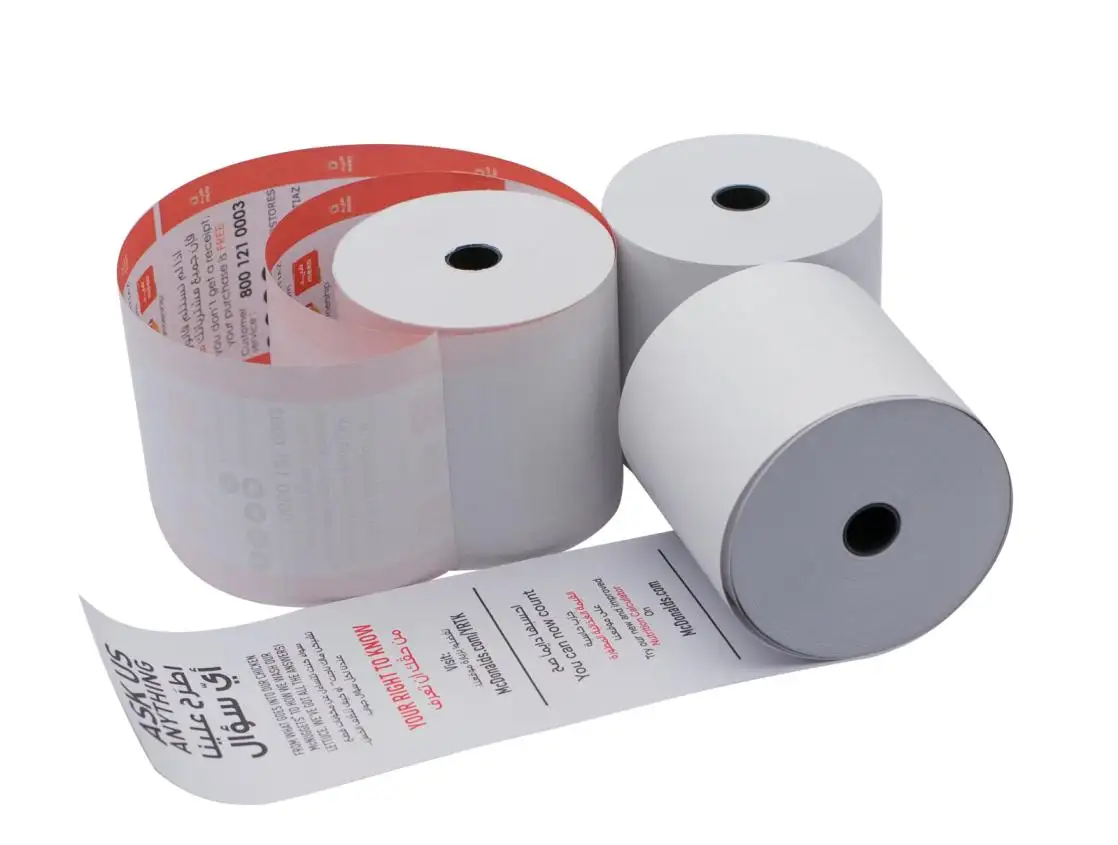
For buyers of POS rolls, receipt paper and direct-thermal labels, "phenol-free" is a coating-chemistry question that affects compliance, printer response, image durability and cost.
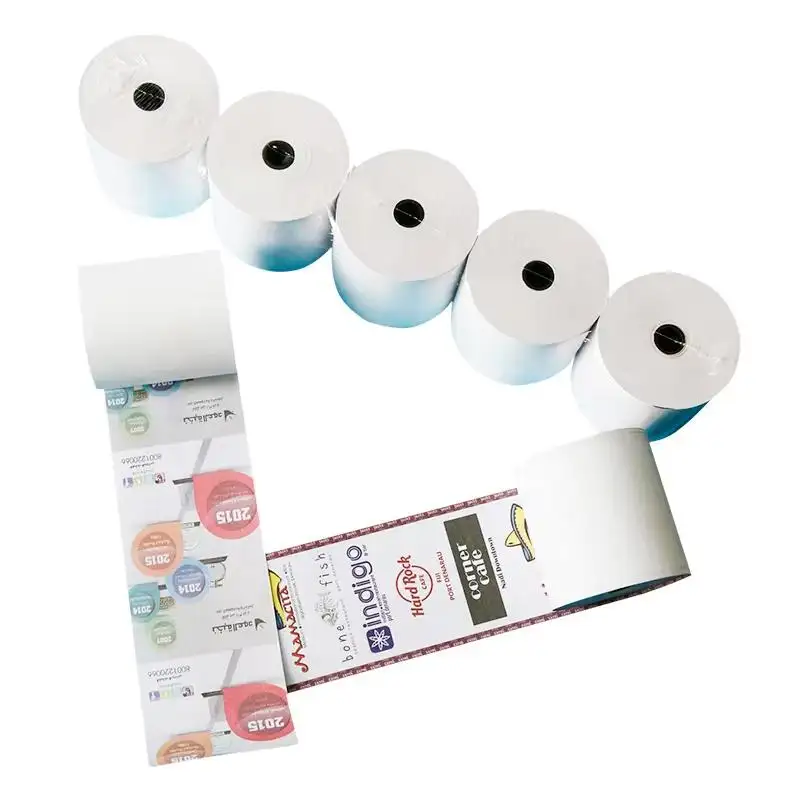
At Jinbao Brother, we manufacture and convert thermal paper for international B2B customers. From that perspective, the right way to compare Wholesale Thermal Paper Manufacturers is not to ask only for price per roll, but to define chemistry, converting specification and end-use performance together.
What Phenol-Free Thermal Paper Actually Means
Direct thermal paper typically contains four functional layers:
• Base paper — provides thickness, stiffness and converting stability.
• Precoat — improves smoothness and thermal efficiency.
• Thermal layer — contains leuco dye, developer and sensitizing components.
• Optional topcoat — improves resistance to water, oil, abrasion and plasticizers.
During printing, heat from the printhead activates the thermal layer and forms the dark image.
| Claim | Technical meaning | Buyer should verify |
| BPA-free | BPA is not used or remains below the required limit | Declaration/test report |
| BPA/BPS-free | BPA and BPS are excluded or controlled | Chemical evidence |
| Phenol-free | Non-phenolic developer chemistry is used | Developer system/documentation |
BPA-free therefore does not automatically mean phenol-free. Jinbao Brother's current thermal POS range is stated as SGS-tested BPA/BPS-free. Buyers requiring a specific phenol-free formulation should still confirm the developer chemistry and test scope before approval.
Compliance Is Only the First Filter
The EU restricts thermal paper containing BPA at concentrations of 0.02% by weight or more from being placed on the market after January 2, 2020.
BPS—4,4'-sulphonyldiphenol—was added to ECHA's Candidate List in January 2023.
For Wholesale Thermal Paper Manufacturers, a technical RFQ should identify:
• Destination market and chemical requirements
• BPA, BPS and phenol-free status
• Required declaration or third-party report
• Intended application and expected image life
• Standard or top-coated construction
Performance: What Changes When Chemistry Changes?
A different developer system can change how thermal paper reacts to heat. Buyers should evaluate five performance dimensions.
1. Dynamic Sensitivity
This describes how quickly density develops as print energy is applied. High-speed POS and logistics printers need adequate density without excessive printhead energy.
2. Paper that is Statically Sensitive
Some papers darken during storage due to poor formation. The type of paper used in making a currency should have a fine balance between print response and background discoloration.
3. Optical Density and Barcode Contrast
A receipt may look readable yet perform poorly under scanners. Test text density, QR recognition and barcode contrast on the actual printer.
4. Environmental Resistance
Heat, humidity, oils, alcohols, plasticizers and friction can shorten image life. Top-coated grades may suit restaurants, warehousing or logistics.
5. Converting Quality
Edge quality, dust, roll tension, curl, core concentricity and roll diameter influence feeding and printhead cleanliness.
This is why experienced Wholesale Thermal Paper Manufacturers validate both paper chemistry and converting tolerances.
Jinbao Brother Thermal Paper Specifications
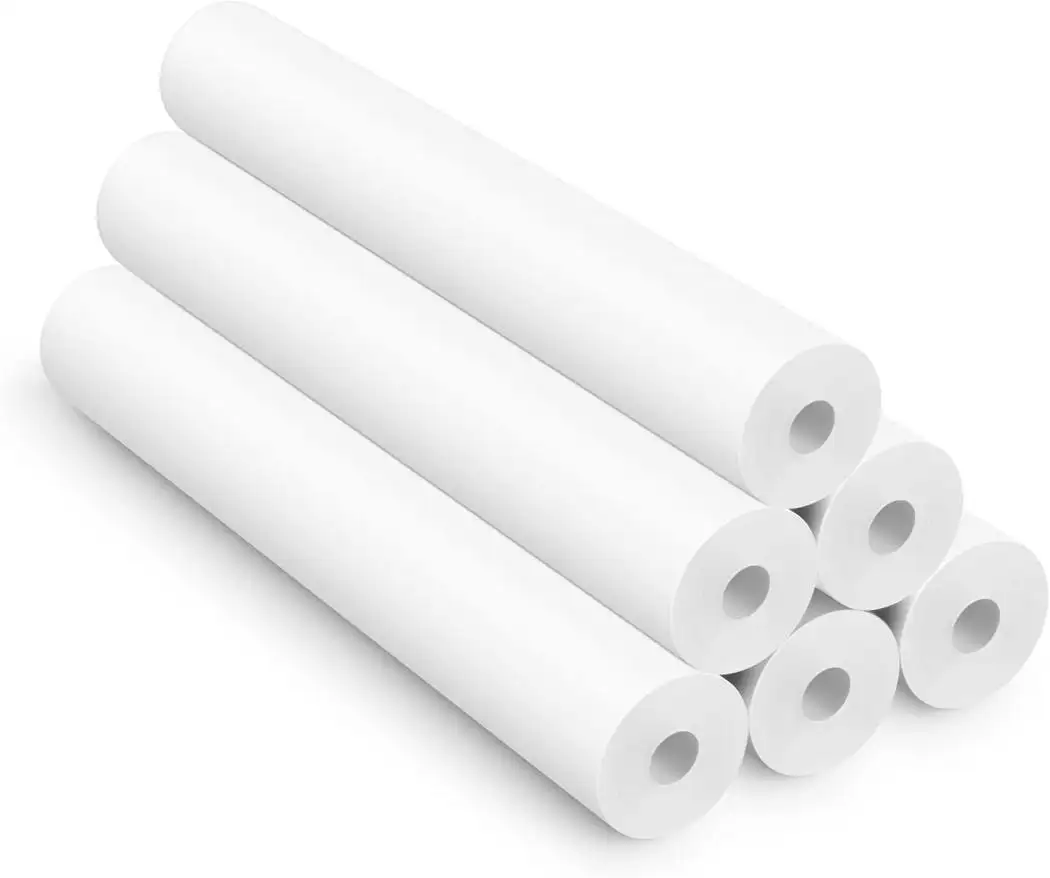
Our current POS thermal-paper program covers common global printer formats and OEM/ODM customization.
| Item | Jinbao Brother Capability |
| Standard widths | 57 mm, 80 mm, 2¼", 3⅛" |
| Paper weight | 42–75 GSM |
| Typical roll diameter | 30, 40, 50, 60, 70, 80 mm |
| Material | 100% pure wood pulp |
| Core | Plastic or customized options |
| Coating | Standard, top-coated, extended-image-life |
| Customization | Width, diameter, length, logo, reverse printing, packaging |
| Production capacity | 500+ tons/month |
We operate our own coating and slitting lines and support thermal jumbo rolls as well as finished POS rolls. For Wholesale Thermal Paper Manufacturers, this integration matters because final-roll performance depends on coating uniformity and converting accuracy, not only base-paper quality.
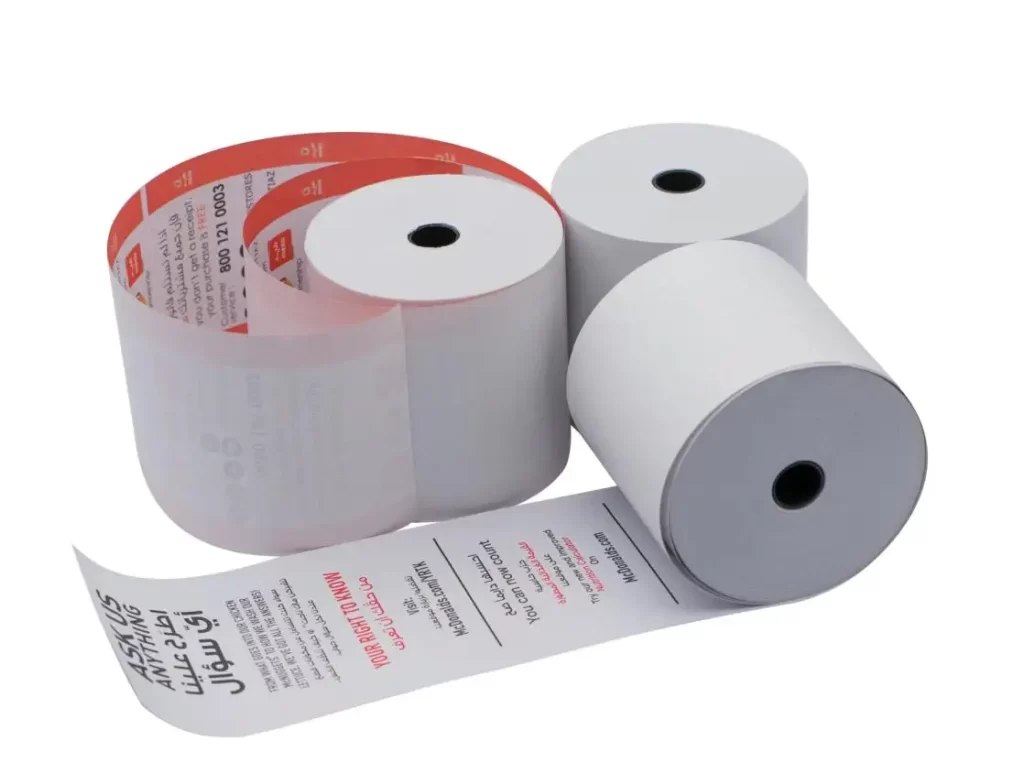
How Buyers Should Compare Cost
A low unit price can hide a different specification. Cost per usable meter is often more meaningful than cost per roll.
When comparing Wholesale Thermal Paper Manufacturers, normalize quotations by checking:
• GSM and caliper
• Actual roll length and outside diameter
• Core dimensions
• Standard vs top-coated grade
• Chemical compliance requirement
• Private-label printing and packaging
• Carton quantity and freight efficiency
• Rejection risk from dust, curl or inconsistent slitting
A 42 GSM roll and a 65 GSM roll with the same external dimensions do not contain the same paper length or behave identically in every printer. Specification control should come before price comparison.
A Practical Approval Process for Wholesale Orders
At Jinbao Brother, we recommend:
- Define printer model, application and destination market.
- Confirm width, GSM, diameter, core and roll length.
- Confirm BPA/BPS/phenol-free chemistry requirements.
- Select standard or top-coated construction.
- Test samples for density, barcode readability, feeding and image stability.
- Approve packaging, private label or reverse-side artwork.
- Lock the specification before mass production.
This reduces the risk of approving a sample that cannot be reproduced consistently at wholesale scale.
From Chemistry to Consistent Production
Choosing phenol-free thermal paper is not simply a chemical substitution exercise. The product must combine compliant chemistry with controlled sensitivity, image density, environmental resistance and precise converting.
Jinbao Brother has manufactured paper products since 1992 and supports 42–75 GSM thermal paper, 57 mm and 80 mm POS formats, custom roll dimensions, coating options, OEM/ODM packaging and bulk production.
Buyers evaluating Wholesale Thermal Paper Manufacturers can visit JinbaoPaper.com to discuss printer requirements, coating options, chemical documentation and roll specifications before sample approval and volume production.
FAQs
Q1. Does Jinbao Brother provide OEM and ODM thermal paper?
Yes. OEM/ODM services include customized roll dimensions, branding, packaging, logo printing, and other specifications for distributors and private-label customers.
Q2. What thermal paper roll widths does Jinbao Brother offer?
Standard POS roll widths include 57 mm, 80 mm, 2¼ inches, and 3⅛ inches. Custom widths can also be produced according to printer and application requirements.
Q3. What GSM options are available?
Jinbao Brother lists thermal cash register paper from 42 GSM to 75 GSM, allowing buyers to balance roll length, paper thickness, stiffness, and application requirements.
Q4. What roll diameters can Jinbao Brother produce?
Common finished roll diameters include 30 mm, 40 mm, 50 mm, 60 mm, 70 mm, and 80 mm, with customized dimensions available for specific printers.
Q5. What material is used for Jinbao Brother thermal POS paper?
Jinbao Brother states that its thermal POS rolls are manufactured from 100% pure wood pulp, designed to provide a smooth printing surface and consistent feeding.
We'll Get Back Within 24 Hours
Related Articles
Cash Register Roll Quality Testing: 7 Technical Parameters Buyers Should Check
2026-09-30

Custom Carbon Copy Paper Technology | Jinbao Brother
2026-09-30
How Long Do A4 Thermal Paper Rolls Last? Image Durability and Storage Explained
2026-09-29
Eco-Friendly A4 Thermal Printing Paper: Sustainability Trends and Recyclability
2026-09-29
