


 Home / News & Events /
-
Share
-

-

-

-

Updated 5 days ago
Thermal Printer Paper Rolls: How to Plan Supply Across Multiple Stores
admin
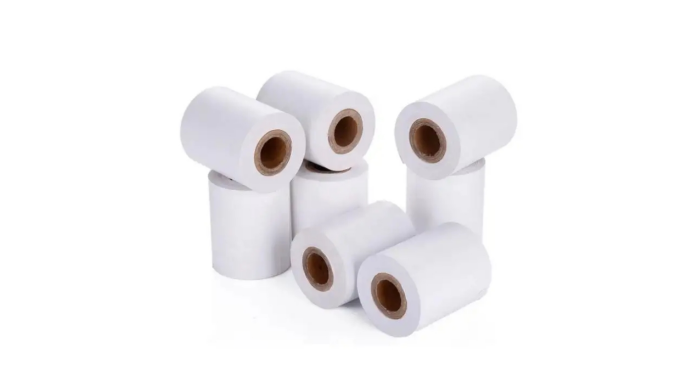
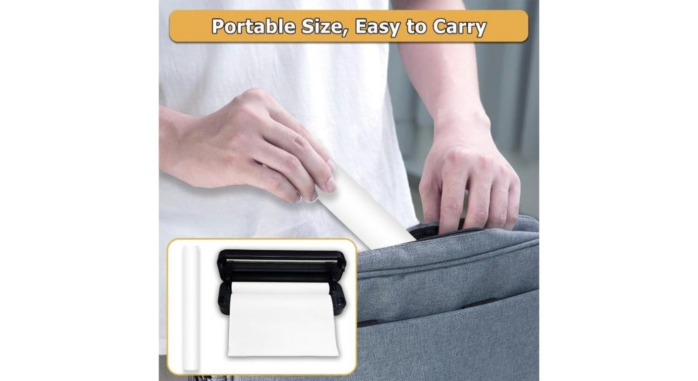
There is no guarantee that if a chain purchases enough rolls of thermal printer paper for a month that they will not run out when the traffic is heaviest at the point of sale. In a supermarket lane, long receipts are printed, including coupons, but short receipts are issued in the form of a card slip by a portable payment terminal. Both sites report their use in roll, although sometimes the rolls used are wider or longer and some paper is left when staff replace them.
The retail and foodservice purchasing unit is a carton, and the planning unit is paper used by each printer group. First, begin with the devices able to share stock, calculate the paper needed and determine the roll formats and pack sizes required for the network.
Before grouping the stores group the Printers
Inventory based on printer models and configurations. The printer can be shared between the front counter and the drive-through, and two tills in the same store can have different roll formats. The actual model and paper guide installed, consult manual for paper width, roll paper diameter, thickness and core requirements. Images on direct thermal receipt printers are created using heatsensitive paper, and impact printers use a ribbon and a special paper.
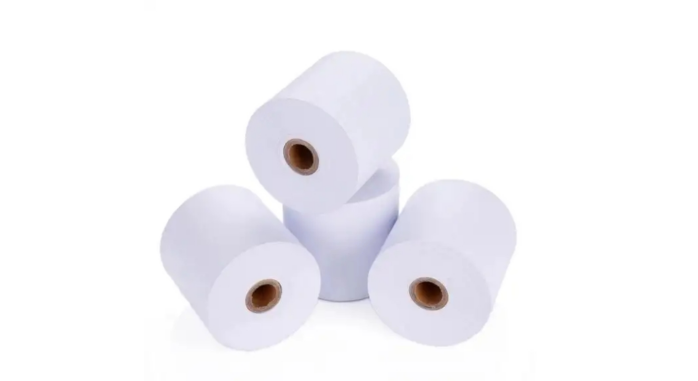
Jin Bao Brother's thermal printer paper roll can be produced in 57mm and 80mm width. Search for these widths and then quote with the desired dimension. When a designation is given, the second number is typically the outer diameter of the roll. Write down separately the core dimensions. If multiple printers occupy the same width, but only have differing compartment limits, compare a smaller roll, that would fit into both, against a larger one for the busiest stations. Those stations may warrant a separate item, dependent upon the length of time that is required for them to change rolls.
Predict what each shift will print.
Extract number of transactions in a typical week (with a busy day). Measure a number of receipts from each printer group (receipts with refunds, promotion, merchant copy etc. Add paper that is moving forward between receipts. Write down the length remaining on the core after a routine so that it can be subtracted from the nominal length of the roll. When a team has a promotion, it can use more paper per sale even if the number of sales are level.
Convert the resulting meters per shift to demand in rolls. If the checkout will yield 60 useful meters per roll, then five rolls would be required over six shifts for a checkout of 45 meters/shift. Include reserve stock according to the store's restocking period. When deliveries are set up twice a week at one location and weekly at another, giving the same amount to both may result in one store having too few and the other too many.
If the store is new, and no usage rate exists, obtain one from a branch that has a similar till configuration and sales mix. In the opening week take stock at the start and the end of the week and add on deliveries or transfers. Update Estimate after completing a trading cycle.
Compare Cost per Usable Meter
Make sure to compare apples to apples. Cost per roll by dividing carton cost by number of rolls, cost per usable meter by dividing cost per roll by number of usable meters and multiplying by 100 to get cost per 100 meters. Express similar modes of transport. The following example will illustrate that increasing the roll price can lead to a lower cost per metre.
| Illustrative quote | Cost per roll | Usable length per roll | Cost per 100 m |
| Roll A | $0.60 | 60 m | $1.00 |
| Roll B | $0.69 | 72 m | $0.96 |
Request the thickness of the paper, in addition to grammage, and the length of the roll. Grammage is a measurement of mass per unit area. Also, the length that will fit in a specific outside diameter will depend on thickness, core size and winding. The thermal roll manufacturing overview by Jin Bao Brother is about heat-sensitive coating, and slitting and rewinding of jumbo stock. On the completed sample, examine to see if the edges are clean and if the roll is feeding evenly and is cutting evenly as it approaches the core of the roll. Use the same receipt template for each candidate, to ensure that the comparison aligns with the paper and roll build.
Make sure that Branded Paper is a separate forecast.
If a plain roll is frequently moved between branches that use the same printer format, the roll can be moved between them. A roll with a store specific offer has less possible locations. Use preprinting for information that will be relevant throughout the stock cycle, like a chain-wide logo or a consistent customer service statement. Allow the Point of Sale to print dates, prices and short promotions at the time of the transaction.
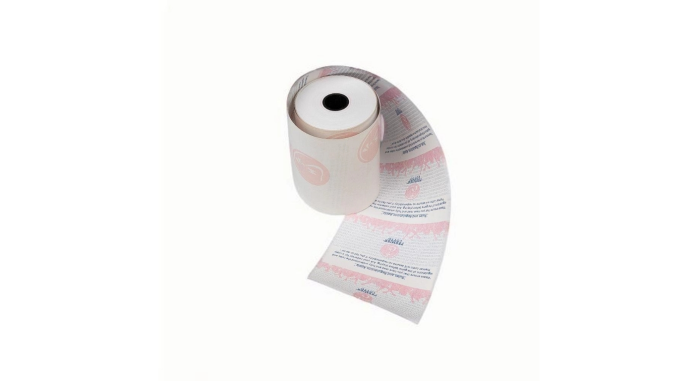
Jin Bao Brother's custom printed thermal receipt paper rolls are perfect for branded artwork, while its custom service can also provide reverse side promotion printing. Before using artwork on the thermal face please consult the printer manufacturer's instructions. Print a short trans and a long receipt on a finished production sample and check all the areas where the cutter stops with respect to the repeating art work. When artwork contains a QR code, scan the QR code on the receipt given to the customer. If older and newer rolls are going to be in stock at the same time, give each artwork revision its own item number.
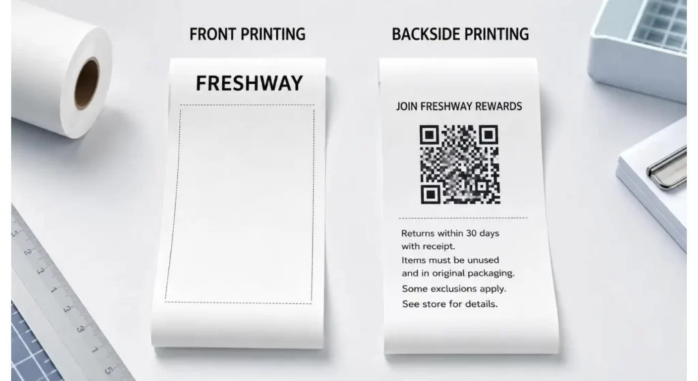
Create and deliver Store Packs around the delivery route.
Select the separate warehouse carton quantity and store issue quantity. A large branch might require a full carton at a time but a small branch, only a portion of it at a time to be sent to the central warehouse. Jin Bao Brother offers a number of carton counts and custom packaging for thermal paper rolls custom printed. Determine the number of inner packs to be picked at smaller pick sizes and mark up outer cartons to enable staff to identify similar looking artwork and width packs.
Determine the reorder level based on the delivery time of the store when ordering goods. If the branch has predetermined days for delivery, add in the time to next delivery.
Monitor printer group replenishment for a full ordering cycle. Adjust the quantities by group when emergency stock is being pulled on high-volume lanes and there is an excess of spares on the compact terminals. Review the forecast when the business changes its printer fleet, receipt template or delivery schedule. Every change might affect the demand or the number of formats that purchases must possess.
Conclusion
Begin with printers, predict the demand in meters that can be used, and then translate the demand into rolls and store packs. This allows for meaningful quote comparisons and provides each branch with a reorder quantity, based on its real checkout activity. If the number of places where the branded stock can be used is limited, maintain a separate forecast.
FAQs
Q1. Is it possible to have two printers sharing a roll of 80mm paper?
They are able to, provided that the same roll fits the diameter, core, thickness and media specification of both printers. Inspect the paper guides that have been installed prior to consolidation.
Q2. Is a bigger roll necessarily going to have more paper in it?
The amount of length that can be rolled also depends on the core size and the thickness of the paper that is rolled. Check the length listed and usable yield in printer.
Q3. Where the buyer receives promotional receipts, how are they to be treated?
Track them as its own receipt category and add in the percentage of transactions that are expected. Re-calculate Usage upon promotion change or template change.
Q4. Is it possible to have a logo preprinted on the back?
Yes, Jin Bao Brother has reverse-side printing. Accept a completed roll to verify artwork positioning with normal roll receipt lengths.
Q5. If all the branches get the same number of rolls?
Set the quantity that each branch issues based on the branch's consumption and replenishment interval. Using a shared carton size can still be effective in the warehouse.
We'll Get Back Within 24 Hours
Related Articles
Thermal Paper for Printers: How to Diagnose Receipt Problems Before Reordering
2026-11-13
Roll Label Printer Media: How to Match the Roll to the Printer and Applicator
2026-11-13
8.5 × 11 Copy Paper: How to Keep Prints Consistent Across Shared Printers
2026-11-12
Thermal Printing Labels: How to Combine Preprinted Artwork With Variable Data
2026-11-12
