



 Home / News & Events /
 -
Share
-

-

-

-

Updated 8 months ago
Thermal Paper Jumbo Rolls Manufacturers: Fade-Resistant Receipts That Last
admin
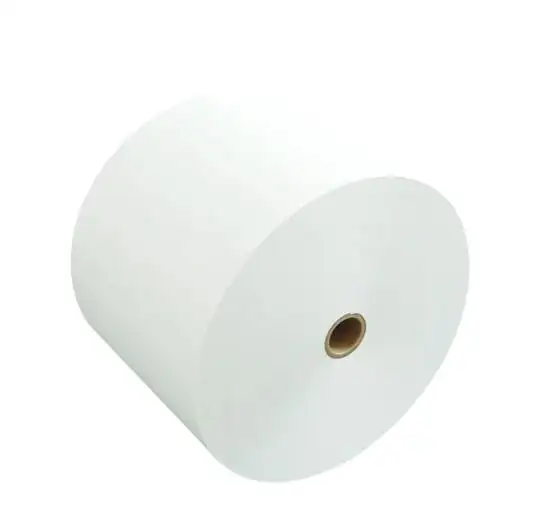
Thermal paper jumbo rolls manufacturers are judged by one everyday result: whether a receipt stays readable after weeks of handling, heat exposure, and routine storage. At Jin Bao Brother, we produce jumbo thermal paper rolls for converters and brand buyers who want fade-resistant printing, clean coating behavior, and fewer daily issues like barcode failure, dust buildup, and unnecessary reprints.
In many markets, buyers still compare only "darkness on day one." That metric is easy to show on a quick sample print. Real performance is harder—and more valuable—because it depends on coating chemistry, base paper control, and process discipline across the full jumbo roll. This guide explains what fade resistance really means, how jumbo formats change production efficiency, and how to evaluate thermal paper jumbo rolls manufacturers like a practical buyer, not like a spec sheet collector.
Why Fade Resistance Matters More Than "Dark On Day One"
A receipt is not only a short proof of payment. In retail chains, logistics hubs, and service counters, a receipt can become a record: a return claim, a warranty check, a delivery dispute, or a tax filing reference. When printing fades too quickly, the cost is not only paper. It becomes time spent on reprints, transaction lookups, customer explanations, and exceptions that slow down frontline staff.
Fade resistance is a real-world outcome of thermal chemistry plus manufacturing control. A strong thermal layer should react efficiently at normal printhead heat, then remain stable during storage and routine handling. The best way to think about it is simple: the receipt must survive imperfect conditions.
That "imperfect environment" is common:
• Warm checkout counters under lighting and heat
• Packed warehouses with mixed temperature zones
• Delivery drivers keeping receipts in pockets or gloveboxes
• Customers folding receipts and handling them repeatedly
When you compare thermal paper jumbo rolls manufacturers, ask a question that matches reality: Will my receipts remain readable when storage and handling are not ideal? If a supplier can only win on initial darkness but loses on stability, you will pay for it later through complaints and returns.
What a Jumbo Roll Really Changes in Your Production Cost
Jumbo rolls are not just bigger rolls. They change your converting rhythm—downtime, waste, slitting stability, and scheduling.
With larger formats, converters can run longer slitting cycles and reduce roll change frequency per shift. That sounds small until you measure it across weeks of production. Each roll change is labor, stoppage time, and a chance for tension variation that creates waste at the start and end of runs.
At Jin Bao Brother, jumbo widths commonly include 400 mm, 795 mm, and up to 1590 mm to match mainstream converting lines. Length can be customized, and high-volume programs can reach up to 24,000 meters when the production plan and winding requirements support it.
For buyers, the benefits are concrete:
✓ Fewer roll changes, less line stoppage
✓ Higher yield per roll, fewer handling steps
✓ More stable scheduling, better delivery predictability
If your market demands consistent replenishment, jumbo formats help you move from "rush production" to a controlled supply cycle. That consistency is part of quality because rushed production tends to amplify variation.
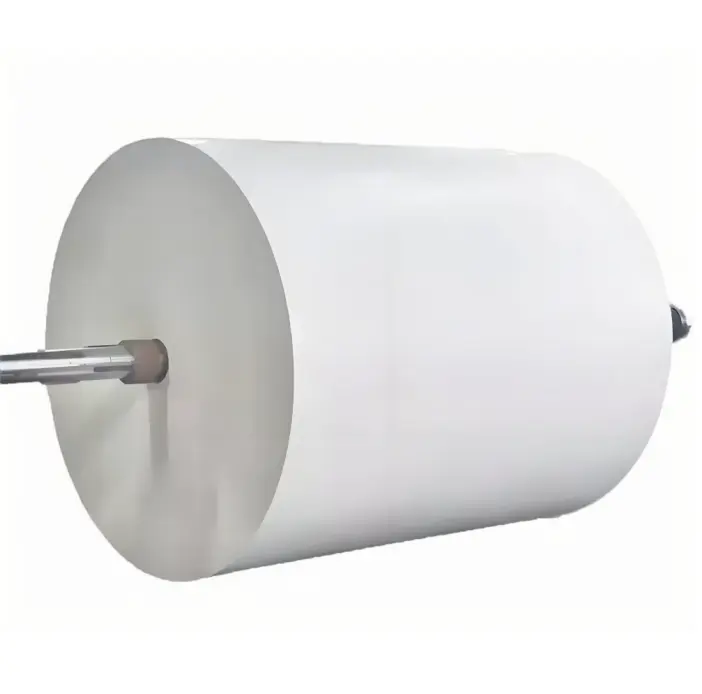
Choosing GSM Like a Buyer, Not Like a Spec Sheet
GSM (paper weight) is one of the fastest levers to align cost with performance. But GSM only helps if consistency is stable across the full roll and across repeated batches. A wide GSM list is meaningless if the supplier cannot hold uniform base paper and coating behavior at scale.
Jin Bao Brother supports 35 gsm to 80 gsm. Most buyers do not need every number. A smarter approach is to select a few practical weights that match your devices, print speed, and retention expectations.
For many POS receipt programs, mid-range weights like 48 gsm, 55 gsm, or 60 gsm are common because they balance stiffness, feeding stability, and cost. For "premium receipt" programs where retention matters more, buyers often choose a slightly heavier base and pair it with a coating designed for stable image formation and consistent heat response.
The decision is not "higher is always better." It is fitness for use:
✓ POS receipts need stable feeding and clean small-font printing
✓ ATM receipts benefit from consistent heat response and low dusting
✓ Transaction records need scannable barcodes and readable text over time
When you evaluate thermal paper jumbo rolls manufacturers, ask for a recommendation based on your printer type, printhead condition, speed, and retention goal—not only price per ton.
Premium Thermal Coating: What You Should Expect in Real Use
"Premium coating" should translate into measurable stability. In real workflows, you want printing that appears quickly, looks even across the roll, and stays readable after handling. A well-controlled coating also reduces dusting, which matters because dust is not only a cleanliness issue—it can increase printhead wear and cause streaking or uneven heat transfer.
From a buyer’s perspective, uneven coating usually shows up as:
✓ Light bands across the receipt surface
✓ Inconsistent barcode darkness that slows scanning
✓ Faster "perceived fading" because density was never stable
Some programs also request moisture-related performance for special handling conditions. Thermal paper is not "magic," but material selection and coating control can significantly improve usability when receipts face humidity or incidental contact with water. The goal is practical: fewer failed scans, fewer "reprint please" moments, and fewer complaints that trace back to paper behavior.
If customers complain about fading, the fix is rarely at the cashier. The root cause is upstream—base paper control, coating uniformity, and batch discipline.
OEM, Free Samples, and How Smart Buyers Reduce Risk
Speed matters in procurement, but thermal paper should be validated before scale. That is why we support OEM/ODM programs and offer free samples for targeted testing. Samples help your team confirm print density, barcode readability, feeding stability, and converting behavior using your real devices and real workloads.
A beginner-friendly test workflow looks like this:
✓ Test on your target printers (POS, ATM, kiosk, receipt printers)
✓ Print small fonts, QR codes, and barcodes at normal speed
✓ Run continuous printing to observe heat consistency across a longer job
✓ Store test receipts in typical conditions for a short retention check
✓ Confirm slitting and winding behavior on your converting line
Our typical MOQ is one container, and we also accept testing orders so buyers can confirm performance before committing to longer volume programs. The purpose is to validate performance at the start, while spec tweaks and process changes are still simple to implement.
CTA: If you’re reviewing thermal paper jumbo rolls manufacturers, request free samples from Jin Bao Brother by sending your target width, GSM range, and application details. We will recommend an appropriate jumbo roll specification, support printer and slitting trials, and offer OEM customization. Subject to production availability, we can ship within 3 days.
Where Jumbo Thermal Paper Performs Best and Why Our Factory Model Helps
Thermal paper jumbo rolls are used wherever printing is frequent and speed-sensitive. Our clients commonly supply the following application sectors:
✓ Retail & POS: supermarkets, chain stores, parking systems, ATM receipt programs
✓ Logistics & Shipping: tracking labels, sorting codes, e-commerce dispatch operations
✓ Healthcare & Medical: lab outputs, ECG strips, medical labeling where clarity matters
✓ Food & Beverage: order tickets, takeaway labels, delivery workflows under time pressure
All of these scenarios depend on consistent print performance and stable runnability. When paper quality creates jams, streaks, premature fading, or scanning delays, the resulting downtime, reprints, and complaints can cost more than the paper itself.
Jin Bao Brother operates as a factory-based paper manufacturer with 34 years of experience, specializing in paper production since 1992. We run integrated in-house processes for thermal paper coating, jumbo roll converting support, and packaging. This matters because control reduces variation—and variation is the most common root cause behind fading complaints, jamming, and inconsistent printing.
We are certified to ISO9001 and ISO14001, and we export through Shenzhen Port with a logistics team that supports documentation and shipping coordination. For buyers, a direct factory supply model means clearer accountability, faster sampling, and more stable batch management over long-term programs.
If your goal is simple—receipts that remain readable and barcodes that scan reliably—the right partner is the one who treats thermal paper as a controlled product, not a commodity. Jin Bao Brother is ready to support your next jumbo roll program with practical specifications, disciplined coating control, and a supply rhythm built for long-term cooperation.
We'll Get Back Within 24 Hours
Related Articles

Cash Register Roll Quality Testing: 7 Technical Parameters Buyers Should Check
2026-09-30

Custom Carbon Copy Paper Technology | Jinbao Brother
2026-09-30
How Long Do A4 Thermal Paper Rolls Last? Image Durability and Storage Explained
2026-09-29
Eco-Friendly A4 Thermal Printing Paper: Sustainability Trends and Recyclability
2026-09-29
