



 Home / News & Events /
 -
Share
-

-

-

-

Updated 8 months ago
Thermal Paper Roll Factory Solutions: Clear Printing, Smooth Feeding
admin
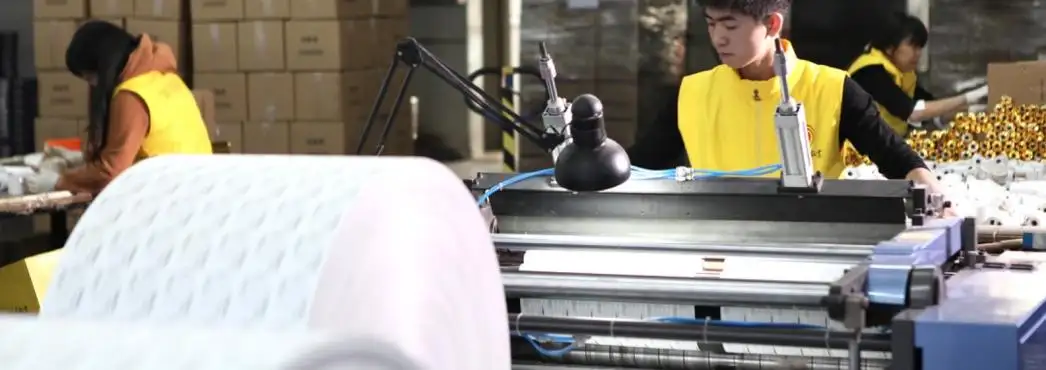
Buyers from a Thermal Paper Roll Factory often assume every roll is "just paper" until the first real problem hits: a POS printer jams during peak hours, an ATM slip turns light after a few days, or a barcode refuses to scan at the counter. Those issues are not random. In most cases, they come from controllable variables—base paper stability, coating uniformity, roll winding discipline, and packaging protection.
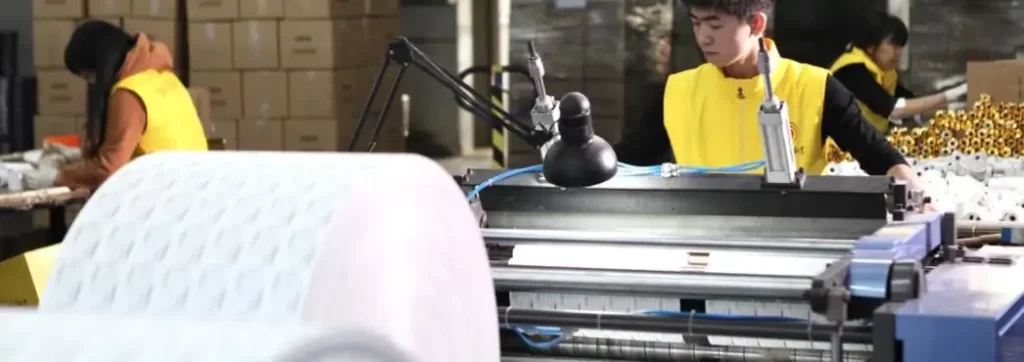
At Jin Bao Brother, we manufacture thermal paper rolls for POS receipts, ATM slips, logistics bills, and retail tickets. After working with real distributors and brand programs, we see one practical truth: stable printing is engineered, not hoped for. This beginner-friendly guide breaks down what "clear printing" actually depends on, why feeding problems are often misunderstood, and how a capable Thermal Paper Roll Factory reduces operational friction for your team and your customers.
Understand What "Clear Printing" Really Depends On
For a Thermal Paper Roll Factory, "clear printing" is not only about darkness on day one. It is about consistent response to heat across the entire roll, stable image formation at different printer speeds, and a surface that stays clean under repeated handling.
Thermal paper works because a heat-sensitive coating reacts to the printhead. If coating uniformity is weak, the result is usually predictable:
• Patchy density across the receipt
• Light lines that repeat at intervals
• Fading that shows up earlier than expected
• Barcodes and QR codes that scan inconsistently
In real operations, the value of clear printing is simple. Clean receipts reduce reprints. Readable tickets reduce customer disputes. Labels that scan on the first pass keep checkout lanes and sorting lines moving. That is why our Thermal Paper Roll Factory focuses on heat sensitivity consistency, smoothness control, and abrasion resistance checks after coating—so the image result is fast, even, and stable in daily use.
Clear printing is also about protecting your brand. If the roll is used in a branded program, customers do not blame the printer model or the environment. They blame the receipt. When print looks weak, the transaction feels less trustworthy. A supply partner that controls coating accuracy helps prevent those small "trust leaks" from turning into big service complaints.
Smooth Feeding Starts With Surface Control, Not "Thicker Paper"
Feeding issues are often misdiagnosed. Many teams assume "thicker paper" solves jams, but feeding stability is more influenced by surface finish, edge quality, roll winding, and dimensional accuracy.
A jam can start from something small:
• Rough edges that shed paper dust
• Inconsistent diameter that changes unwind tension
• Loose winding that causes telescoping or misalignment
• Surface drag that increases friction inside the printer path
As a Thermal Paper Roll Factory, we treat feeding as a system outcome. To feed reliably, the roll needs steady motion, smooth unwind, and edges that stay true. That performance becomes critical in nonstop printing zones—POS counters, ATM cycles, logistics stations, and ticketing points.
When feeding is stable, your team sees fewer interruptions, fewer jams to clear, and less printhead cleaning. Over weeks, that becomes measurable savings in labor, downtime, and customer waiting time.
✅ Practical Checklist For Smoother Feeding In Daily Use
✅ Match roll size to printer specification (width and max diameter)
✅ Choose stable coating and controlled surface smoothness to reduce drag
✅ Confirm clean roll edges to minimize dust and debris
✅ Use moisture-protected packaging to prevent curl and swelling in transit
If you are troubleshooting frequent jams, ask your supplier for edge condition and winding consistency checks—not only GSM and thickness.
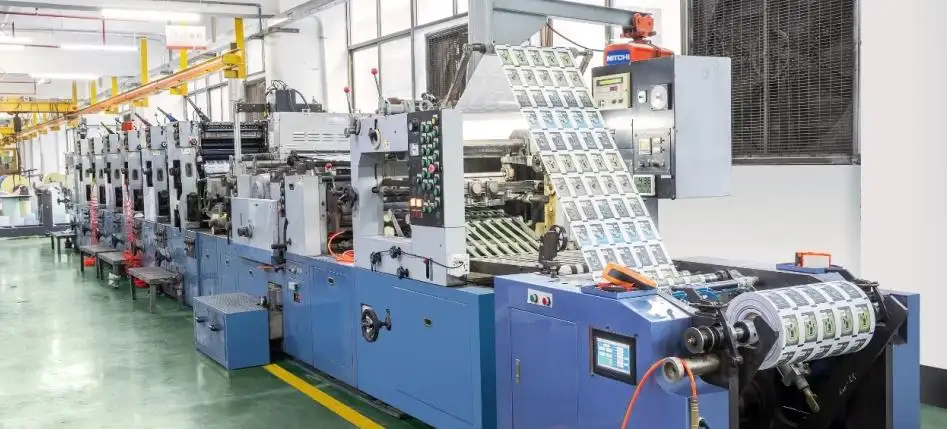
Product Options That Fit Common Workflows
A reliable Thermal Paper Roll Factory does not push a "one roll fits all" solution. Different devices and scenarios need different formats and performance targets.
In retail, 80×80 mm is widely used because it offers good receipt capacity and fewer roll changes. 57 mm is the go-to width for compact and handheld devices. For ATM deployments, buyers usually look for reliable winding stability and steady image performance, because alarms and service calls affect both cost and continuity.
At Jin Bao Brother, our core product lines include:
• Wood Free Thermal Paper Rolls made from 100% virgin wood free base paper
• POS Thermal Paper Rolls in common widths such as 80 mm and 57 mm
• Printer Thermal Paper Rolls for wholesale supply programs
• Custom Printed Thermal Receipt Paper Rolls for branding, logos, and messages
• Color Thermal Paper for visual sorting, promotional use, or internal ticketing
The key is to treat format + coating + packaging as one matched solution. A roll that prints well but arrives curled due to moisture exposure can still create feeding problems. Likewise, a roll with perfect size but unstable heat response will still create customer-facing failures.
Full-Process Quality Control That Protects Your Brand
If your customers see your name on the box, quality becomes part of your brand promise—even when the product is "just a consumable." A capable Thermal Paper Roll Factory must control quality across the full process, because defects can be introduced at multiple points: raw paper stability, coating variation, printing alignment, cutting deviation, or packaging failures.
Our approach is built on stage-by-stage checks:
• Incoming material inspection for base paper stability
• After-coating tests for uniformity, heat sensitivity, smoothness, and abrasion resistance
• For OEM printed rolls, printing inspection for alignment and visual consistency
• Triple quality control in cutting: pre-cut checks, mid-cut monitoring, post-cut inspection
• Packaging and final shipment inspection for storage performance and clarity confirmation
What This Means For You
✅ Fewer printer complaints and fewer "random" jam issues
✅ More consistent print density across batches and markets
✅ Lower return rates because defects are removed and reprocessed
✅ More uniform shelf presentation for OEM packaging programs
We follow a "100% Quality Guaranteed" internal rule: rolls that fail standards are removed and reprocessed, so only qualified products leave the factory. For distributors and brand owners, this reduces the hidden cost of after-sales negotiation and repeated service conversations.
Compliance, Sustainability, and Global Readiness
Modern buyers often need more than performance. They need compliance and sustainability signals that are easy to document and easy to explain internally.
Jin Bao Brother is ISO9001 and ISO14001 certified, and we also carry FSC certification. For many procurement teams, these certifications support vendor approval and help pass internal compliance checks. We also supply BPA-free thermal paper rolls for customers who want clearer safety positioning in retail and service environments.
Global shipping adds another layer of risk. During transport, moisture and dust exposure can lead to curling, swelling, or surface contamination. Those issues may not appear immediately at arrival, but they show up later as feeding instability. That is why our packaging inspection emphasizes seal integrity and protective performance, not only visual appearance.
With 34 years of experience and a direct factory supply model, we support bulk supply programs, custom sizes, OEM packaging, and export planning. For new buyers, working with one Thermal Paper Roll Factory that covers coating, slitting, printing, and finished packaging reduces fragmented responsibility—and makes problem-solving faster when something needs to be improved.
How to Start a Reliable OEM Program With Jin Bao Brother
If you are building a private label line or upgrading your supply chain, start with usage reality—not a catalog page. A Thermal Paper Roll Factory can recommend a stable baseline when we understand three things:
• Your printer model and printhead type
• Your roll size requirements (width and diameter limits)
• Your application (POS receipts, ATM slips, logistics bills, retail tickets)
From there, sampling becomes meaningful because your team tests rolls on real printers, under real workload. A practical rollout approach is to lock one standard size and one performance baseline first, then expand into additional SKUs once the workflow is stable. This reduces rework and makes inventory planning simpler across regions.
CTA: Get a Free Quote and Sample Plan
Send Jin Bao Brother your target roll size (for example 80×80 mm or 57 mm width), your printer model, and whether you need OEM packaging or custom printed rolls. We will recommend a stable specification, prepare samples for on-site testing, and help you build a consistent Thermal Paper Roll Factory supply program with clear printing and smooth feeding—batch after batch.
We'll Get Back Within 24 Hours
Related Articles

Cash Register Roll Quality Testing: 7 Technical Parameters Buyers Should Check
2026-09-30

Custom Carbon Copy Paper Technology | Jinbao Brother
2026-09-30
How Long Do A4 Thermal Paper Rolls Last? Image Durability and Storage Explained
2026-09-29
Eco-Friendly A4 Thermal Printing Paper: Sustainability Trends and Recyclability
2026-09-29
