



 Home / News & Events /
 -
Share
-

-

-

-

Updated 8 months ago
Best Copy Paper Suppliers: High Whiteness, Smooth Feed, Fewer Jams
admin
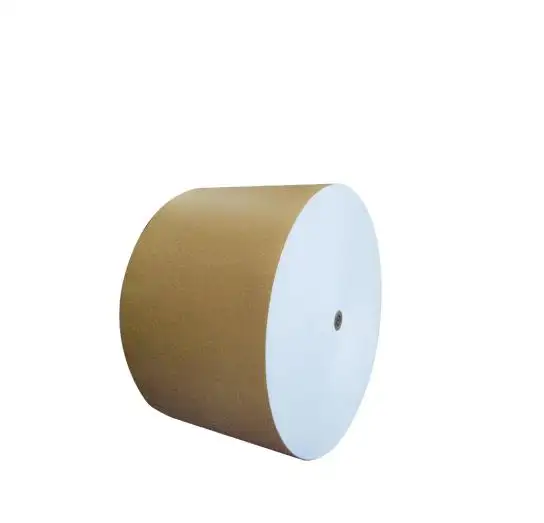
Best Copy Paper Suppliers are not defined by low prices or a familiar brand name. In real office and commercial printing, the best suppliers are the ones who deliver paper that feeds smoothly, prints clearly, and stays consistent from the first carton to the last. At Jin Bao Brother, we have manufactured office paper since 1992, and we have learned a simple truth: fewer paper jams start with controlled pulp quality, stable base weight, and a surface that keeps friction predictable across different devices.
Why High Whiteness and Smooth Feed Matter More Than You Think
When buyers compare paper, they often focus on "A4 is A4" and "80gsm is 80gsm." But daily users experience paper through output and uptime. High whiteness improves contrast, so text looks crisp and small fonts stay readable. Smooth feed reduces mis-picks and skew, which is where many jams begin.
For buyers, here is the practical connection: paper is a mechanical material inside a mechanical system. Your copier or printer pulls, bends, heats, and stacks every sheet. If the surface is too rough, fibers and dust increase drag. If the sheet stiffness is unstable, the paper can curl or misalign. That is why Best Copy Paper Suppliers should talk about feed performance, not only brightness.
At Jin Bao Brother, our A3/A4 copy paper jumbo rolls are produced with stable surface properties and measurable whiteness ranges. Depending on the market and positioning, we offer whiteness options such as 95–97% or higher-grade ranges that support sharper visual output.
How Jin Bao Brother Builds Copy Paper That Prints Cleanly
We use 100% virgin wood pulp because it gives customers a more durable sheet with better fiber strength. For users, this shows up as cleaner edges, fewer broken fibers, and more stable runnability in multi-page jobs. It also supports consistent toner or ink behavior, which is essential when customers print contracts, manuals, invoices, or training documents that need to look professional.
As a factory-based manufacturer with 34 years of experience, we run an integrated production model that covers jumbo roll processing and finished packaging. This matters because each handoff in a supply chain is a chance for spec drift. When the same manufacturer controls key steps, the output stays aligned to the spec that buyers approved.
For B2B buyers, "stable" also means repeatable procurement. You do not want one shipment that performs perfectly and the next that triggers complaints from office users. Best Copy Paper Suppliers reduce this risk by controlling raw material selection and process discipline, not by making after-the-fact promises.
Choosing the Right GSM and Thickness for Your Workflow
One reason copy paper buying feels confusing is that users expect one weight to fit every device and application. In reality, paper weight should match your printing load and the devices your customers use.
Jin Bao Brother offers multiple base weight options such as 70gsm, 75gsm, and 80gsm (and other choices for different markets). This range is practical, because it helps distributors and wholesalers build a clean product ladder:
✅ 70–75gsm: efficient for high-volume copying, internal documents, and cost-sensitive tenders
✅ 80gsm: stronger feel for client-facing documents, proposals, and heavier duplex printing
✅ Stable thickness choices: for buyers who want predictable stiffness and lower curl risk
For example, many markets prefer a thickness around 102–104 μm in common grades because it balances stiffness and stack behavior. If your customers do duplex printing, a stable sheet structure reduces show-through and improves feeding.
A beginner-friendly rule is simple: if you see frequent skewing, mis-feeds, or corner folding in multi-page runs, the paper may be under-matched to the device speed or the roller condition. The right GSM and thickness can reduce those issues without changing printers.
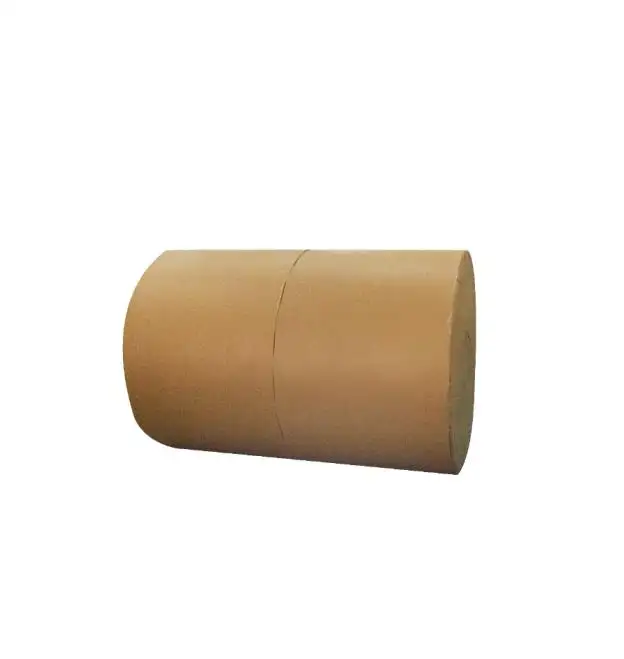
The "Fewer Jams" Formula: Smoothness, Friction, and Consistency
Paper jams are often blamed on the printer. Sometimes that is true. But many jams are repeat patterns caused by friction and dust. Smoothness is a measurable property, and it directly relates to how rollers pull sheets.
In our copy paper jumbo roll options, typical smoothness ranges include 22–30 seconds (depending on grade). For a buyer, the benefit is not the number itself. The benefit is what the number predicts: smoother sheets usually travel with fewer interruptions, especially in fast copiers and shared office printers.
If you are sourcing from Best Copy Paper Suppliers, ask how they manage batch consistency, not only what their best sample looks like. A stable supplier can keep the same behavior across containers, so your customer does not experience sudden changes in feed resistance.
Here are practical checks that reduce jam complaints after you launch a paper line:
✅ Test the paper on real devices: inkjet printers, laser printers, copiers, and fax machines
✅ Run continuous printing, not only one-page tests
✅ Print typical files: contracts, spreadsheets, manuals, and barcode-rich documents
✅ Track whether jams happen at pickup, fusing, or output stacking—each points to a different cause
This testing approach is also why we provide free samples. Customers typically cover shipping, then validate performance before scaling.
Beyond Copy Paper: Custom NCR 1–3 Ply for Business Forms
Many buyers serve mixed demand. One client wants A4 copy paper for offices, while another needs multi-part forms for invoices or receipts. That is where carbonless NCR paper becomes relevant.
Copy paper is designed for single-sheet printing and copying. NCR carbonless paper is designed for automatic duplication, commonly used for invoices, receipts, and multi-part forms. At Jin Bao Brother, we support 1–3 ply customization (CB + CFB + CF structures) and provide free samples so customers can check copy clarity and writing pressure performance.
This matters for distributors because it creates a "one supplier, multiple categories" supply strategy:
✅ Copy paper for daily office printing
✅ NCR forms for transaction documents and multi-copy workflows
✅ Consistent OEM/ODM support across sizing, GSM, and packaging
If your customers run high-speed printers for invoices or shipping forms, NCR performance needs to be stable. The right spec reduces faint copies, mis-registration, and paper dust that can build up in rollers.
Lead Time, Certifications, and a Practical CTA for Buyers
A supplier is only as strong as its ability to deliver reliably. Through a direct factory model and fully integrated production, Jin Bao Brother can support full-container supply with rapid shipping readiness—often within 3 days for qualified programs. We provide export packaging solutions and coordinated logistics to serve customers across the Middle East, Europe, South America, Africa, and Asia.
Compliance remains a core requirement. We operate under ISO 9001, ISO 14001, and FSC systems to keep quality stable and environmental responsibility measurable. For customers, these are not "labels." They are proof that the supplier runs repeatable processes and documented standards—exactly what Best Copy Paper Suppliers should provide when buyers scale across regions.
CTA (Call-to-Action):
If you are sourcing A3/A4 copy paper jumbo rolls or building a private-label paper line, contact Jin Bao Brother with your target GSM (such as 70gsm, 75gsm, or 80gsm), desired whiteness range, and packaging concept. We will recommend a practical specification, prepare free samples for device testing, and help you move from trial to stable bulk supply—so your customers get high whiteness, smooth feed, and fewer jams with every shipment.
We'll Get Back Within 24 Hours
Related Articles

Cash Register Roll Quality Testing: 7 Technical Parameters Buyers Should Check
2026-09-30

Custom Carbon Copy Paper Technology | Jinbao Brother
2026-09-30
How Long Do A4 Thermal Paper Rolls Last? Image Durability and Storage Explained
2026-09-29
Eco-Friendly A4 Thermal Printing Paper: Sustainability Trends and Recyclability
2026-09-29
