



 Home / News & Events /
 -
Share
-

-

-

-

Updated 9 months ago
What Cash Register Till Rolls Are Best for Faded Prints?
admin
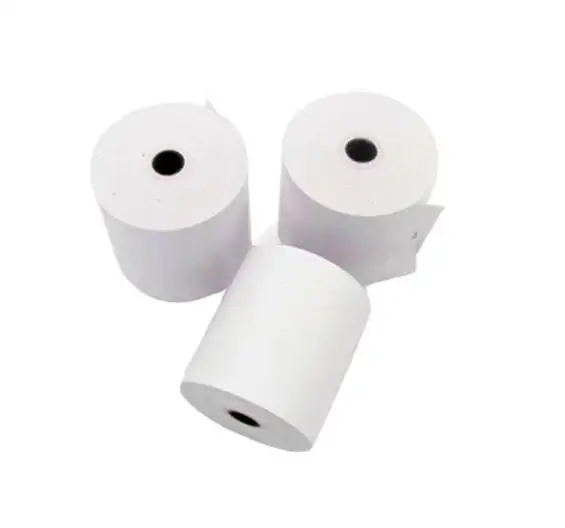
Every checkout prints a tiny promise: proof that a sale happened and the details can be trusted later. When that slip stays dark and legible, returns move quickly, audits stay clean, and customers walk away reassured. When it fades before someone reaches the parking lot, everything slows down. The simple choice of Cash Register Till Rolls can be the difference between sharp, scannable records and a frustrating ghost of a transaction.
Why Receipts Fade and How to Prevent It
Thermal receipts aren't "ink on paper.” They're heat-activated chemistry. The print head energizes a dye and developer in the coating, forming the image. That image can break down when exposed to sunlight and UV, elevated heat, humidity, hand oils and lotions, cleaning sprays, or plasticizers from vinyl sleeves and certain plastics. Add the friction of pockets, wallets, and overstuffed bags, and you get smudged text and lighter barcodes. On the ground, that means reprints, longer lines, and risk during chargebacks, warranties, or audits when a receipt can't be read.
- Paper Construction Isn't a Footnote - It's the Foundation
Start with the base sheet. A premium paper made from 100% virgin wood pulp offers a smooth, uniform surface that transfers heat evenly. Smoothness matters twice: it helps the printer create dense, consistent characters and barcodes, and it reduces abrasion on the thermal head, protecting your hardware. Cheap, dusty, or rough paper sheds fibers, wears heads faster, and produces weaker images that fade sooner. Over the lifetime of a POS fleet, that wear translates to downtime, replacement costs, and uneven print quality.
- Topcoated vs. Non-Topcoated
Think of a topcoat as a clear armor over the imaging layer. It shields print from UV and ambient light, moisture, fingerprints, oils, and airborne dust. In bright storefronts, warm kitchens, high-touch counters, or any POS where receipts are handled repeatedly, topcoated Cash Register Till Rolls preserve text and barcodes far longer than non-topcoated options. Non-topcoated paper still has a place - quiet environments, quick-consume receipts, or tight budgets - but most retailers and hospitality brands see a payback with topcoats through fewer reprints, fewer disputes, and more reliable barcode scans.
- Sensitivity and Print Quality
Thermal grade - the paper's sensitivity to heat - directly affects results. High-sensitivity grades create bold blacks and crisp fine text at lower print-head energy. That's a lifeline for older printers, units running at high speed, or devices overdue for service. When the paper does more of the work, you avoid cranking up darkness settings, which otherwise stresses the head and shortens its life. Just as important as peak darkness is consistency across the page: a calendered, smooth surface from virgin pulp ensures uniform heat transfer, reducing banding, pale stripes, and patchy barcodes that fail at the scanner.
- Width and Weight
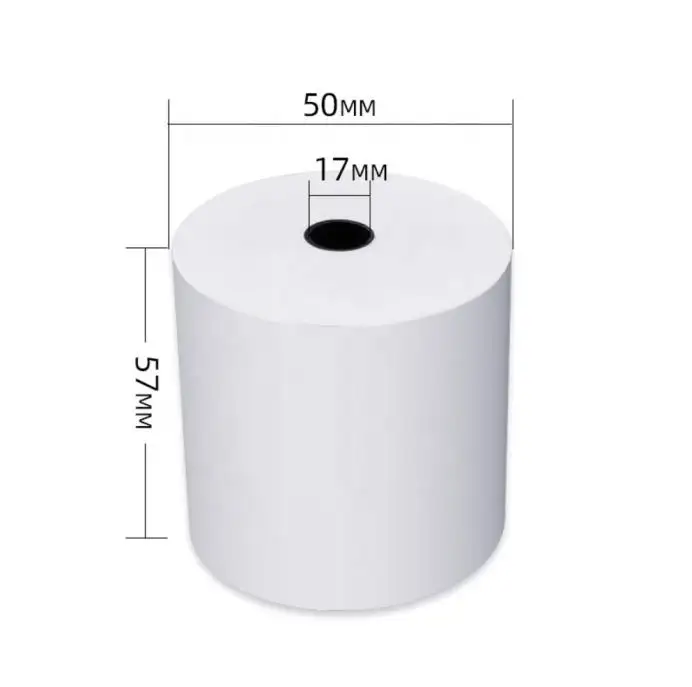
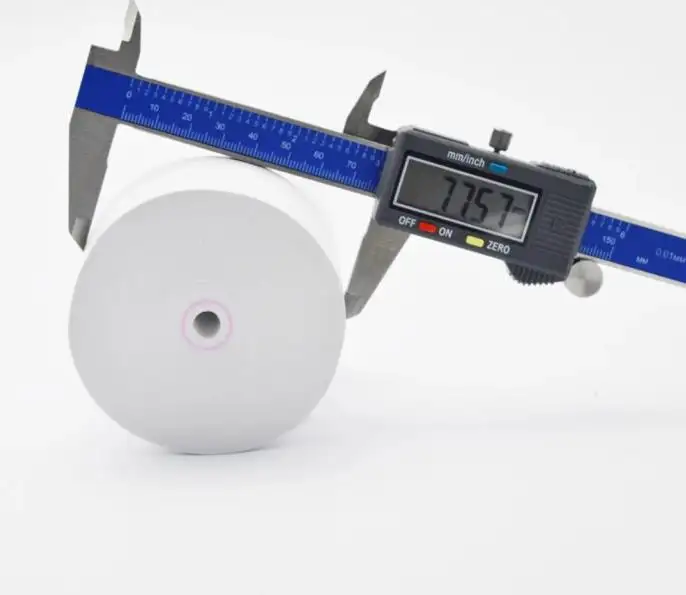
Most terminals take either 57 mm (2 1/4") or 80 mm (3 1/8") rolls. Width controls your layout - logos, return policies, QR codes, and long item lists - so match it to both your device and your preferred receipt design. Paper weight, measured in GSM, changes how the receipt feels and performs:
•Heavier papers (around 70 - 75 GSM) feel stiffer, resist crumpling, show less show-through, and present printed images with higher apparent contrast. They often scan better through sleeves and windows.
•Lighter papers (about 42 - 55 GSM) allow longer roll lengths, fewer changeovers, and smoother high-speed feeds - ideal for busy counters where uptime and speed are everything.
The thermal chemistry doesn't change with GSM, but the user experience does. If your receipts carry multiple barcodes, need archiving, or travel through mailers, lean heavier. If your throughput is king, use a lighter weight but pair it with a protective topcoat and an appropriate thermal grade.
What to Ask Your Supplier
Many organizations now specify BPA-free or phenol-free thermal paper to meet internal policies or local regulations. Modern topcoated grades can be both phenol-free and high performing, delivering strong image density and better fade resistance. When you compare vendors, request documentation confirming phenol-free formulations, and ask for a technical data sheet that details resistance to light, heat, humidity, and plasticizer migration. Certifications such as ISO 9001 (quality management) and ISO 14001 (environmental management) signal consistent manufacturing and responsible stewardship.
- Storage and Handling
Even the best Cash Register Till Rolls benefit from good care:
•Store rolls in a cool, dry area, away from direct sunlight, heaters, and HVAC outlets.
•Keep rolls sealed in their original wrap until use to limit humidity pickup.
•Avoid placing printed receipts under PVC or vinyl; choose archival-safe sleeves that won't leach plasticizers.
•Encourage staff to handle print areas with clean, dry hands - no lotion or solvent residue.
•Clean the thermal head on schedule and use smooth, low-dust paper to minimize abrasion and debris.
•Rotate stock (first-in, first-out) so older cases are used before newer deliveries.
- How to Test Before You commit: a Practical, Quick Trial
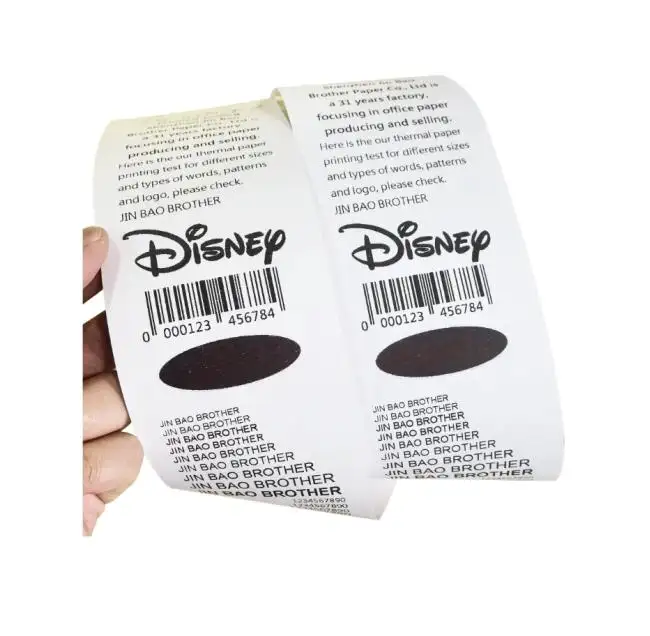
A one-week, real-world test beats any spec sheet. Ask suppliers for sample Cash Register Till Rolls that match your width and GSM, then run this checklist:
•Darkness at default settings: print solid blocks and fine text at your normal profile. Compare visual blackness and edge crispness without increasing heat.
•Barcode performance: print EAN-13 and Code 128 at your standard sizes, then scan with your POS scanners and a smartphone app. Note misreads.
•Smudge and rub resistance: rub gently with a dry thumb, then place a sample in a wallet or apron for a day. Check for transfer, ghosting, or loss of detail.
•Light and heat exposure: tape half-sheets near a window and place others by a warm register for 48 - 72 hours. Assess contrast and legibility afterward.
•Chemical splash: swipe a corner with a tiny amount of hand lotion and a separate corner with an alcohol-based cleaner. Inspect for discoloration or loss of image.
•Curl and feed: load a few rolls and watch for curling, sticking, or printer jams at speed, especially on lighter GSM.
Procurement Details that Keep Lines Moving
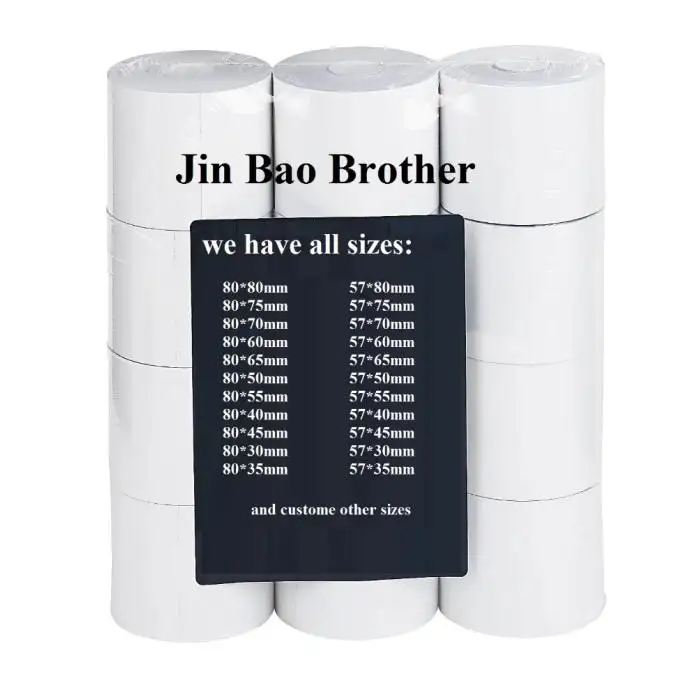
Paper specs are only half the story. Front-line resilience starts with a reliable supply chain. Source from factory-direct or closely managed wholesalers with predictable lead times and container MOQs to secure pricing. Fit logistics through EXW, FOB, or CIF. Preserve brand consistency with OEM/ODM services: customized packaging, branded cores, exact core size options (12.7 mm or 25.4 mm), and label design. Ask about perforation spacing, thermal side out/in, and roll length tolerances. Free samples, clear technical data, and responsive support signal a vendor that will stand behind their Cash Register Till Rolls when you scale.
- A Buyer's Short Checklist
•Specify topcoated thermal paper for environments with light, heat, frequent handling, or longer retention needs.
•Choose a high-sensitivity grade that prints dark at default settings to protect print heads and reduce service calls.
•Match width (57 mm or 80 mm) and GSM (roughly 42 - 75) to your devices and workflow priorities.
•Test samples for darkness, barcode reliability, rub resistance, exposure to light and heat, and feed behavior.
•Verify BPA-free or phenol-free chemistry if required, and check ISO 9001/14001 certifications.
•Align packaging, MOQ, roll length, and Incoterms with your rollout plan and replenishment cadence.
The Bottom Line and a Simple Next Step
If fading receipts are slowing checkout or undermining records, step up to topcoated, high-sensitivity Cash Register Till Rolls built on a smooth base sheet of 100% virgin wood pulp. That combination delivers dense, high-contrast text and dependable barcodes, cuts down on reprints, and reduces wear on the thermal head. Pick the specification that fits your terminals - 57 mm or 80 mm width and a paper weight between about 42 and 75 GSM - and prove it in your own environment before you commit.
Ready to see the difference? Request a sample set, print at your usual settings, and evaluate legibility after seven days of everyday handling. Ask about OEM/ODM, factory pricing, and delivery terms scaled to your network. With the right Cash Register Till Rolls, receipts stay clear from the counter to the archive, audits get easier, and queues get shorter - encouraging repeat business.
We'll Get Back Within 24 Hours
Related Articles
Cash Register Roll Quality Testing: 7 Technical Parameters Buyers Should Check
2026-09-30

Custom Carbon Copy Paper Technology | Jinbao Brother
2026-09-30
How Long Do A4 Thermal Paper Rolls Last? Image Durability and Storage Explained
2026-09-29
Eco-Friendly A4 Thermal Printing Paper: Sustainability Trends and Recyclability
2026-09-29
