



 Home / News & Events /
 -
Share
-

-

-

-

Updated 9 months ago
Top Multi-Scenario Use Cases for Label Sticker Jumbo Roll
admin
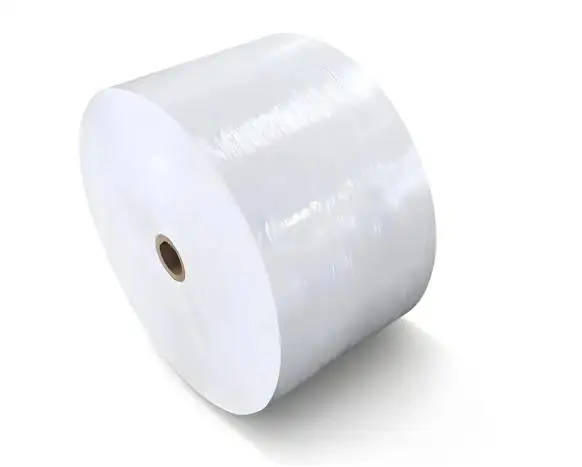
If you manage labels across multiple sites, you've seen how small inconsistencies can ripple into big problems: barcodes that won't scan, labels lifting in cold rooms, printers behaving differently from shift to shift. A well-spec'd Label Sticker Jumbo Roll changes that dynamic. Instead of juggling a dozen short rolls and materials, one master roll becomes the common platform for identification, compliance, and traceability - from the shelf edge to the loading dock to the lab bench. When adhesive, facestock, topcoat, and print method are matched to real operating conditions, a single Label Sticker Jumbo Roll can support diverse tasks without swapping base materials, reducing downtime, stabilizing print quality, and simplifying procurement.
Why a Label Sticker Jumbo Roll Pays Off at Scale
The biggest wins come from consistency. Long running length, uniform caliper, and tightly controlled conversion deliver predictable adhesion on varied substrates and stable imaging across teams, shifts, and locations. That uniformity keeps brand elements and variable data aligned, and it supports cost control by consolidating SKUs and tightening batch variability. With the right topcoat, barcodes withstand abrasion, moisture, and cleaners; imaging remains sharp and readable even under fast application. One materials platform can span retail, warehousing, manufacturing, and healthcare without sacrificing performance, making a Label Sticker Jumbo Roll a practical backbone for enterprise labeling.
Where a Label Sticker Jumbo Roll Delivers Immediate Value
- Retail and Omnichannel Execution
Retail moves fast, and clarity wins at the shelf and in the backroom. Jumbo programs drive high-volume shelf labels, price changes, and promotions with crisp contrast and fast application. For quick-turn tasks like daily markdowns, direct thermal is the straightforward choice. When labels need to go the distance - on apparel tags, storage bins, or inventory locations - thermal transfer adds the durability. Omnichannel fulfillment leaves no room for failure: pick tickets, shipping labels, and returns must remain legible from pack-out to doorstep. Smudge-resistant topcoats and adhesives matched to coated cartons or stretch wrap keep labels in place. Get the size right and you'll cut waste and improve scan rates across handhelds and fixed scanners.
- Logistics, Outbound Speed, and Cold Chain Protection
On the road and in the cold chain, reliability is everything. A label that peels mid-route creates exceptions and severs traceability. The Label Sticker Jumbo Roll with freezer-grade adhesive maintains grip in cold rooms and on frosted packaging. Stiff, flat liners are engineered for high-speed automatic applicators, and protective coatings guard barcodes from condensation, abrasion, and cross-dock handling. Cross-border freight adds marks and pictograms - strong contrast and durable topcoats ensure first-pass scans across varied hardware. Align unwind direction and label orientation with the applicator path to minimize jams and feed errors, boost throughput, and keep loading bays flowing.
- Manufacturing, WIP Visibility, and Durability
On the line, labels face heat, oils, and constant contact. A Label Sticker Jumbo Roll built with a compatible topcoat shields variable data from cutting fluids and cleaners. High-tack adhesives improve initial grab on low-surface-energy plastics and powder-coated metals, limiting edge lift. For small-diameter parts, a thinner facestock wraps cleanly and prevents flagging. Work-in-process tickets often blend barcodes, human-readable text, and process checks; sourcing jumbo rolls keeps adhesive and facestock uniform so scan performance doesn't drift between cells, shifts, or plants. That stability supports SPC targets and audit readiness.
- Healthcare, Safety at the Bedside, and Chain-of-Custody
When identification fails in clinical settings, risk rises. A medical-grade Label Sticker Jumbo Roll must hold precise, small-font printing without feathering. Adhesives should secure to vials, syringes, and cold storage gear without residue. Smooth, clean-release liners keep particulates down in controlled areas. Use alcohol-tolerant topcoats for tube labels, and soft, conformable facestocks for wristbands and pharmacy labels so they stay readable through frequent disinfecting. Standardizing jumbo materials across wards, labs, and pharmacies boosts legibility, cuts relabels, and protects chain-of-custody.
Selecting the Right Build for Your Label Sticker Jumbo Roll
Consider surface energy, environment, and print method. Configure each material layer for the most severe condition in your process.
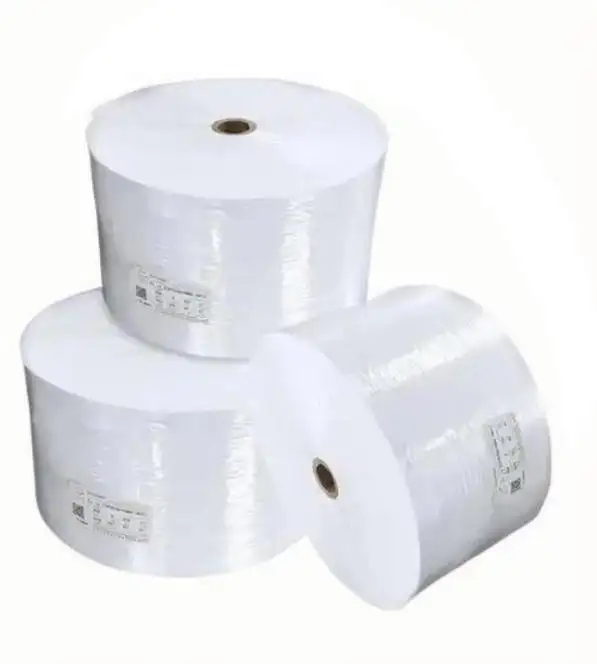
- Adhesives:
•Permanent acrylic: dependable adhesion on cartons, corrugate, and general packaging.
•Removable: suited to promotions, QA holds, and rework when residue-free removal matters.
•Freezer-grade: keeps tack in cold rooms, rapid freeze, and on frosted films.
•High-tack: increases initial bond on LSE plastics and powder coats; useful on textured substrates.
•Healthcare-specific: optimized for curved vials and resistant to disinfectants.
- Facestocks and Coatings:
•Direct thermal: use a heat-sensitive layer with a protective topcoat where oils, moisture, or abrasion are present.
•Thermal transfer: match ribbon to durability needs - wax (paper, short life), wax-resin (better abrasion), resin (chemical/heat resistance on synthetics).
•Overlaminates: add scuff and chemical resistance but increase thickness; verify your applicator can handle the stack-up.
- Liners:
•Glassine: smooth release for high-speed dispensing and reliable die-cutting.
•PET: dimensional stability for tight gaps, narrow labels, and precise tracking in automation.
•Balance release to your dispense speed - too light drops early; too tight stresses blades.
- Size and Winding:
• Confirm core size, maximum OD, unwind direction, and wind pattern for each printer/applicator.
• Align label pitch to sensor type (gap, black mark, notch) and set tight die-cut tolerances for auto-apply or multi-lane feeds.
- Printers:
•Direct thermal: fast, simple, ideal for short-life labels.
•Thermal transfer: long-term readability, superior chemical and abrasion resistance.
•Inkjet: enables color coding and GHS icons when the facestock is ink-receptive.
•Calibrate darkness, speed, and heat to protect printheads and keep barcode grades high.
Always trial on the real surface, at the coldest or hottest point in the process, with the actual cleaners and handling steps. A short pilot prevents expensive surprises and confirms that your Label Sticker Jumbo Roll holds up under the worst conditions you'll encounter in production.
Pairing Label Sticker Jumbo Roll programs with NCR Multi-Copy Forms
Many workflows need both a rugged label and a verified paper trail. Pairing a Label Sticker Jumbo Roll with NCR multi-copy forms delivers one-touch capture and consistent records without separate carbon sheets. NCR sets use a 2 - 3 ply structure (CB + CFB + CF) of premium carbonless paper for instant, clean duplicates. Sizes, colors (such as white + pink), and ply counts are customizable for POS receipts, cash registers, manufacturing travelers, and logistics documents.
- Integration Scenarios:
•At the dock: Print the pallet label and the signature-ready NCR pack together - clean handoffs, zero rekeying.
•On the line: A tough label plus an NCR traveler keeps each checkpoint aligned on the same data.
•In the lab: Specimen labels and multi-part forms carry patient/test info flawlessly from draw to result.
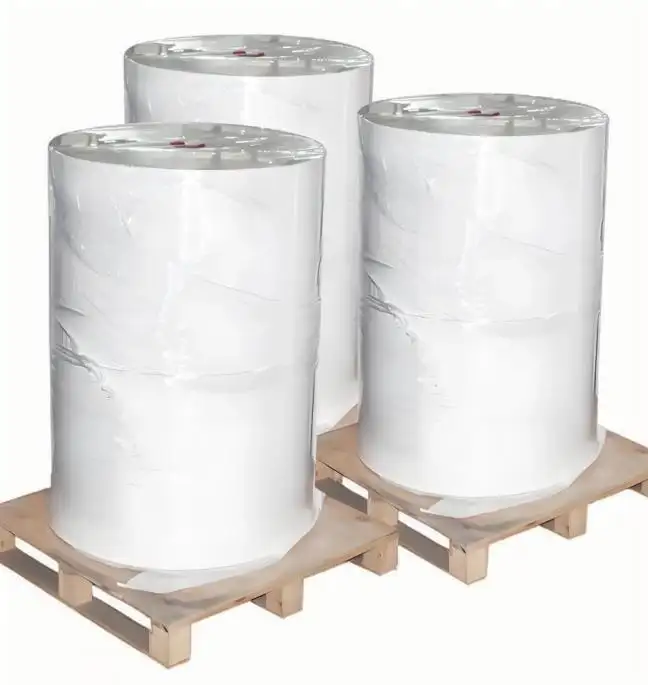
- Benefits:
•Single-pass simplicity: One print, consistent data everywhere.
•Reliable scanning: Tuned settings deliver crisp barcodes across every surface.
•Audit confidence: Paper trails match the system, so audits finish faster.
- Quality Controls and Rollout:
•Great materials need great process - plan storage, setup, and verification.
•Storage and conditioning: Stabilize environment and acclimate stock before printing and applying.
•Storage and conditioning: Hold materials in controlled environments; allow time to reach room conditions before use. Let rolls acclimate when moving from cold rooms to warm pack areas to curb curl, liner waves, and print variability.
•Surface preparation: Dust, oils, and mold release agents weaken bonds. Simple wipe-down SOPs raise first-pass yield.
•Winding, sensors, and marks: Applicators depend on exact unwind direction and mark placement. Verify diagrams and inspect incoming rolls to avoid skew and misfeeds.
•Static buildup: High-speed dispense creates static that attracts dust and disrupts placement. Ground equipment, manage humidity, and consider anti-static liners.
•Barcode integrity: Over-dark images, low contrast, or poor ribbon pairing degrade scans. Validate with an ISO-grade verifier, not only a handheld device.
•Chemical exposure: Alcohol and disinfectants can attack inks and some coatings. Choose tested topcoats and set wrap overlap on curved vials to prevent flagging.
- Deployment Checklist for a Label Sticker Jumbo Roll Program:
•Define surfaces, temperatures, and exposures (chemicals, abrasion, UV).
•Select facestock, topcoat, and adhesive for the worst-case scenario.
•Match core, OD, unwind, pitch, liner, and die-cut tolerance to equipment.
•Run on-press trials at production speeds with real artwork.
•Verify barcode grades and legibility using a verifier.
•Pilot on the line; capture failure modes and correct before scaling.
•Train operators on storage, handling, cleaning, and inspection.
Take the Next Step
Want the same reliable labels everywhere and less rework? Connect with our experts for a simple evaluation and sample test. We'll set up a Label Sticker Jumbo Roll plan with a custom NCR multi-copy option, choosing the right materials and printers to last longer, cost less, and make everyday tasks easier and faster.
We'll Get Back Within 24 Hours
Related Articles

Cash Register Roll Quality Testing: 7 Technical Parameters Buyers Should Check
2026-09-30

Custom Carbon Copy Paper Technology | Jinbao Brother
2026-09-30

How Long Do A4 Thermal Paper Rolls Last? Image Durability and Storage Explained
2026-09-29
Eco-Friendly A4 Thermal Printing Paper: Sustainability Trends and Recyclability
2026-09-29
