



 Home / News & Events /
 -
Share
-

-

-

-

Updated 8 months ago
Label Stickers For Packaging (2026): Waterproof, Oil-Proof Basics
admin
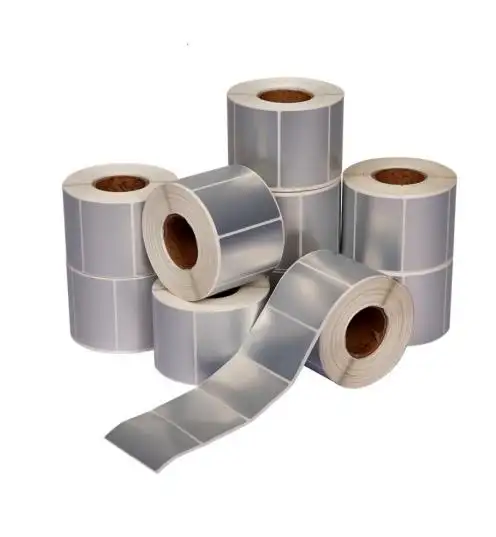
Label Stickers for Packaging in 2026 are no longer "just labels." They are tiny working parts inside a much bigger shipping system—because they carry addresses, barcodes, tracking IDs, and handling notes that must remain readable from the pick line to the doorstep. At Jin Bao Brother, we manufacture adhesive thermal waybill label solutions for high-frequency operations, and we see one truth again and again: when a label fails, the loss is not the sticker. The real cost is the delay, the reprint, the reshipment, and the customer complaint that follows.
This guide is written in a practical, beginner-friendly way. It explains what "waterproof and oil-proof" actually means in daily logistics, how material grade affects legibility, why adhesion should be treated like a system, and how to lock a stable specification that keeps scanning fast and exceptions low.
Understand What "Waterproof, Oil-Proof" Really Means in 2026
Many buyers hear "three-proof" or "triple protection" and assume it is simply marketing language. In real logistics workflows, it is closer to insurance for readability. A shipping label has one job: keep the printed data intact while the parcel gets bumped, dragged, taped, stacked, scanned, and delivered.
Think about what a parcel experiences on a normal route: conveyor belts, packing tape friction, rain or condensation, warehouse dust, light oil or grease from handling zones, and repeated scanning at different angles. If the coating is weak, print can smear, the top layer can scuff, and barcodes become harder to read. That is why a waterproof, oil-proof, scratch-resistant surface matters—not as a slogan, but as a way to reduce preventable exceptions.
✅ Cleaner scans with fewer manual re-entries
✅ Less surface damage from rubbing, dust, or small spills
✅ More stable presentation on brand-facing shipments
For Label Stickers for Packaging, the coating choice should match the reality of your handling environment. A calm office packing desk and a busy 3PL warehouse do not punish labels in the same way.
Start With the Right Material: Direct Thermal Paper Basics
Most shipping labels today are direct thermal labels. That means the printer forms an image with heat—no ink cartridge, no ribbon. It is fast, simple, and cost-efficient, which is why it dominates eCommerce fulfillment, courier operations, and 3PL work.
But there is a trade-off that beginners sometimes miss: direct thermal paper is sensitive to heat, light, and certain chemicals. Durability does not begin after printing. It begins before printing—during storage and handling.
A practical rule is to plan around your "label life cycle." If a label only needs to survive the delivery window, you can focus on cost efficiency and strong scanning performance during transit. If the label must remain readable for returns, warranty tracking, or internal records, you should step up to a higher-grade face stock and a stronger protective coating.
At Jin Bao Brother, we help buyers match face stock grade to cycle time. The goal is not to overspend. The goal is to choose a label that stays readable for as long as your operation needs it to stay readable—no longer, no less.
Size and Layout: Why 4"×6" Is Popular, and When Custom Wins
Size is not only a dimension. It decides whether the label "works" with your cartons, poly mailers, and sorting flow. In many markets, 4"×6" is popular because it balances address readability, barcode scan space, and compatibility with common shipping label printers. We also supply 100×150 mm and 100×100 mm formats, and we support customization when your packaging or layout requires it.
A practical way to choose size is to work backward from scanning needs:
• Barcodes need clean "quiet zones" around them.
• Tracking numbers need readable font size, not tiny compressed text.
• Handling icons need contrast and enough space to stay clear.
If everything is squeezed into a label that is too small, the information may technically fit, but scan rate can drop in real handling conditions. That is where delays start—one unreadable barcode becomes a manual check, then a reprint, then a backlog.
✅ Use 4"×6" for mainstream courier and eCommerce shipping
✅ Use 100×100 mm for compact cartons and retail logistics
✅ Choose custom sizes when packaging shape forces a unique placement
We also support custom printed label formats, where a brand mark, warning note, or standard instruction is printed consistently so your team does not rely on manual stamping or extra stickers.
Adhesion Is a System: Permanent, Removable, and Freezer-Grade Options
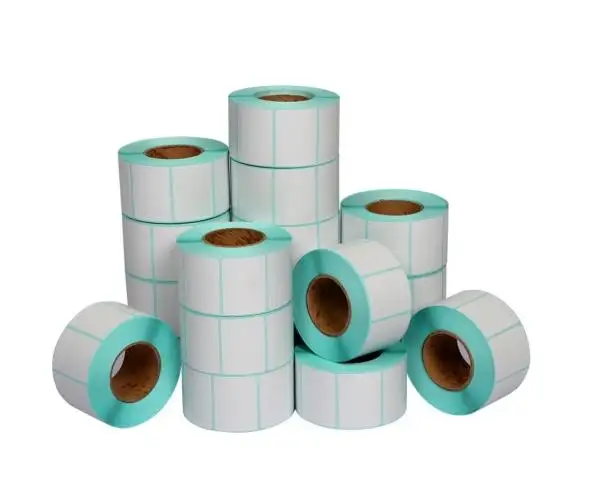
Many label problems are not print problems. They are adhesion problems. A label that lifts at the corner becomes vulnerable fast: it folds, collects dust, rubs against other parcels, and the printed area gets damaged. Once the label surface is compromised, scan performance drops.
That is why we suggest thinking about adhesive as a system, not a single feature. For Label Stickers for Packaging, the right adhesive depends on surface type (kraft carton, poly mailer, PE bag, plastic tote), temperature, and how long the label must stay attached.
In 2026 operations, most use cases fall into three adhesive "jobs":
✅ Permanent adhesive: strong bonding for cartons, poly mailers, and rough handling
✅ Removable adhesive: clean removal for retail, temporary labeling, short campaigns
✅ Freezer-grade adhesive: designed for cold chain and medical use down to -20°C / -4°F
Cold environments are a common trap. Standard adhesive can harden and lose grip. The label may look fine during application, then fail after chilling. On the other side, retail relabeling has the opposite issue: permanent glue can leave residue that creates cleanup work and complaints.
If you want fewer exceptions, match adhesive to the reality of your surface and temperature—not to generic assumptions.
Where Label Stickers for Packaging Work Best Across Industries
Thermal labels are popular because they are fast, widely compatible, and easy to standardize. Our customers use them as daily tools across a wide range of workflows:
• Logistics & Shipping
Address labels, waybills, tracking IDs, and handling notices for eCommerce sellers and 3PL companies.
• Retail & Supermarkets
Price labels and barcode tags that keep scan rates high across checkout lanes and inventory guns.
• Foodservice & Cold Chain
Cold-room labels and shipping tags that resist moisture and stay stuck in low temperatures and condensation-heavy handling.
• Warehouse & Manufacturing
Location markers, batch tracking labels, and raw-material IDs designed for rough touch, dust, and light grease exposure.
• DIY, Crafts & Home Organization
Storage labels and craft stickers that apply cleanly, peel smoothly, and keep layouts tidy for daily use.
Across all these scenarios, the success metric is the same: the label must stay attached and readable long enough to finish the job. That is the real definition of "quality" for Label Stickers for Packaging.
Practical Ordering, Compatibility, and a Simple Next Step
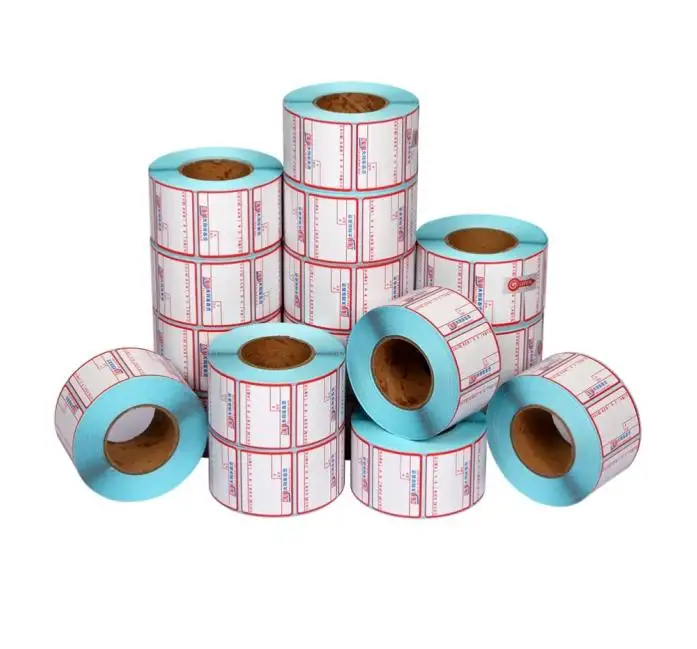
The fastest way to reduce purchasing risk is to confirm compatibility, then lock a stable specification. Our thermal waybill labels are designed for mainstream direct thermal printers, and buyers often use them with common brands such as Zebra, Epson, Bixolon, and Star Micronics. Many operations also care about popular shipping-label models (for example, 4-inch desktop printers used in warehouses), because alignment and feeding stability are just as important as print darkness.
From a procurement point of view, we keep ordering practical for growing programs. Our standard MOQ is 5,000 rolls, which works well for wholesalers, distributors, and expanding eCommerce fulfillment teams looking for steady replenishment without excessive inventory pressure.
To speed up sourcing and reduce spec mistakes, confirm these items first:
✅ Confirm label size (4"×6", 100×150 mm, 100×100 mm, or custom)
✅ Describe the environment (standard, dusty, oily warehouse, cold chain)
✅ Choose adhesive type (permanent, removable, freezer-grade)
✅ Share printer model and layout needs (barcode, address, handling notes)
CTA: Want fewer scan failures and fewer peel-up issues? Message Jin Bao Brother with your size, printer model, and how you use the labels. We’ll recommend a dependable Label Stickers for Packaging spec, get samples ready for testing, and help you standardize so your team spends less time troubleshooting and more time shipping.
We'll Get Back Within 24 Hours
Related Articles
Cash Register Roll Quality Testing: 7 Technical Parameters Buyers Should Check
2026-09-30

Custom Carbon Copy Paper Technology | Jinbao Brother
2026-09-30
How Long Do A4 Thermal Paper Rolls Last? Image Durability and Storage Explained
2026-09-29
Eco-Friendly A4 Thermal Printing Paper: Sustainability Trends and Recyclability
2026-09-29
