



 Home / News & Events /
 -
Share
-

-

-

-

Updated 5 months ago
BPA-Free Thermal Paper What Buyers Should Know | Safety Guide
admin
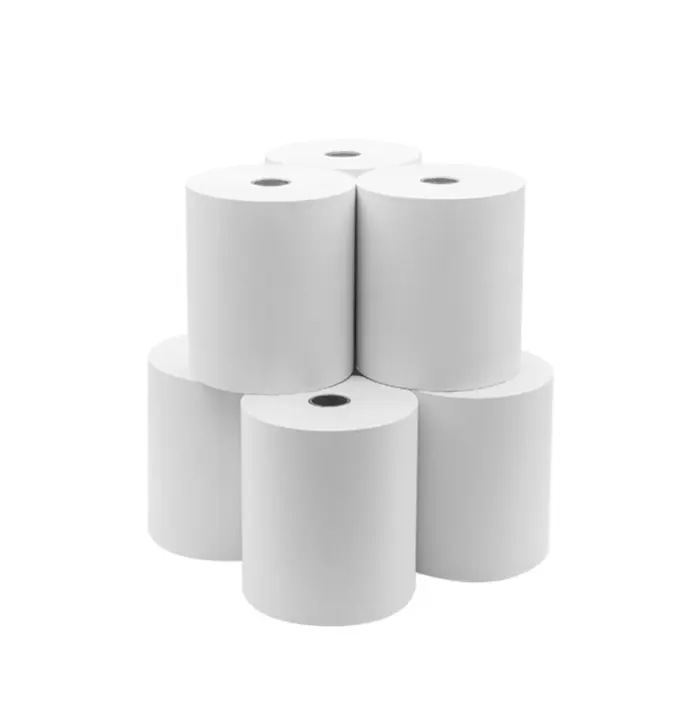
What is BPA-Free Thermal Paper?
BPA-free thermal paper is a kind of heat-sensitive paper material that is designed to be directly thermal printed without the use of Bisphenol A (BPA). Instead, it uses BPA replacement compounds or phenol-free thermal paper technology to create images when exposed to heat. In simple terms, it is a safer option than the conventional thermal paper, which is utilized in receipts, labels, and barcode printing.
The most important semantic comprehension is:
- A free thermal paper structure
- coating on receipt paper, without chemicals.
- direct thermal printing paper safety standards.
- non-toxic thermal roll of paper to be used in retail.
Unlike traditional thermal paper, BPA-free versions do not have the problems of using endocrine-disrupting chemicals in paper, and are therefore safe to be used in the long-term in the environment.
BPA-Free Thermal Paper: What Buyers Should Know: Complete Guide
Free of BPA thermal paper is emerging as a significant change in the contemporary printing sector. Retail receipts, logistics labels, and other business materials are shifting towards safer and more sustainable materials. However, many buyers continue to pose some crucial questions, such as what BPA-free thermal paper is, whether BPA-free thermal paper is safe, and how it performs in real-world POS systems.
How BPA-Free Thermal Paper Works
The principle of operation is founded on a thermal coating formulation that is used on the paper surface. When the coating is exposed to heat by a thermal print head, the coating reacts and forms visible text or images.
Core process includes:
- Color developer is activated by a heat reaction.
- Microcapsules in coating fracture with temperature.
- The dye and developer mix instantly.
- The image is stuck on the surface.
This is part of the phenol-free thermal paper technology, whereby safer chemical alternatives are utilized in place of BPA-based systems.
Important technical terms:
- thermal coating chemistry
- homogeneity of coating in thermal rolls.
- thermal sensitivity rating
- permanence and fading resistance of images.
The outcome is a clean, sharp print utilized in POS receipt printing paper and logistics barcode printing systems.
Technical Composition of BPA-Free Thermal Paper
Experience of the structure helps buyers to determine quality.
1. Top Coating Layer
• Controls image clarity
• Increases the abrasion resistance of the receipts.
• Improves the compatibility of print heads.
2. Thermal Layer
• Has BPA substitute coatings in thermal paper.
• Responds to heat and produces images.
• Guarantees barcode readability and stability.
3. Base Paper
• Usually FSC certified paper sourcing
• Provides strength and durability
• Impacts the shelf life of thermal paper rolls
Performance factors:
• paper caliper and sensitivity levels.
• degree of smoothness and brightness.
• thermal paper resistance to humidity.
These are the factors that will determine how well BPA-free POS thermal paper will perform in the daily business operations.
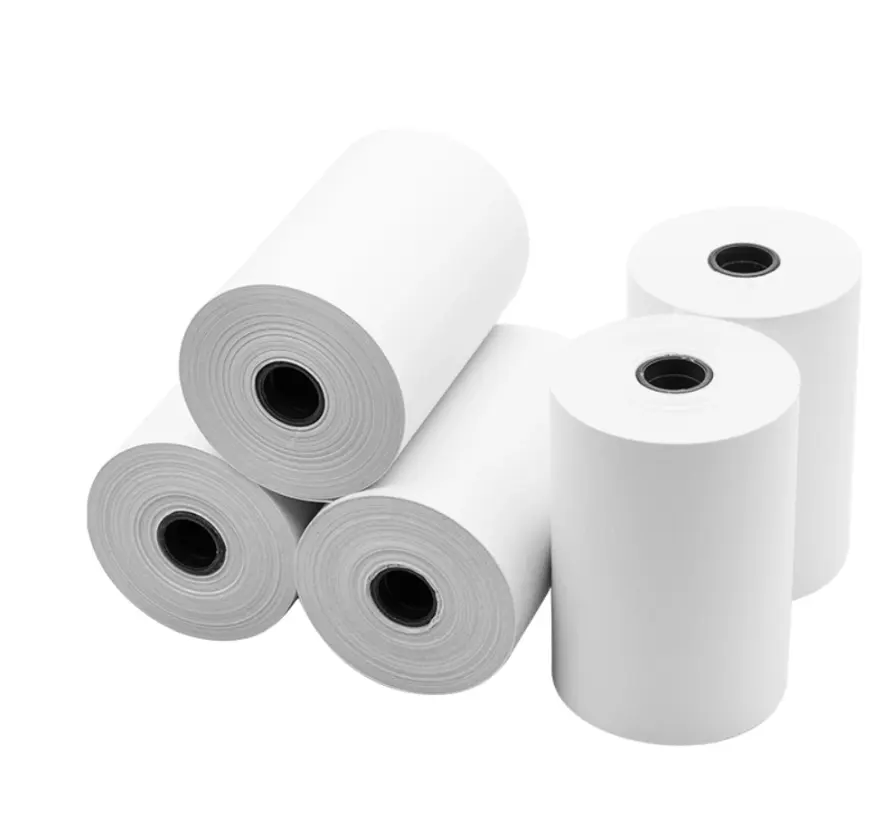
Safety and Compliance Standards
One of the biggest reasons for switching is safety compliance. BPA-free paper regulations are concerned with:
- reducing the risk of exposure to chemicals.
- Limiting the exposure to BPA in receipts.
- improving the environmentally safe receipt paper requirements.
Key safety advantages:
- Fewer health risks of BPA thermal paper.
- improved safety in the treatment of retail workers.
- reduced environmental contamination
The numerous manufacturers of BPA-free thermal paper now adhere to ISO certified paper production and stringent thermal paper chemical safety standards to respond to the global requirements.
How to Choose BPA-Free Thermal Paper
Are you comparing suppliers? Here is a convenient BPA-free thermal paper purchase guide.
Check these factors:
1. Print Quality
- sharp image clarity
- good image fade resistance.
- stable barcode readability
2. Durability
- resistance to humidity and heat
- Thermal paper rolls can be stored on the shelf for a long time.
- high abrasion strength of receipts.
3. Compatibility
- print head compatibility
- with POS systems.
- support for logistics barcode printing
4. Certification
- Paper sourcing FSC certified.
- Paper production that is certified by ISO.
- compliance with BPA-free paper policies.
An excellent supplier ensures the consistency of the quality of the coating and the absence of problems with the production standards.
Use in POS and Logistics Systems
BPA-free thermal paper is highly sought after in industries, and BPA-Free Thermal Paper What Buyers Should Know is discussed below.
Retail & POS Systems:
- point of sale (POS) receipt printing paper.
- thermal paper cash register.
- durability needs of retail receipts.
Logistics & Warehousing:
• compatibility thermal paper shipping label.
• warehouse labeling solutions
• readability and stability of barcodes.
Rolls of thermal receipt paper are BPA-free.
• Direct thermal labels that are free of BPA.
• Fanfold thermal paper BPA-free.
• Thermal paper BPA-free shipping label.
This is one of the reasons why it is a favorite among the modern supply chains.
Manufacturing & Quality Control
A process of controlled thermal paper production is behind each roll. Key manufacturing elements:
• Manufacturing systems of OEM thermal paper.
• uniformity of coating in thermal rolls.
• chemical accuracy of thermal coating chemistry.
Manufacturers of high-quality BPA-free thermal paper have stringent production controls to maintain uniformity.
Certifications often include:
• Certified paper production that is certified by ISO.
• Paper sourcing FSC certified.
• green printing materials standards.
Environmental and Health Impact
Substituting alternatives that are free of BPA, it will assist in the realization of sustainability goals.
Environmental benefits:
- thermal paper solutions that are recyclable.
- more environmentally friendly BPA paper.
- Improvement of the green printing supply chain.
Health benefits:
- decreased exposure to BPA on receipts.
- safer substitutes for paper that are not toxic.
- decrease the number of endocrine-disrupting chemicals in paper.
Several environmentally friendly thermal paper producers have now turned their focus to environmentally friendly packaging materials to assist in meeting the global environmental objectives.
Businesses are Switching to BPA-Free Thermal Paper
The contemporary industries are more inclined to use safer and cleaner materials.
Main reasons include:
• seller safety standards of thermal paper to customers.
• growing eco-friendly regulations
• improved customer trust
• better environmental compliance
• fewer chemical hazards in everyday use.
Businesses are also interested in print clarity and image stability, and modern BPA-free materials are now able to offer.
Product Insight: Wood-Free Thermal Paper Rolls
Wood-free alternatives are also gaining popularity among customers who are looking for premium alternatives.
These products offer:
• strong durability
• stable print quality
• eco-conscious material sourcing
• linkage with POS systems.
They are applied in combination with BPA-free solutions in environmentally friendly printing environments.
Conclusion
BPA-Free Thermal Paper: What Buyers Should Know is discussed in this article. The printing industry in the world is evidently shifting to safer and more sustainable materials. Not only is it a trend, but a needed evolution, BPA-free thermal paper necessitated by health awareness, environmental responsibility, and modern business efficiency.
Being aware of what buyers should know about BPA-free thermal paper would enable businesses to avoid risks and to use smarter materials to achieve long-term success. Should you be interested in changing your printing supply chain with reliable and eco-friendly materials, Jin Bao Paper is there to help you along your way with trusted quality and global supply capability.
We'll Get Back Within 24 Hours
Related Articles
Cash Register Roll Quality Testing: 7 Technical Parameters Buyers Should Check
2026-09-30

Custom Carbon Copy Paper Technology | Jinbao Brother
2026-09-30
How Long Do A4 Thermal Paper Rolls Last? Image Durability and Storage Explained
2026-09-29
Eco-Friendly A4 Thermal Printing Paper: Sustainability Trends and Recyclability
2026-09-29
