



 Home / News & Events /
 -
Share
-

-

-

-

Updated 7 months ago
What Makes High Quality Thermal Paper Roll A Smart Choice For Business
admin
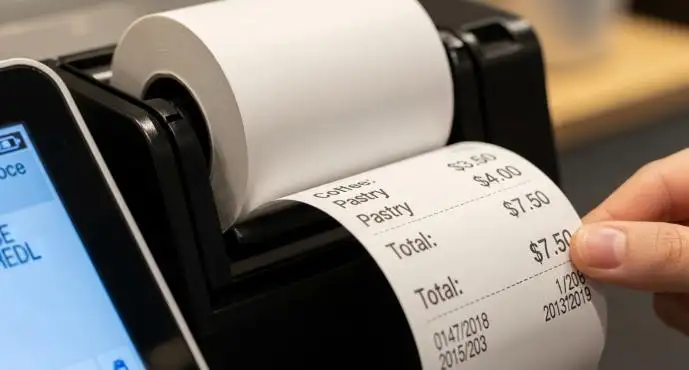
Receipt paper is often treated as a routine purchasing item, yet many businesses only notice its real value after problems appear. Faded print, paper dust, printer jams, coating inconsistency, and customer complaints can all start from one weak point in the supply chain: poor paper quality. For overseas buyers, chain stores, wholesalers, and merchants managing daily transactions, that risk is not small. A low-grade roll may look acceptable at first, but it can create repeat replacement costs, shorten printer life, and affect the image a business presents at the counter. That is why choosing a High Quality Thermal Paper Roll is not only a purchasing decision. It is also an operational decision.
Why Material Quality Matters From the Start
A thermal paper roll performs well only when its material structure is reliable. Several material and production details influence printing performance, such as the base paper, thermal layer, smoothness, thickness, and winding quality. If one detail is not well controlled, the overall roll can become less reliable.
A High Quality Thermal Paper Roll should provide:
• Clear and dark printed images
• Smooth operation inside the printer
• Reduced dust generation to limit printhead wear
• Stable image readability in storage and transport
• Consistent roll size and length across repeat purchases
For high-volume sourcing, this kind of consistency is especially critical. One shipment should match the next. If paper quality changes from batch to batch, retail operations, restaurant counters, and self-service payment points can all be affected.
Jin Bao Brother places strong focus on production control so that customers receive more uniform performance in each order. This helps distributors and commercial users reduce uncertainty in daily operations.
Certifications and Chemical Safety Are Essential
Today, buyers in North America, Europe, and many other markets pay close attention to compliance. Thermal paper is no longer judged only by print darkness. Chemical safety and manufacturing standards also play a major role in supplier evaluation.
A dependable supplier should be able to support key compliance expectations such as:
• ISO9001 for quality management
• ISO14001 for environmental management
• BPA-free and BPS-free material options
• RoHS and REACH compliance for regulated markets
• Third-party testing support when required
These points matter for more than documentation. They help buyers control import risk, respond to customer expectations, and create greater confidence in the products they distribute or use.
Jin Bao Brother offers thermal paper solutions designed around global market requirements. For hospitality, retail, supermarkets, and food-service buyers, safer material standards are becoming a practical advantage rather than an added option.
Size, GSM, and Specification Matching Affect Daily Efficiency
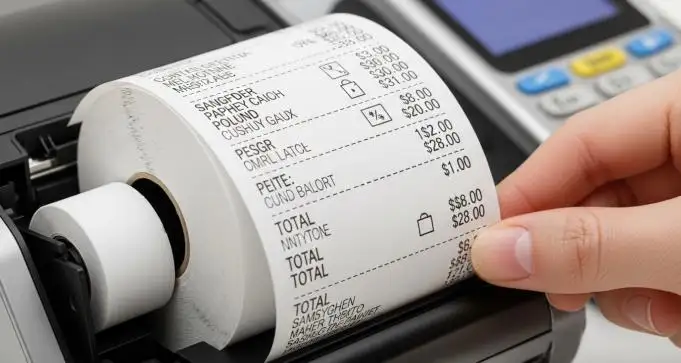
Even good paper can create problems if the size or specification does not match the printer. Width, diameter, core size, and paper weight must align with the equipment in use. Otherwise, businesses may face feeding errors, incomplete prints, or wasted stock.
Common thermal paper roll specifications include:
• 57 mm width for compact payment devices
• 80 mm width for regular POS systems and receipt printers
• A range of roll lengths for varying transaction volumes
• Different GSM levels for cost balance and paper quality
In many markets, lighter GSM paper may be a practical choice for short-duration receipts and high-speed retail use. Heavier paper often provides a firmer feel, stronger opacity, and a better visual impression for restaurants, hotels, and service counters where receipt presentation matters more.
Jin Bao Brother supports a wide specification range for different POS systems and market needs. This helps importers and resellers serve mixed customer groups with greater flexibility.
Coating Uniformity and Printer Compatibility Define Real Performance
Many buyers judge thermal paper only after it reaches the printer. This is where real quality becomes visible. Uneven coating can lead to patchy images, weak barcodes, inconsistent darkness, or faded text. Rough surfaces and excess lint may also damage thermal printheads over time.
A High Quality Thermal Paper Roll should deliver a coating layer that is uniform in application, quick to respond, and dependable during routine printing. The paper surface should remain smooth enough for clean thermal transfer while avoiding excess debris.
This brings several business advantages:
• Sharper printing for receipts and barcodes
• Better readability for returns, audits, and records
• Lower maintenance pressure on printers
• Reduced paper curl during use
• Fewer interruptions at the checkout counter
Jin Bao Brother focuses on coating consistency and printer-friendly performance. For buyers, this helps ensure more dependable compatibility with common cash registers, POS terminals, and thermal printing systems.
OEM and Branding Support Create Added Business Value
For many merchants and distributors, the receipt is not only a transaction document. It is also part of the customer experience. Custom printed thermal paper can support brand visibility, promotional messaging, and stronger product identity in a competitive market.
As a manufacturing partner, Jin Bao Brother provides OEM and ODM support for customers looking for more than standard stock rolls. You can customize your order in the following ways:
• Design of custom packaging
• Branding for private labels
• Choosing a core type
• Options without cores
• Change the length of the roll
• Logos or brand elements printed
• Customizing the outside of the box
Wholesalers, supermarket suppliers, hospitality distributors, and brand owners who want to be more visible in the market will find this flexibility helpful. Instead of buying a product that can be used with other products, they can build a more recognizable supply program around it.
Why Better Paper Is Worth the Money in the Real World
Different industries use thermal paper in different ways, but they all need printouts that are reliable.
In retail, receipts must be easy to read so that returns, exchanges, and warranty claims can be made. Printing quickly makes things run more smoothly in hotels and restaurants. Stable barcode clarity makes it easier to keep track of things in logistics. Long-lasting print quality helps banks and self-service kiosks keep track of transactions.
A better thermal paper solution can help:
• Making transactions go faster
• It's cleaner to scan barcodes.
• Better keeping of records
• Less stress on equipment
• Better experience for the end user
This is where the quality of a product directly affects how well a business does. People who buy things aren't just buying paper. They are buying smoother operations.
In Conclusion
Not only is the print quality different between regular receipt paper and a High Quality Thermal Paper Roll. Its value also extends to equipment protection, compliance preparation, order consistency, and customer presentation. For companies aiming to avoid unnecessary disruptions and achieve stronger cost performance, thermal paper selection deserves closer attention.
Jin Bao Brother supports buyers with dependable quality, flexible customization, standards-based manufacturing, and efficient export coordination. Instead of standing out only through pricing, we focus on delivering the reliability global businesses expect from a thermal paper partner.
We'll Get Back Within 24 Hours
Related Articles
Cash Register Roll Quality Testing: 7 Technical Parameters Buyers Should Check
2026-09-30

Custom Carbon Copy Paper Technology | Jinbao Brother
2026-09-30
How Long Do A4 Thermal Paper Rolls Last? Image Durability and Storage Explained
2026-09-29
Eco-Friendly A4 Thermal Printing Paper: Sustainability Trends and Recyclability
2026-09-29
