



 Home / News & Events /
 -
Share
-

-

-

-

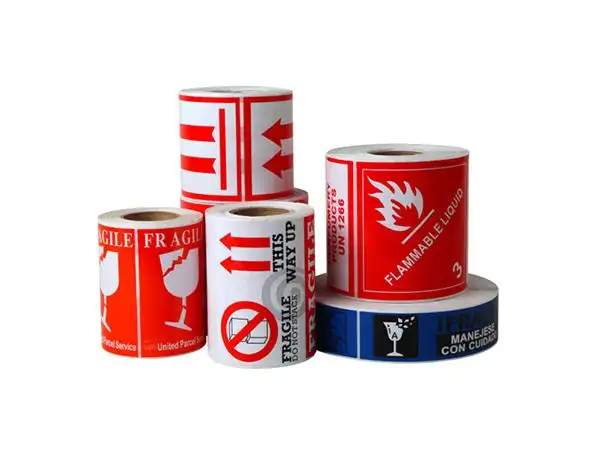
Custom label printing is expected to experience rapid growth in the coming years. One driver of the predicted industry growth will be changes in technology. Innovations in laws and consumer habits will also be key factors. The Global Label Printing Market was worth USD 55.07 billion in 2025 and is forecasted to reach USD 89.51 billion in 2032. The growth of this market indicates that Custom Label Printing for Businesses will continue to gain traction and further investment as required. The five major trends forecasted to affect the Custom Label Printing industry in 2026 are discussed below.
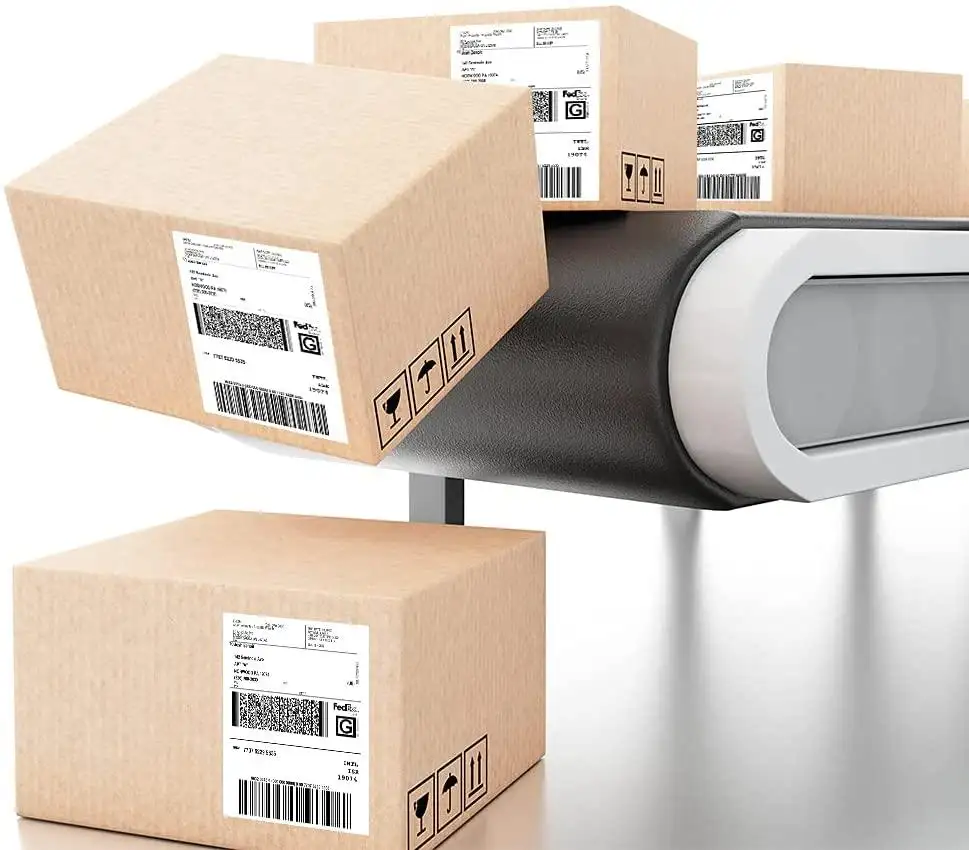
1. The Dominance of Digital Printing
In 2026 and beyond, the leader in technology by a significant margin will be Digital Printing. The dominance of Digital Printing is due to the technology's speed and cost effectiveness, especially for custom labels and, more notably, for the Ink Jet Digital Color Printing.
Why are these factors so significant?
- Now, Short Run Printing is practical. For Digital Printing, there is no need to create printing plates for each run. Print run changeovers for Digital printing are in the 5 to 10 minute range, whereas traditional Flexo printing takes 45 to 90 minutes.
- Additionally, Variable Printing is now much simpler. With Digital Printing, the introduction of important variable elements (e.g. codes, graphics, and text) can be done easily and without interruption. This enables rapid changeovers to serve different packaging requirements.
- Agility and responsiveness : For mid-size converters, digital production of labels sits at about 20-30% of total production with the number rising to 35-45% in e-commerce dominant sectors. This trend relates to the growing market imperative of variability and speed.
For those companies considering Custom Label Printing for Businesses, digital production results in smaller minimum order quantities, quicker production cycles and the ability to spend less on inventory to test various regional and/or seasonal SKUs.
2. Sustainability: Required, Not Optional
No company should consider its sustainability promise as a marketing tactic. From 2026 onwards, we will see the introduction of new laws as well as changes in consumer preferences. As a result, sustainability will be integrated into custom label printing.
Some recent innovations that are on the forefront of sustainability are:
- Sustainable substrates: Labels are now being created which consist of 100% recycled paper. Also, algae-based UV flexo inks are negative carbon footprint, therefore, are carbon neutral as well.
- Sustainability and Law: A new EU law on Packaging and Packaging Waste (PPWR) will require EU member states to act by August 2026. 2030 will show labels that will make 70% of EU Packaging Fully Recyclable.
- Design for recycling: Businesses can help build a circular economy by creating labels that are easy to remove for recycling.
As regulations on packaging continue to be unpredictable and change rapidly, companies that offer custom label printing will need to comply and adopt a packaging approach with recyclable and sustainable materials. These companies must partner with suppliers using actual sustainable materials.
3. Smart Labels Change Packaging to Digital Portals
Passive carriers of packaging information are changing to touchpoints that initiate digital interactions. By 2026, smart labels will dominate packaging and integrate various bridging technologies that connect the physical and digital environments.
The smart label revolution includes:
- QR codes and NFC tags for consumer interaction: Consumers will be able to access product information and verification, instruction and promotional content just by scanning a label with their smartphone. In 2026, the barcode and QR code segment will capture a market share of 47.22% of the industry.
- RFID for supply chain automation: The RFID label will enable the tracking, authentication, and automation of inventory. This will be particularly useful in pharmaceuticals, high-value goods, and food safety.
- Digital Product Passports for smart label traceability: Instead of gimmicks, smart labels will be compliance tools. DPPs will help the verification and compliance of traceability and reuse of the good.
- The Global Smart Label Packaging Market was valued at $11.5 billion in 2026 and will grow to $28.9 billion by 2034. For companies, adding smart features to their packaging label printing will be a business necessity and no longer a luxury.
4. Encompassing AI and Automation in the Printing Business
Between now and 2026, artificial intelligence will be the automation foundation for all printing businesses. In custom label printing, AI will be present in every aspect and every level of printing, from prepress to color management to the press and even finishing.
- AI Influence On Industry: For automated prepress and artwork QC, AI tools provide heavy lifting assistance with automated preflighting, as customers submit files in thousands of different ways and with missing components and constituent elements. AI tools can even perform artwork QC by identifying and flagging errors or file and specification issues. Prepress artwork QC can now be accomplished in a completely automated fashion.
- Generative design and rapid prototyping address how AI will assist in iterative design cycles and fulfillment of automated compliance assessments in multiple languages, thus shortening the time to market.
- By affecting AI in the manufacturing domain, gaps will be closed with predictive maintenance, and automated quality will no longer be a concern. AI systems eliminate downtime by predicting failures, while automated visual inspection systems enforce quality control.
- Systems that achieve full automation through the use of AI tools and robotics continue to bring businesses that offer Custom Label Printing for Businesses closer to achieving rapid production that is cost efficient and reduces errors to a minimum.
5. Regulation-Driven Design Reshapes Labeling
In recent years there have been drastic changes with regulating controls for labeling. Companies that disregard the new rules will have restricted access to the market.
- EU Packaging and Packaging Waste Regulation (PPWR): Starting August 12, 2026, packaging in all member states will be required to follow PPWR, or face a sales ban. By 2028, packaging will include harmonized pictogram labels indicating recyclability. Until then, packaging will meet new minimum standards for recyclability. These standards will include classifications A, B, or C.
- Rising Multi-Layered Labels: legal mandates increasingly compel manufacturers to communicate to consumers about a broader spectrum of issues, including safety, risk, and regulation. Resultantly, multi-layered or booklet labels will proliferate. This is particularly relevant for the pharmaceutical, cosmetic, and chemical industries.
- Global Regulatory Fragmentation: Markets leading the way, such as China, are creating their own electronic labeling for importing cosmetics. The rest of the world is following suit. Businesses will be faced with continually changing and differing regulations in different regions.
Converters will need to be ready for a future in which brand owners seek to understand the cots of their products' labels based on water, carbon, and material costs. Designers with certified materials, designed to recycle, and smart tracking will lead the transition.
Why Jinbao Brother Custom Printed Labels
With over 34 years experience in the industry since 1992, JinBao Brother have developed a reputation as a trustworthy factory we worldwide clients. JinBao Brother have a specialty in Custom Printed Thermal Labels, Custom Thermal Paper Rolls and Custom Label Stickers; provide a full service from consultation and design, to delivery at your door.
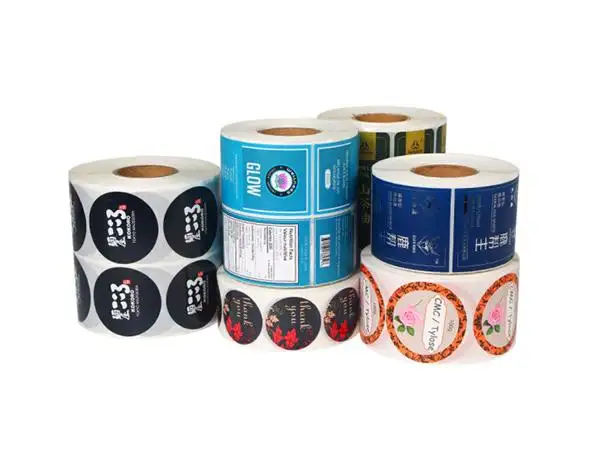
The benefits for using Jinbao Brother are:
- BPA Free, Eco Safe: SGS tested thermal coating are BPA/BPS free; safe for food; environmentally safe printing as well.
- High Printing Quality: Labels have smart label applications.
- Made to Order: Flexible diameters for a wide range of global clients.
- Consistent Quality: 100% pure wood pulp, ISO9001 certified and dust free rolls for jam free printing.
- Orders of any size are welcome, whether for a few rolls or a bulk order of chains and with logistics support available worldwide for easy transportation.
Jinbao Brother is an expert manufacturer offering both custom solutions and quality consistency. This means they can support you with custom label printing you need for everything from seasonal marketing to new ways of packaging that are compliant with regulations on sustainability to custom solutions for compliance with new rules.
FAQs
Q1: Are materials for eco-friendly labels available?
A: Sure. Materials like recycled paper, compostable films, and BPA-free thermal coatings are great options for sustainability.
Q2: What is the difference between digital and flexo label printing?
A: Digital is great for short runs and variable data since there are no set up costs. Long runs make flexo printing cheaper, though plate fees are incurred.
Q3: Do you provide samples before the big order?
A: Yes, Jinbao Brother, provides free samples for you to test the material, adhesion, and printing first.
Q4: Is it possible for barcodes and QR codes to be printed on thermal labels?
A: Of course, since high quality thermal coating will capture your barcodes and QR codes with clear quality and long-lasting imaging.
Q5: Are OEM and custom packaged available for international shipments?
A: Yes, Jinbao Brother provides customized sized and OEM services for specific customized packaging for international logistics.
We'll Get Back Within 24 Hours
Related Articles
Cash Register Roll Quality Testing: 7 Technical Parameters Buyers Should Check
2026-09-30

Custom Carbon Copy Paper Technology | Jinbao Brother
2026-09-30
How Long Do A4 Thermal Paper Rolls Last? Image Durability and Storage Explained
2026-09-29
Eco-Friendly A4 Thermal Printing Paper: Sustainability Trends and Recyclability
2026-09-29
