



 Home / News & Events /
 -
Share
-

-

-

-

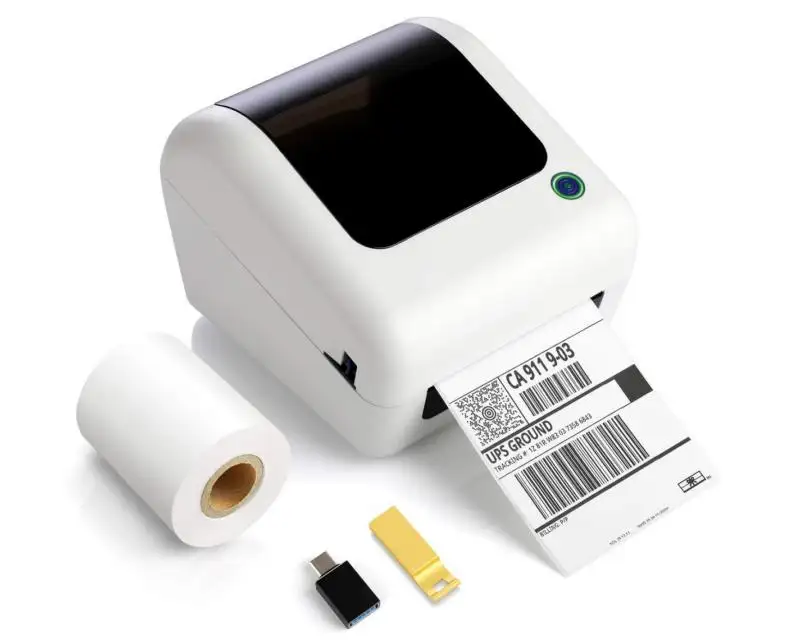
In an automated warehouse, a shipping label is part of the control system. It must print cleanly, feed predictably, release from the liner, bond to the package, and remain scannable through conveyors, sorters, and carrier handling. A Custom 4x6 Thermal Label should therefore be specified as an engineered consumable—not simply a 4 × 6-inch sticker.
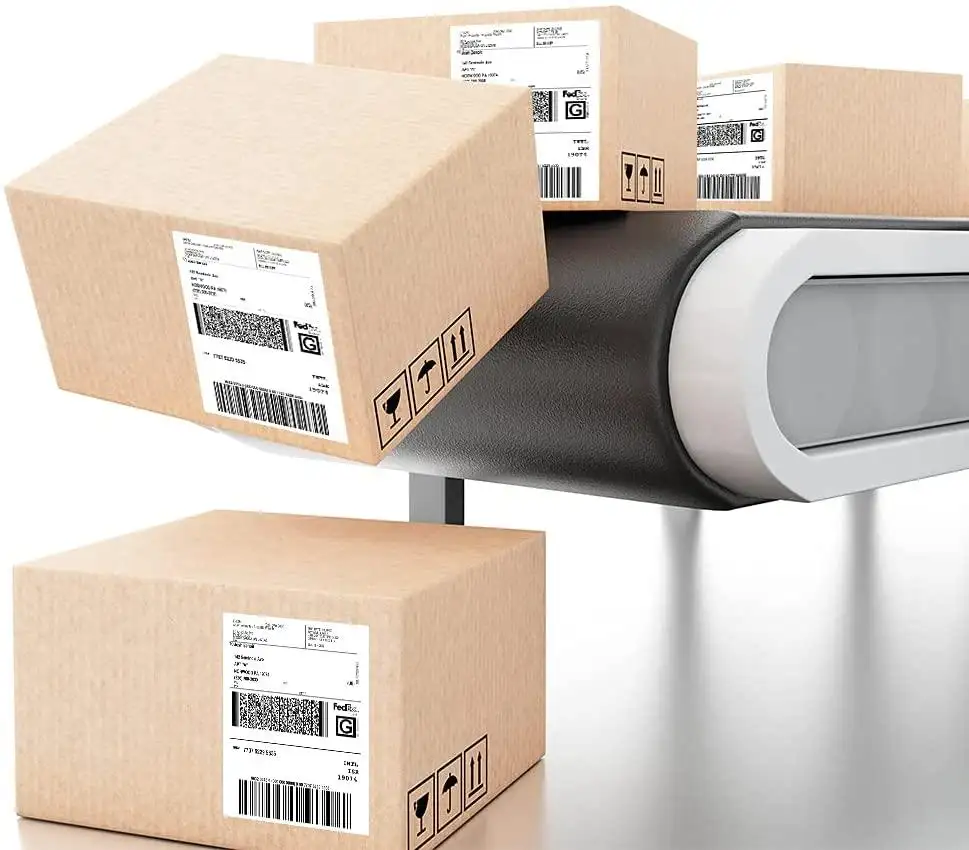
At Jinbao Brother, we look at five linked variables: thermal coating, face stock, adhesive, converting accuracy, and roll configuration. A mismatch in any one can create reprints, scanner rejects, applicator stops, or manual relabeling.
1. 4 x 6" Is Not The Same As 100 mm x 150 mm
How are the actual dimensions of a label that is said to be 100 mm x 150 mm? Most of the time, a reply of 4 x 6 inches is given. In actuality, the dimensions of that label would be, about, 101.6 mm x 152.4 mm. When a label is printed, the printing machine has to account for the space between labels as well as the position of barcodes on the labels. The dimensions of the labels determine where the machine prints barcodes. So knowledge of the dimensions of a label can help a user of the machine automate the label printing process.
Jinbao Brother allows printing of direct thermal labels of dimensions, 4" x 6", 100 mm x 150 mm, A6, and dimensions of a user's choice. A roll of labels of 4" x 6" dimensions contains 220 labels.
For a Custom 4x6 Thermal Label project, confirm:
• Exact face size and label gap;
• Liner width, core ID, and maximum roll OD;
• Winding direction;
• Printer model and sensor type;
• Roll or fanfold feeding.
Face size alone does not define machine compatibility.
2. Thermal Coating Determines Print Stability
Direct thermal printing activates a heat-sensitive coating with the printhead. At higher print speeds, each dot receives heat for less time, so coating response and printer energy settings become more important.
A poorly matched Custom 4x6 Thermal Label can show faded bars, broken text, uneven density, or excessive background darkening.
Higher Print Speed → Shorter Heat Exposure → Greater Dependence On Coating Sensitivity.
Jinbao Brother's 4 × 6/A6 products use direct thermal paper and are listed with waterproof, oil-proof, and alcohol-resistant protection. Our manufacturing includes in-house thermal paper coating, jumbo-roll slitting, and finished-product packaging, giving us direct control over both coating and converting stages.
3. Is 203 DPI Sufficient for Printing Carrier Labels?
In general, 203 DPI is high enough for clear address text and typical barcodes and QR codes. A higher resolution of 300 DPI is necessary for better printing of small text and 2D symbols, and for labels that have a lot of information and are therefore dense.
Ultimately, several other factors impact scan quality apart from DPI. Barcode performance also depends on:
• Module width and quiet zones;
• Print speed and darkness;
• Printhead condition;
• Thermal coating response;
• Wrinkles, curvature, or contamination after application.
A barcode can look acceptable to an operator but still fail a fixed scanner if contrast or edge definition is poor.
4. Match Face Stock to the Shipping Route
| Construction | Typical Use | Main Protection |
| Standard direct thermal | Dry, short-cycle shipping | Simple, economical printing |
| Top-coated thermal | Humid or abrasive handling | Moisture and scuff resistance |
| Synthetic direct thermal | Industrial/tough logistics | Tear, oil and moisture resistance |
We provide direct thermal, top coated thermal and synthetic direct thermal papers. For top coated thermal paper, we offer waybill paper as an example. The top coating improves paper surface moisture and scratch resistance. Synthetic direct thermal paper provides improved resistance to tearing and oil compared to direct thermal paper.
5. Adhesive Selection Depends on Your Packaging
What kind of packaging do you need custom 4x6 thermal labels for? We can label just about anything. We've labeled corrugated, recycle, and other kinds of boxes and cartons, Poly mailers and totes, and temperature sensitive shipping containers.
• Corrugated Boxes: When using direct thermal labels with fibers, you'll want to make sure your labels have “initial tack" to help them adhere.
• Poly Mailers: Direct thermal labels will adhere to Poly mailers.
• Totes: If you plan to use thermal labels on totes, you can use removable adhesives to help eliminate the residual adhesive.
• Cold: The service and operation temperature of thermal labels is important to consider, especially when dealing with shipping products that are perishable and require a cold temperature.
Jinbao Brother offers several options of thermal labels. The medical and cold-chain thermal labels can operate at a temperature as low as -20°C/-4°F.
The correct adhesive is not simply the strongest one. It must match the substrate, application temperature, storage environment, and handling cycle.
6. Die-Cutting and Roll Geometry Affect Uptime
In automated fulfillment, converting accuracy becomes a machine-performance issue.
There are many things that can go wrong with die cuts. If the cut is too deep, the die will cut through the release liner and ruin it. Consistent gaps can lead to confusion for the printer sensor. Adhesive can bleed beyond the cut and contaminate guides and rollers. There are many issues that can impact how the media is transported.
To ensure your automatic 4x6 thermal labels are printed and cut properly, the following problems should not exist:
• Irregular label dimensions and gaps
• Rough die cuts
• Release liners with cuts or tears
• Irregular peeling
• Bleeding of adhesive
• Irregular winding
• Incorrect media unwinding direction
These factors will impact how the dispensing and printing system interfaces with the applciator.
7. Validate the Label Under Real Fulfillment Conditions
A five-label desktop test is not enough. Qualification should reproduce the actual workflow:
Printer → Continuous Run → Dispensing → Application → Scan → Conveyor Handling → Storage/Environment
Before mass production, check:
• Barcode readability at operating print speed;
• Sensor registration during continuous printing;
• Adhesion immediately and after dwell time;
• Peel behavior at the dispenser or applicator;
• Moisture, abrasion, or cold exposure where relevant;
• Final scan quality after package handling.
This is especially important because many failures—liner tracking, curl, inconsistent gaps, adhesive ooze, or dispensing variation—may not appear during a short sample print.
8. What Should Buyers Specify Before Customization?
For Jinbao Brother, an effective Custom 4x6 Thermal Label specification starts with the application rather than the label alone.
| Parameter | Information to Confirm |
| Printer | Brand/model, direct thermal |
| Resolution | 203 or 300 DPI |
| Label Size | 4 × 6", 100 × 150 mm or custom |
| Roll | Core ID, maximum OD, winding |
| Barcode | 1D/2D type and size |
| Package | Carton, PE mailer, plastic tote |
| Environment | Dry, humid, cold-chain |
| Adhesive | Permanent, removable, freezer |
| Face Stock | Standard, top-coated, synthetic |
| Application | Manual or automated |
Jinbao Brother supports OEM/ODM and customized label production. Current product options include 4" × 6", 100 × 150 mm, A6 and custom dimensions, with direct thermal, top-coated or synthetic face stock and multiple adhesive configurations.
Design the Custom 4x6 Thermal Label Around the System
A reliable Custom 4x6 Thermal Label comes from matching thermal response, barcode design, dimensions, adhesive, liner, roll configuration, printer, package surface, and warehouse conditions.
For a new e-commerce, 3PL, distributor, or private-label project, buyers should provide the printer model, DPI, exact dimensions, core and roll requirements, winding direction, package substrate, temperature range, and barcode requirements before finalizing production.
With integrated thermal coating, jumbo-roll slitting, finished-product converting, and OEM/ODM capabilities, Jinbao Brother can use these application inputs to develop and sample a Custom 4x6 Thermal Label configuration before bulk production. Buyers evaluating a new shipping-label program can learn more about the available materials and customization options through Jinbao Brother's official website.
FAQs
Q1. Does Jinbao Brother manufacture Custom 4x6 Thermal Labels?
Yes. Jinbao Brother supports 4" × 6", 100 × 150 mm, A6 and customized direct thermal label sizes.
Q2. Can Jinbao Brother customize the adhesive for 4x6 thermal labels?
Yes. Available options include permanent, removable and freezer-grade adhesives for different packaging and storage conditions.
Q3. What facestock options does Jinbao Brother offer?
Options include standard direct thermal paper, top-coated thermal paper and synthetic direct thermal materials.
Q4. Are Jinbao Brother Custom 4x6 Thermal Labels suitable for cold-chain applications?
Yes. Freezer-grade adhesive options are available for applications down to approximately -20°C / -4°F.
Q5. Can Jinbao Brother produce labels for automated warehouse printers?
Yes. Label size, roll configuration, core, winding direction and material can be customized according to the printer or applicator requirements.
We'll Get Back Within 24 Hours
Related Articles
Cash Register Roll Quality Testing: 7 Technical Parameters Buyers Should Check
2026-09-30

Custom Carbon Copy Paper Technology | Jinbao Brother
2026-09-30
How Long Do A4 Thermal Paper Rolls Last? Image Durability and Storage Explained
2026-09-29
Eco-Friendly A4 Thermal Printing Paper: Sustainability Trends and Recyclability
2026-09-29
