Home / News & Events /
 -
Share
-

-

-

-

Updated 2 months ago
Surface-Specific Industrial Label Stickers for Inventory Management
admin
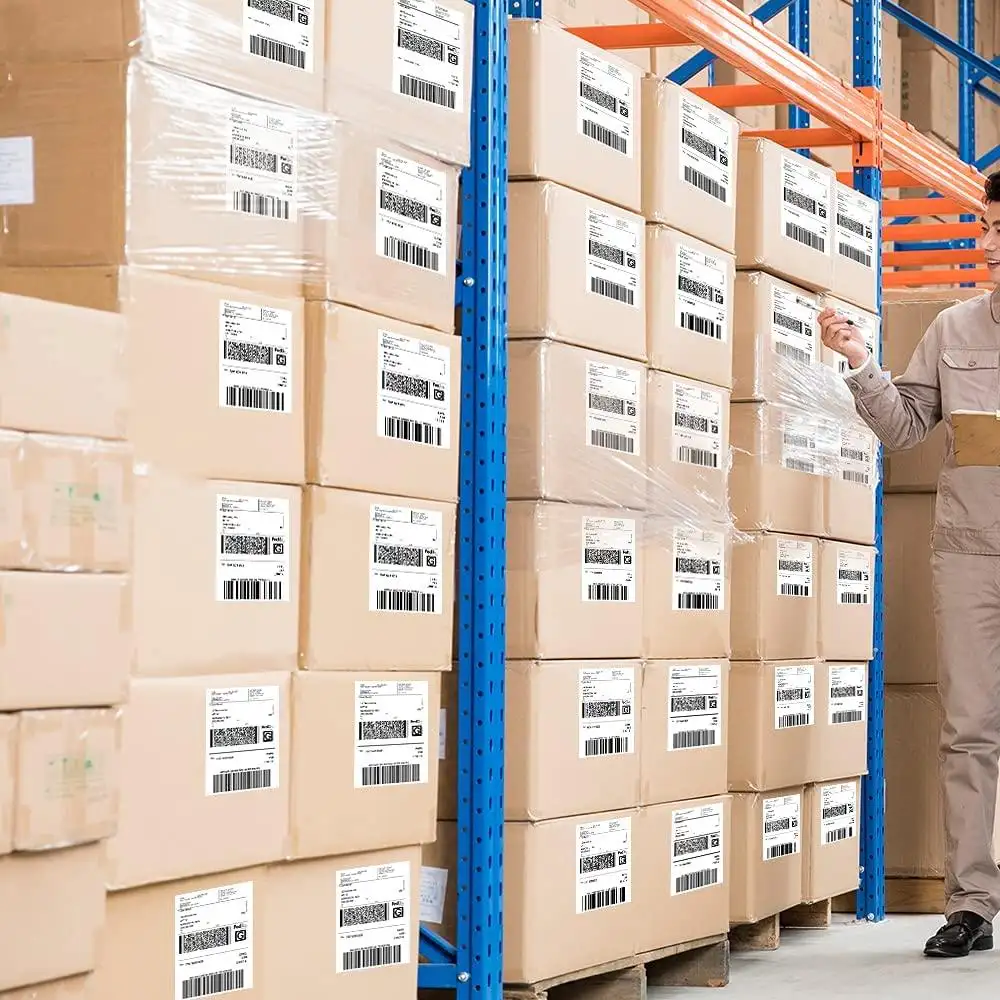
Selecting the right Industrial Label Stickers for Inventory Management goes beyond choosing a label of a specific size. The right label for your application needs to withstand the conditions of the environment and surfaces where it will be applied. For example, labels that work well on a clean box may peel off plastic totes, slip off oily metal, or become unreadable after exposure to moisture and repeated handling. Stickers may serve you well on a carton but fail on a tote, or stick but be unreadable after repeated handling.
Performance is impacted by substrate, adhesive, application temperature, exposure conditions, and the duration for which tracking is needed. Properly addressing substrate, adhesive, application temperature, exposure conditions, and the duration for which tracking is needed minimizes the need for relabeling and helps address scanning issues for warehouse and logistics operations.
Importance of the Application Surface
Adhesives require close contact with the substrate to bond.
Some of the limiting factors include:
•Surface energy: High energy surfaces typically facilitate adhesive contact.
•Surface roughness: An adhesive is unable to bond to the surfaces that do not make full contact.
•Porosity: Absorption of the adhesive by the substrate.
•Contamination: Oil, dust, rust, and mold-release agents negatively impact bonding.
•Temperature: Cold or wet surfaces can prevent proper adhesive contact.
•Service conditions: Heat, washing, abrasion, and chemicals limit the durability of the bond.
Initial tack indicates the speed of adhesion, but there is a significant difference with bond strength.
Industrial Labels on Metal
Almost all surfaces of metal cabinets, tools and parts containers, and metal shelves provide a smooth labeling area. However, surfaces can get contaminated with machining oils, condensation, and metal dust.
To enhance adhesion of the sticker to metal:
•Thoroughly clean and dry the surface before applying the label.
•Make sure to use a permanent adhesive.
•Consider protective coatings if you expect exposed surfaces to come into contact with water, oil, or alcohol.
•If you expect the surface to come into contact with other surfaces, consider using an abrasion-resistant adhesive.
•It is also a good idea to label the surfaces to test the adhesion under the conditions you expect.
•Waterproof construction protects the label face and image, but it does not guarantee adhesion to oily or corroded metal.
Industrial Labels on Plastic
Plastic is often the most difficult substrate because adhesion varies by polymer type.
| Plastic | Adhesion Difficulty | Typical Application |
| PET | Low | Clear packaging and containers |
| PVC | Low to medium | Packaging and industrial containers |
| ABS | Medium | Equipment housings and toolboxes |
| HDPE | High | Drums, bins, and reusable totes |
| PP | High | Pallets and logistics boxes |
PP, PE, and HDPE are low-surface-energy plastics. Industrial Label Stickers for Inventory Management used on these surfaces may require:
•High-tack permanent adhesive
•Low-surface-energy adhesive formulations
•Longer dwell time before testing
•Samples applied to the actual molded container
Also check for mold-release residue, repeated washing, surface flexing, and removable-label requirements.
Industrial Labels on Corrugated Boxes
Corrugated boxes are rough, porous, and sometimes dusty. Recycled board may also vary in surface consistency.
For pallet, batch, and inventory labels used in shipping:
•Employ a high-tack, permanent adhesive.
•Place labels on a flat, dry panel of the carton.
•Avoid application on folds, damaged areas, or sealing tape.
•Apply firm pressure to the entire label.
•Ensure barcodes are readable following transport simulation.
•Assess cold-chain labels at the temperature at which they will be applied.
For Industrial Label Stickers for Inventory Management used in cold storage, applying a standard adhesive after frost or condensation appears can cause lifting or detachment.
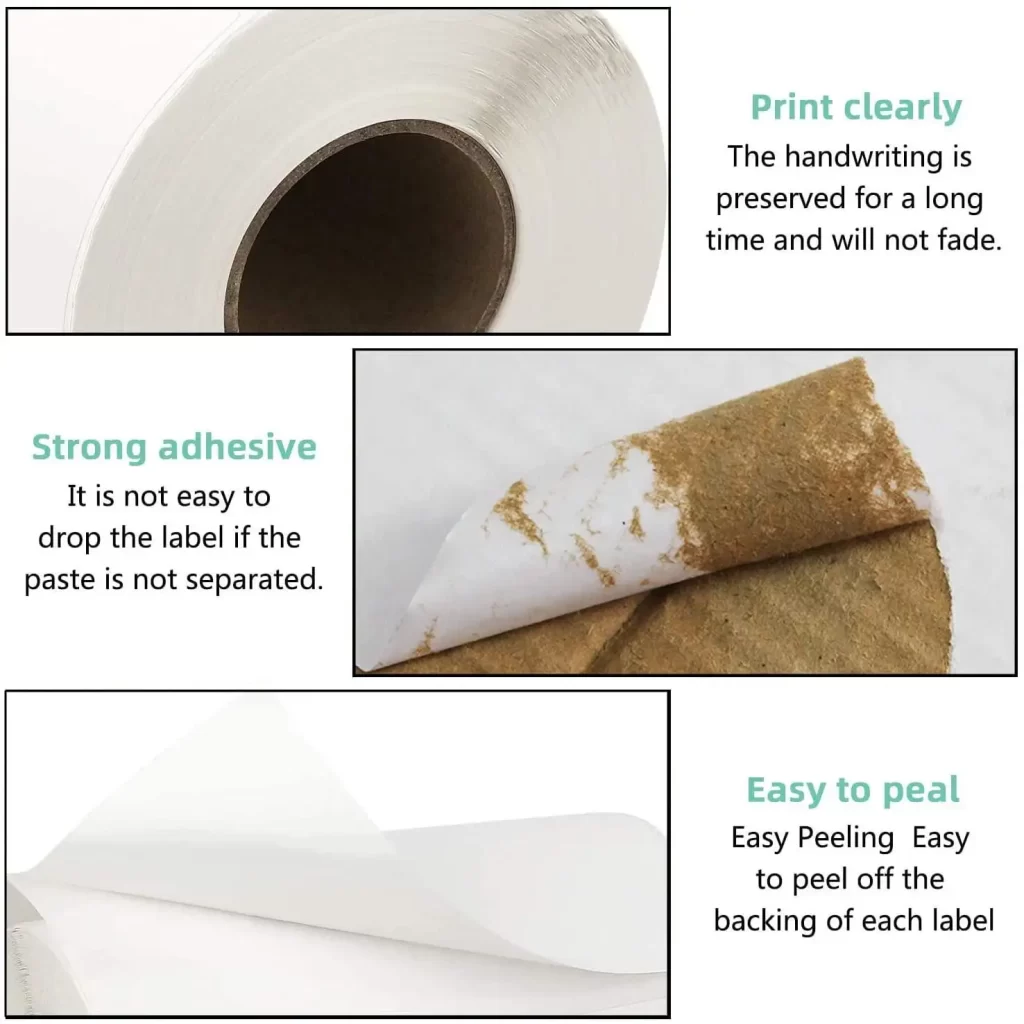
Surface Performance Comparison
| Factor | Metal | Plastic | Corrugated Box |
| Main challenge | Oil and condensation | Low surface energy | Roughness and dust |
| Adhesive priority | Durable permanent adhesive | High-tack or LSE adhesive | High-tack permanent adhesive |
| Protection needed | Water, oil, abrasion | Washing and handling | Moisture and transport wear |
| Typical use | Assets, racks, tools | Totes, pallets, containers | Shipping cartons |
| Main test | Temperature and contamination | Polymer type and washing | Roughness and cold bonding |
Selecting the Adhesive System
Common options include:
•Permanent adhesive: Long-term warehouse and shipping identification
•High-tack adhesive: Rough cartons and difficult plastics
•Removable adhesive: Temporary stock labels and reusable containers
•Freezer-grade adhesive: Cold-room and frozen-product applications
•Low-surface-energy adhesive: PP, PE, and related plastics
The adhesive should match the substrate, labeling temperature, storage environment, and intended service life.
Printing, Coating, and Barcode Readability
Direct thermal printing eliminates the need for ribbon, and so is useful for logistics, retail, shipping, and short to medium term inventory activities. Quality thermal paper provides:
•Sharp barcodes
•Consistent print density
•Clear tracking
•Recognizable scannability
•On-demand printing
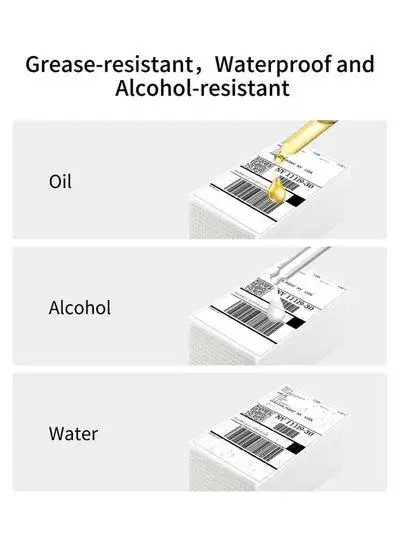
Coatings that are waterproof, oil resistant, and alcohol resistant will reduce damage caused by common exposure in warehousing. However, heat, sunlight, abrasion, plasticizers, and chemicals may still affect direct thermal images. Long-term outdoor tracking may require synthetic labels or thermal-transfer printing.
Jin Bao Brother Thermal Label Sticker Options
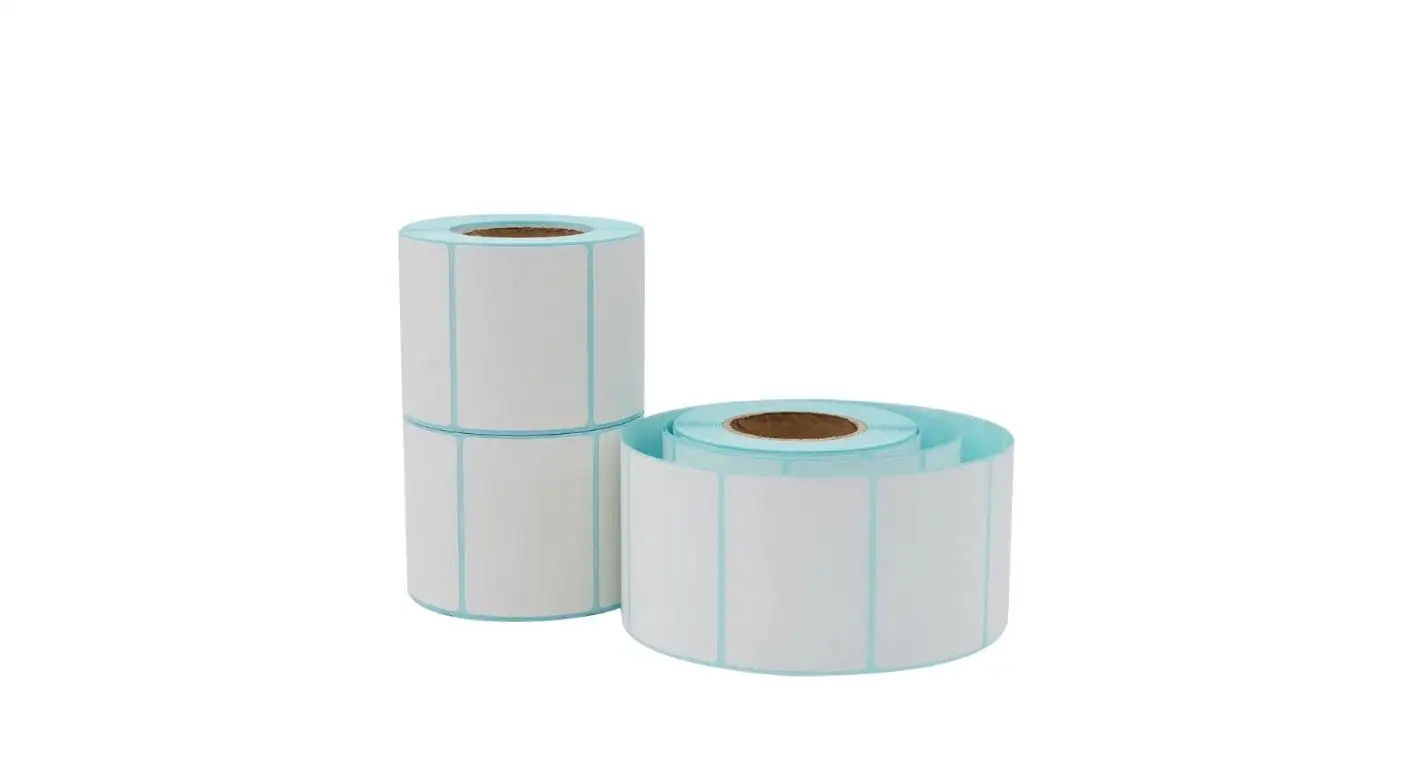
Jin Bao Brother supplies direct thermal Industrial Label Stickers for Inventory Management for logistics, warehousing, retail, eCommerce fulfillment, and manufacturing traceability.
| Product Element | Available Option |
| Face material | Thermal paper |
| Core | Cardboard paper core |
| Color | White and multicolor options |
| Adhesive | Permanent adhesive |
| Sizes | 4 × 6 inches, 100 × 150 mm, A6, and custom sizes |
| Protection | Waterproof, oil-resistant, and alcohol-resistant coatings |
| Services | OEM printing, custom packaging, design support, and samples |
Rolls may contain approximately 220 labels depending on configuration. The stated MOQ is 10,000 rolls. Shipping within three days may be available for selected specifications and confirmed stock conditions.
Selected 4 × 6-inch labels can be configured for the DYMO LabelWriter 4XL and many direct thermal printers from Zebra, Epson, Bixolon, Star Micronics, and other brands. Buyers should confirm label width, roll diameter, core dimensions, sensing method, and feeding structure before ordering.
Select by Surface, Not by Size Alone
Metal, plastic, or corrugated surfaces require different Industrial Label Stickers for Inventory Management. These surfaces need to be tested for adhesion, print quality, coating resistance, feeding and barcode readability prior to bulk manufacturing.
Jin Bao Brother can customize label dimensions, cores, coatings, and printers, as well as value added Packaging (VAP) for their customers. Buyers can order free samples and test adhesion, printing, and scanning. We can also test the samples for moisture and how well the samples stand up to the conditions under which we will be used.
FAQs
Q1. What Industrial Label Stickers for Inventory Management does Jin Bao Brother provide?
Jin Bao Brother provides direct thermal adhesive label rolls for inventory management, logistics, shipping, warehousing, retail, eCommerce fulfillment, and manufacturing.
Q2. What label sizes can you provide?
The standard sizes are 4 × 6 inches, 100 × 150 mm, and A6. For OEM orders, we can provide custom sizes, roll types, and custom packing.
Q3. What is the material of Jin Bao Brother thermal labels?
Jin Bao Brother thermal labels consist of direct thermal paper as the face material, and the roll core is made of cardboard paper. We can provide white and colored preprinted labels as per the order.
Q4. Are Jin Bao Brother thermal labels waterproof?
Some of our products have a coating which makes them waterproof and resistant to oil and alcohol. However, we recommend testing the labels under the actual conditions they will be stored to determine how the labels will perform.
Q5. Can the labels stick to metal, plastic and corrugated boxes?
The permanent adhesive is applicable to clean surfaces and is commonly used on cartons and shipping containers. The following materials should be tested prior to bulk production: metal, PP, PE, HDPE, textured plastic, and corrugated board.
We'll Get Back Within 24 Hours