Home / News & Events /
 -
Share
-

-

-

-

Updated 2 months ago
Thermal Paper POS Sustainability: Recyclability, Safe Coatings, and Material Choices
admin
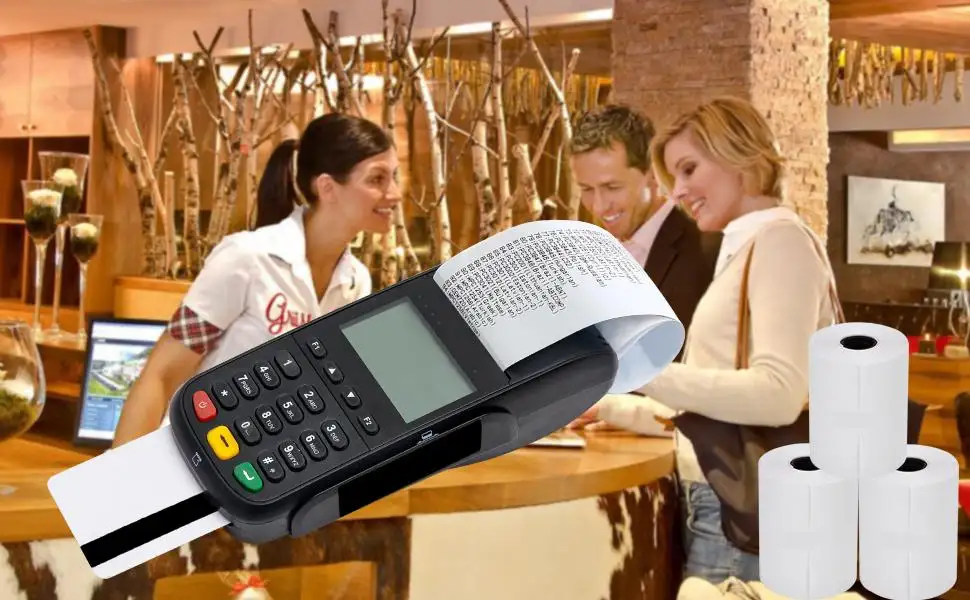
Thermal paper roll receipts are generated daily by retailers, restaurants, hotels, logistics and transportation providers, and service-related businesses. Although a single receipt uses a small amount of paper, the cumulative use of thermal paper rolls generates significant impact and demand for packaging, transportation, and waste-related services.
Because of this impact, customers are becoming more concerned with the use of coatings, BPA and phenol-free chemistry, and are looking for greater resource efficiency and end-of-life options for paper roll recycling. However, no single solution or label can make a thermal paper roll sustainable, as the sustainable status must be considered for the quality of the paper, coatings, roll dimensions, print performance, packaging, and local recycling options.
What Makes a Thermal Paper Roll POS Eco-Friendly?
Generally, safe thermal paper coatings, resource-controlled paper, efficient roll construction, reliable manufacturing, and proper end-of-life handling distinguish a truly eco-friendly thermal paper roll.
The main areas of importance when evaluating eco-friendly thermal paper rolls include:
•Paper sourcing and base paper composition
•Thermal developer chemistry
•Paper grammage and roll length
•Coating uniformity and thermal paper image stability
•Printer dust and coating performance
•Packaging efficiency and transport
•Recycling options and local requirements
Base Paper Quality
The large majority of thermal receipt paper is manufactured using virgin wood pulp as a base paper, as this provides a high degree of coating uniformity, strength, smoothness, and printing. Because of this, and the stable and clear feeding of the paper through the printer, thermal paper produced using virgin wood pulp is preferred.
Recycled paper can decrease the use of virgin paper, however, recycled wood paper's printing quality, feeding, and coating uniformity are more problematic when compared to virgin paper.
Using rolls of thermal paper that are produced using 100% virgin wood pulp does not ensure that the paper roll is environmentally sustainable. Other factors, such as the length and weight of the paper, improvement of transportation, and sustainable sourcing of wood pulp are essential to determine the environmental sustainability of thermal paper rolls.
The Chemistry Behind Thermal Paper Coatings
Thermal paper used in point of sale (POS) systems eliminates the need for ink, toner, and ribbons. The printhead generates heat and initiates a coating reaction.
The coating consists of a color former functional additive, developer, sensitizer, binder, and additives. The developer system has a significant role for chemical compliance assessment.
| Coating Claim | General Meaning | What Buyers Should Verify |
| BPA-Free | BPA is not intentionally used as the developer | Third-party test report and detection limit |
| BPS-Free | BPS is not intentionally used | Test method, batch scope, and specification |
| Phenol-Free | Uses an alternative non-phenolic developer | Supplier declaration and coating details |
| Food-Contact Suitable | Evaluated for a defined contact condition | Applicable regulation and test scope |
| Eco-Friendly | Broad environmental description | Material, coating, packaging, and recycling evidence |
BPA-free and BPS-free Thermal Paper POS should not automatically be described as suitable for every food-contact application. Suitability depends on the intended use, contact conditions, destination-market requirements, and supporting documentation.
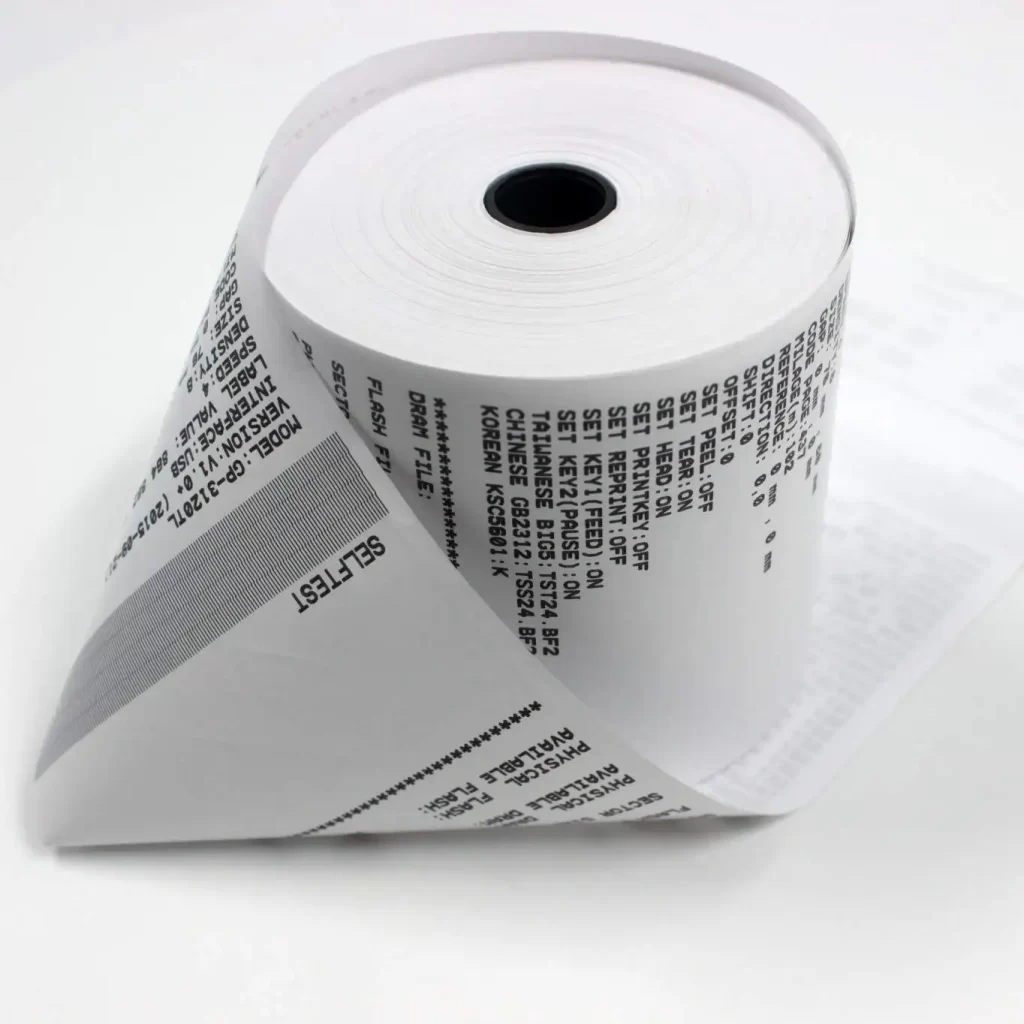
Can Thermal Paper POS Be Recycled?
The recyclability of Thermal Paper POS depends on the coating formulation and the capabilities of the local collection and paper-reprocessing system.
Factors that may affect acceptance include:
•Thermal coating chemistry
•Oil, food, adhesive, or chemical contamination
•Receipt size and sorting capability
•Heavy preprinting or additional coatings
•Local paper-mill restrictions
•Separation from ordinary office paper
A universal "100% recyclable" claim should therefore be avoided unless it is supported for a clearly defined market and disposal route. A more accurate statement is that the paper is designed to support improved recyclability where suitable local facilities are available.
How Thermal Coating Influences Printing and Sustainability
Environmental improvement should not reduce the basic performance of Thermal Paper POS. Poor coating quality can cause weak images, unreadable barcodes, repeated printing, paper waste, and increased equipment maintenance.
| Technical Factor | Printing Function | Sustainability Impact |
| Thermal sensitivity | Controls the speed of image formation | May lower printhead energy consumption |
| Surface smoothness | Allows printing to be generally clear and stable | Reduces friction and dust, and the need for cleaning |
| Coating uniformity | Ensures consistency of printing for text and barcodes | Reduces the number of receipts that are rejected or reprinted |
| Image retention | Ensures that receipts remain readable | Reduces printing of duplicate receipts |
| Paper grammage | Affects stiffness and the length of the roll | Impacts the weight of the paper and shipping |
| Roll winding | Ensures that the paper feeds consistently | Reduces jamming and damage to the paper rolls |
An optimal Thermal Paper POS specification will harmonize image density and barcode printing, paper feeding and printhead safety, along with compliance and efficiency of materials.
Top-Coated vs Non-Top-Coated Thermal Paper POS
Top-coated thermal paper has an extra imaging layer protecting coating. It increases resistance to moisture, oils, and scratches, as well as exposure to the environment.
| Attribute | Top-Coated Paper | Non-Top-Coated Paper |
| Water resistance | Higher | Moderate to low |
| Oil resistance | Higher | Depends on base coating |
| Abrasion resistance | Better | More limited |
| Image durability | Usually longer | Suitable for short-term records |
| Typical use | Catering, logistics, parking, outdoor tickets | Retail, supermarkets, Convenience stores |
| Selection priority | Durability and environment | Cost and routine checkout use |
Non-top-coated paper is not necessarily the more sustainable option. In demanding applications, a durable top-coated roll may be a better option as it reduces operational waste from duplicated receipts and printing.
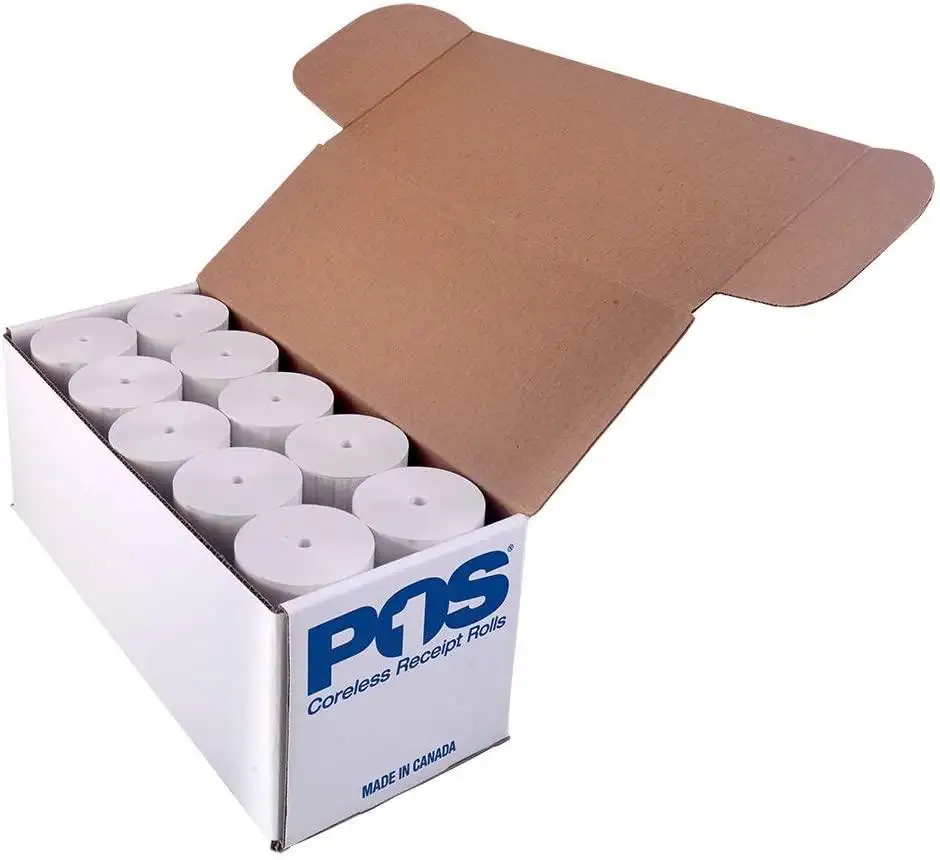
Sustainability Beyond Recyclability
The production, packaging, transportation, and consumption of Thermal Paper POS create many environmental issues.
Some of those ways are:
•The correct length and diameter of rolls
•Consistency in thickness and grammage of paper
•Slitting with no dust
•Consistent and tight winding
•Flat edges and aligned cores
•The use of minimal plastic in packaging
•The use of recyclable outer cartons
•The use of appropriately sized cartons for transportation
The proper management of quality can reduce the need for replacement shipments, machine cleaning, rejects, jams, and more.
How to Choose Thermal Paper POS
Buyers should confirm the following before ordering:
•BPA, BPS, and phenol-free certificates
•Paper thickness, grammage, and exact roll length
•Width, outer diameter, and core size
•Standard or top-coated
•Desired retention
•Type of POS printer and its speed
•Where the POS printer will be used and how the paper will be stored
•Requirements for packaging (if any) and the destination market
The most common specifications are for widths of 57mm and 80mm; roll diameters of 30mm to 80mm; paper of 48gsm to 65gsm; and standard or extended image-retention coatings.
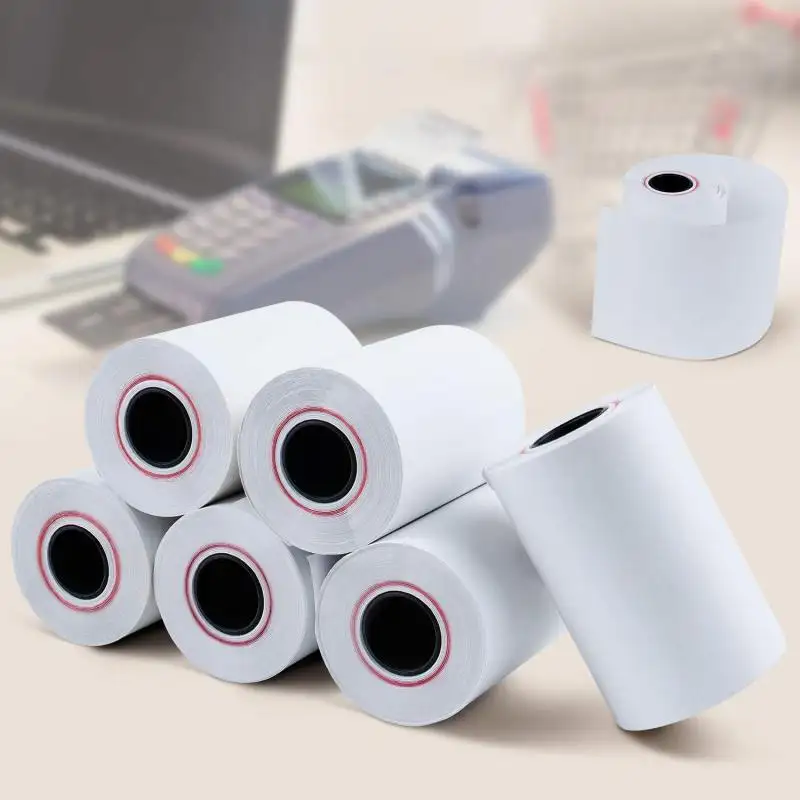
Jin Bao Brother Manufacturing Capabilities
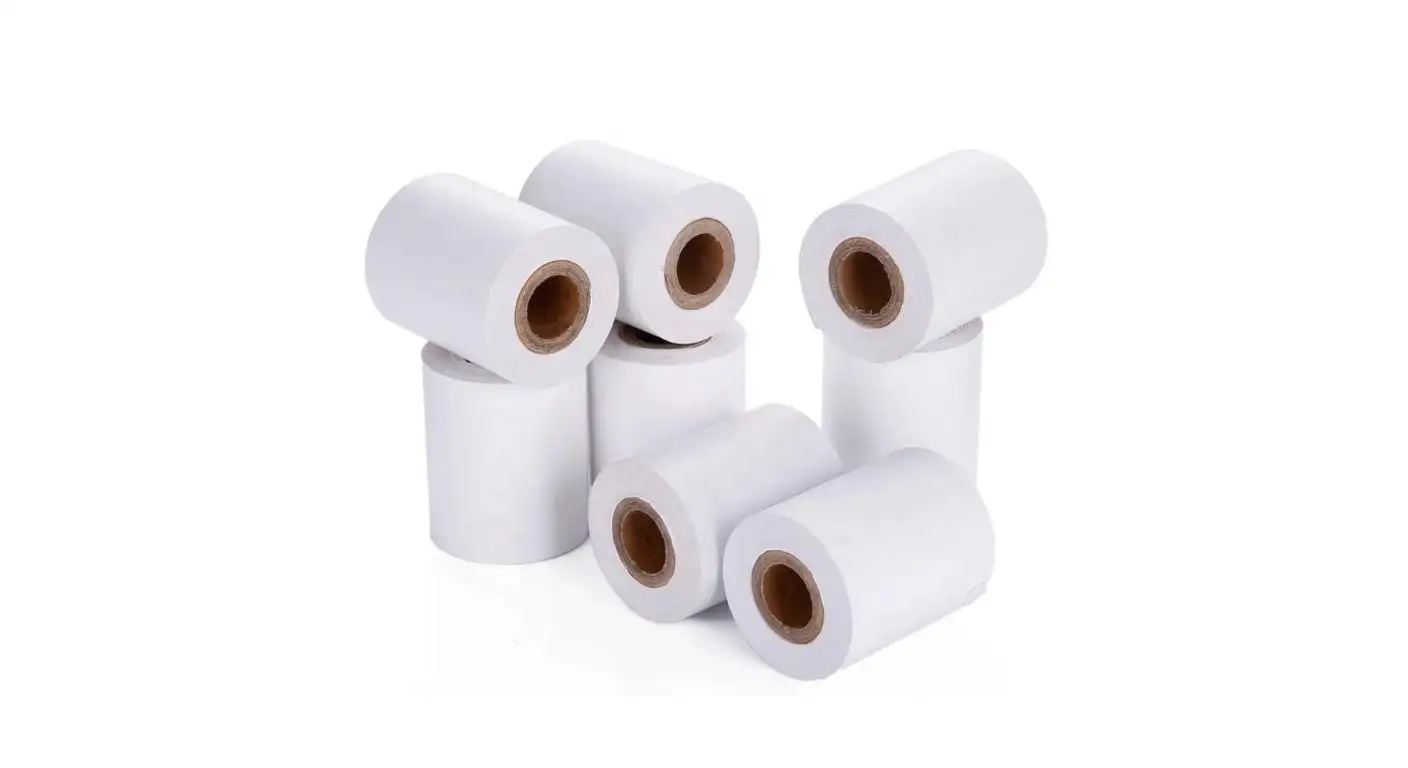
Jin Bao Brother manufactures JB-80 cash register thermal paper with POS machine compatible paper made from 100% pure wood pulp. Our Thermal Paper POS features a low-dust surface with a smooth finish that provides excellent reproduction of text and barcodes/QR codes. Additionally, it is coated with BPA and BPS free materials.
Some custom features you can request are:
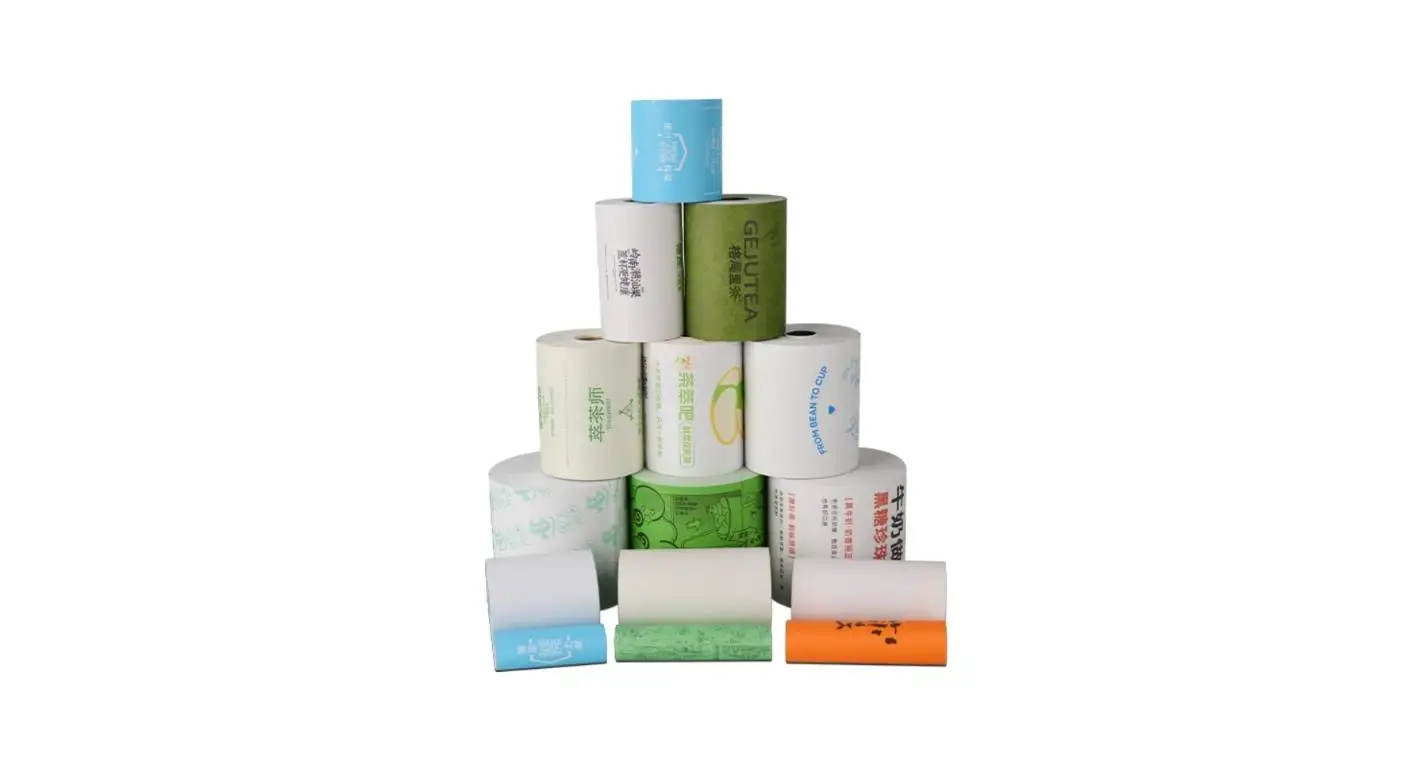
•Widths of 57mm, 80mm, and custom sizes
•Roll diameters between 30 and 80mm
•Choice of plastic or custom cores
•Grammage and roll length for each project
•Coatings in standard, top-coated, and extended life
•Private label, reverse-side printing, custom cartons, individual boxes, and shrink wrap
Quality control at our production facilities consists of testing print coatings, print density, roll dimensions, edge flatness, feed, packaging, and batch trace inspections. We recommend our customers to check the recent SGS testing and ISO 9001 certification of their desired market before placing an order.
Summary
Eco-friendly Thermal Paper POS cannot be defined by a single factor. Fiber choice, coating, grammage, roll efficiency, the durability of printed matter, and the control of the manufacturing and the local recycling of the packaging contribute to the overall environmental impact.
Jin Bao Brother can provide specification matching, sample testing, custom roll making, private label printing, and packaging. To enable Jin Bao Brother to suggest the best-suited Thermal Paper POS system, please provide the printer model, roll size, preferred coating, target image life, preferred packaging, and order quantity.
FAQs
Q1. What materials are used in Jin Bao Brother Thermal Paper POS rolls?
In manufacturing Jin Bao Brother Thermal Paper POS rolls, 100% pure wood pulp paper is used to create a smooth surface for stable feeding and clear thermal printing.
Q2. Are Jin Bao Brother Thermal Paper POS rolls BPA-free and BPS-free?
Yes, there are BPA-free and BPS-free coating options. Buyers should ask for the SGS test report and related documents to the batch and technical specifications for their target market.
Q3. What Thermal Paper POS roll sizes can Jin Bao Brother customize?
Jin Bao Brother can customize a range of roll widths and diameters, with common widths being 57mm and 80mm, and diameters of 30mm, 40mm, 50mm, 60mm, 70mm, and 80mm.
Q4. Can Jin Bao Brother customize the paper core?
Yes. Customized core dimensions are available, including plastic cores. Buyers should indicate the required core inner diameter, outer diameter, and the printer model.
Q5. What grammage is available for Thermal Paper POS?
For Thermal Paper POS, the JB-80 can be supplied in 65gsm. Other options may be developed based on roll length, stiffness, and based on the printer and application requirements.
We'll Get Back Within 24 Hours