Home / News & Events /
 -
Share
-

-

-

-

Updated 2 months ago
How Durable Thermal Labels Resist Water, Oil, Chemicals, and Abrasion
admin
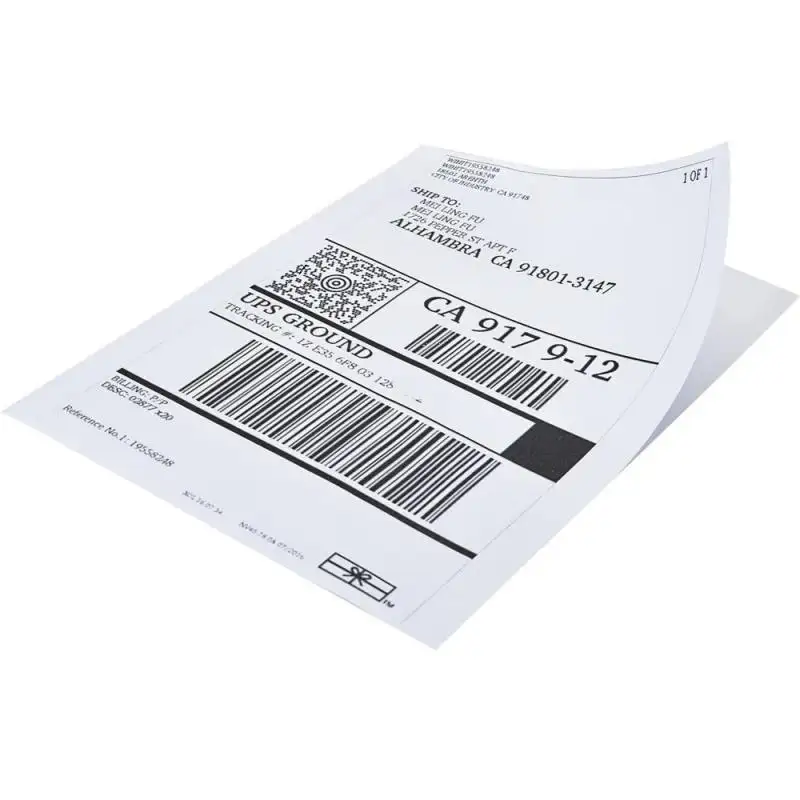
Labels used in logistics, warehousing, food packaging, retail, and manufacturing are rarely protected from environmental exposure. Exposure to moisture and other contaminants, handling, and friction between packages can all compromise label adhesion and reduce barcode contrast.

Through careful design of the label's components (face stock, topcoat, thermal imaging layer, adhesive, and release liner) Durable Thermal Labels manage the risks of the above through their construction. Their performance relies on the construction of the entire label.
It is also important to recognize the difference between resistance and protection. Labels that are water-resistant can tolerate some condensation and splashes, but will fail after some time if the label is exposed to prolonged contact with water. The same principle applies to chemical resistance.
What Are Durable Thermal Labels?
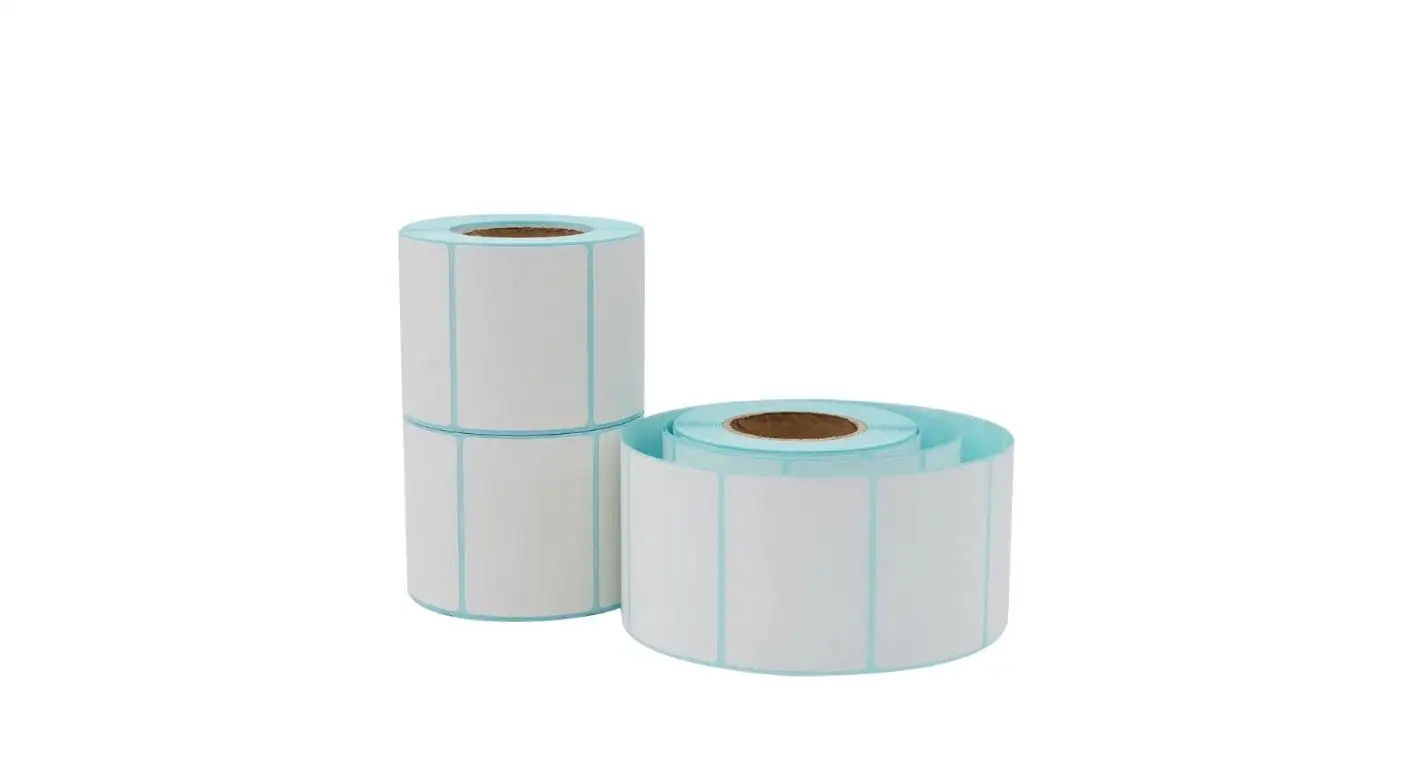
Durable Thermal Labels are direct thermal labels designed for more demanding conditions than standard uncoated paper labels. Common constructions may include:
•Reinforced or high-density thermal paper
•PP, PET, or other synthetic face materials
•Protective top-coated surfaces
•Stable thermal imaging coatings
•Permanent, freezer-grade, or high-tack adhesives
•Moisture-resistant release liners
Not every durable label needs a synthetic face stock. Top-coated paper Durable Thermal Labels can provide sufficient protection for parcel shipping, warehouse inventory, retail identification, and other short- to medium-term applications.
The Role of Label Structure and Design in Durability
The construction of Durable Thermal Labels helps them withstand environmental damage with top coatings, stable face materials, thermal coatings, and an array of specialized adhesives.
| Element of the Label | Function | Impact on Durability |
| Top coat | Protects the thermal imaging layer | Improves durability against moisture, oils, chemicals and scratches |
| Thermal imaging layer | Forms the printed image | Influences the sensitivity, contrast and stability of the image |
| Face material | Provides support and strength | Influences the resistance to tearing, absorption of moisture, and stability/dimension |
| Adhesive layer | Bonds the label to the package | Influences adhesion on various surfaces |
| Release liner | Provides support during conversion and dispensing | Influences die cutting and peeling |
Construction must be appropriately balanced. A strong top coat cannot compensate for a poor adhesive. Similarly, a high-tack adhesive cannot protect a thermal image.
Water Resistance: Defense Against Moisture and Condensation
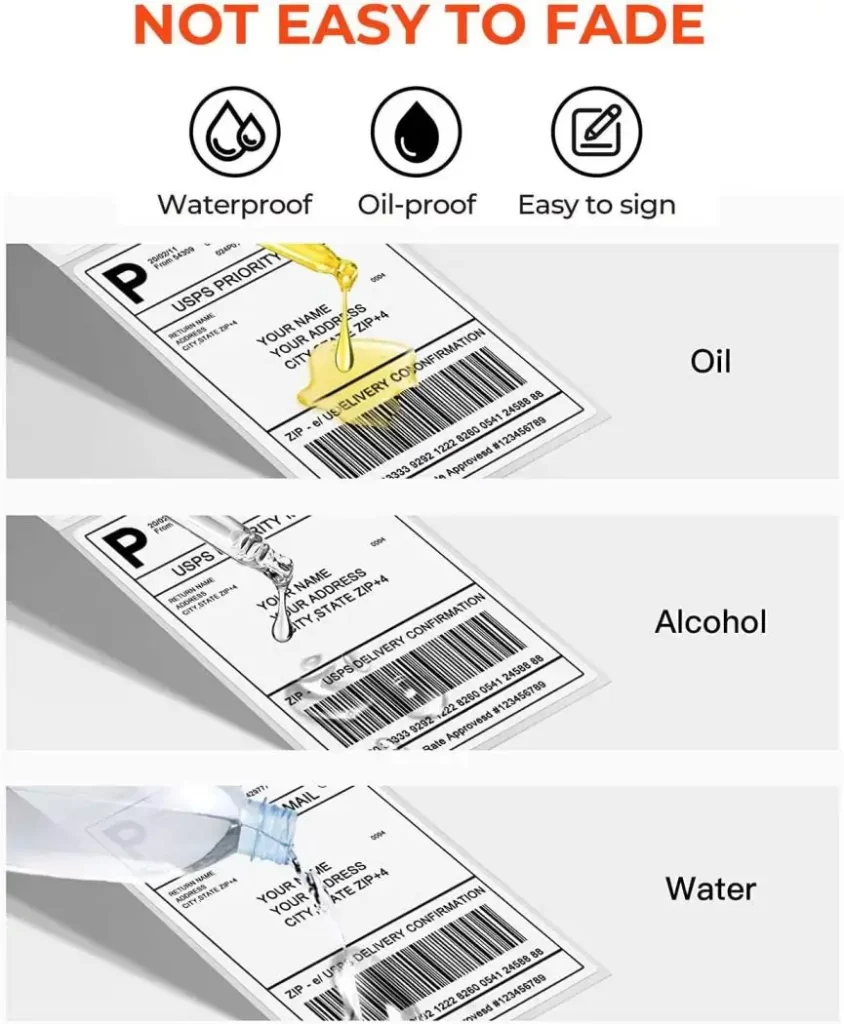
Paper develops contrast printing issues and curls and wrinkles with moisture absorption. This document presents some causes and manufacturing methods of waterproof and water-resistant thermal labels:
•The top coating creates a moisture barrier for the thermal layer.
•Regarding the face stock of thermal labels, synthetic stocks are less moisture-absorbing than paper stocks.
•Edge lifting is reduced by the use of moisture-resistant adhesives.
•Stable liners help the feeding of labels under humid conditions.
Water-resistant Durable Thermal Labels are commonly used for cold-chain transport, refrigerated products, beverage packaging, damp warehouses, and short-term outdoor identification.
However, continuous immersion, high-pressure washing, hot water, and application to wet surfaces may exceed the label's intended performance.
Oil and Grease Resistance
Oil can penetrate unprotected paper, darken the surface, lower barcode contrast, and interfere with the adhesive bond.
Oil-resistant thermal labels typically use a dense topcoat or low-absorption face material to slow penetration. They may be suitable for:
•Food and beverage packaging
•Commercial kitchens
•Automotive components
•Industrial containers
•Lubricated machinery parts
Performance should be tested with the actual contaminant. Cooking oil, mineral oil, lubricants, fuel, and processing fluids can affect Durable Thermal Labels differently.
Chemical Resistance and Conditions of Use
Thermal labels engineered for chemical resistance can endure short contact exposure to some alcohols, detergents, disinfectants, and to some extent, weak acids and alkalis. Though the topcoat provides a protective barrier, there is no universal coating that is capable of withstanding all chemicals.
Chemical compatibility should be evaluated according to four factors:
•Chemical type and concentration
•Contact duration
•Application temperature
•Wiping, splashing, or immersion conditions
For laboratory, healthcare, or industrial chemical applications, buyers should test the exact medium rather than rely only on a "chemical-resistant" product description.
Scratch and Abrasion Resistance
Labels come in contact with many different surfaces from the stacking of cartons, movement on the conveyor, manual contact, scanning of the label, transit and distribution center activity.
Top-coated Durable Thermal Labels are designed to shield printed information from the elements and contaminants. Abrasion resistance is influenced by:
•Topcoat hardness and uniformity
•Face-stock strength
•Printhead pressure and energy
•Surface of the package
•Friction frequency and intensity
•Storage and transport conditions
Scratch resistant shipping labels are ideal in applications where the barcode must remain scannable and readable during the entire process of picking, packing, shipping and returning the shipment.
Resistance Performance at a Glance
| Resistance Type | Main Failure Risk | Important Label Feature | Recommended Test |
| Water | Curling, blurring, edge lift | Topcoat and moisture-stable material | Droplet, spray, or condensation test |
| Oil | Staining and contrast loss | Dense barrier coating | Oil-contact test |
| Chemicals | Fading or coating damage | Chemically stable topcoat | Controlled wipe test |
| Abrasion | Damaged text or barcode | Wear-resistant surface | Dry- and wet-rub test |
Top-Coated vs Non-Top-Coated Thermal Labels
| Comparison | Top-Coated Labels | Non-Top-Coated Labels |
| Moisture resistance | Higher | Best for dry conditions |
| Oil resistance | Better protection | More vulnerable to penetration |
| Scratch resistance | Stronger | Thermal layer remains exposed |
| Typical use | Logistics, cold chain, industrial handling | Retail and short-term indoor use |
| Cost | Generally higher | More economical |
Top-coated Durable Thermal Labels are usually preferred when labels face repeated handling or environmental exposure. Non-top-coated labels remain practical for controlled, dry, short-duration applications.
Adhesive Selection Is Equally Important
The correct face material must be paired with the correct adhesive:
•Permanent adhesive: Shipping, inventory, and long-term identification
•Freezer adhesive: Low-temperature labeling and cold-chain packaging
•High-tack adhesive: Corrugated cartons and rough surfaces
•Removable adhesive: Temporary identification or clean removal
Surface energy, dust, moisture, application temperature, and substrate texture all affect adhesion. "Strong adhesion" does not automatically mean compatibility with every surface.
Final Thoughts
The performance of Durable Thermal Labels is a result of the thermal layer, protective coating, face stock, adhesive and the environment. Customers should assess the quality of printing and barcode scanning, and the effects of adhesion, exposure to water and chemicals, and abrasion before making bulk purchases.
Jin Bao Brother Durable Thermal Labels
Jin Bao Brother manufactures Durable Thermal Labels with water, oil and scratch resistant labels and is suitable for shipping, warehousing, retail and inventory.
Key features include:
•Permanent and customizable adhesive options.
•Common sizes of 4"×6" and 100×150 mm.
•Around 220 labels/roll for common label designs.
•Custom sizes, roll direction, cores and quantity.
•Transparent label stock for front and back identification.
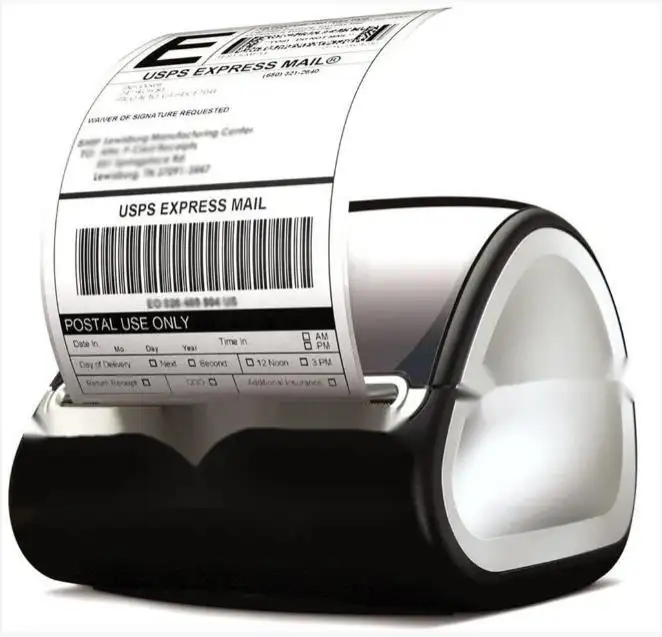
•Compatibility for DYMO LabelWriter 4XL and common warehouse label printers.
SGS testing, and compliance with ISO 9001 and 14001, and BP-free materials are available depending on the product and documentation scope.
Let Jin Bao Brother know your printer model, label stock and label size, and the exposure conditions. We can provide samples for you to assess print quality, adhesion, barcode scanning, and resistances before you place a bulk order.
FAQs
Q1. What makes Jin Bao Brother Durable Thermal Labels water-resistant?
Jin Bao Brother Durable Thermal Labels utilize certain top coatings and moisture-stable substrates. Combined with suitable adhesives, these help to minimize curling, image loss, and edge lifting from condensation and splashes.
Q2. Are Jin Bao Brother Durable Thermal Labels waterproof?
They can be produced with water-resistant features, but the performance is dictated by the substrate and the conditions of exposure. These features can be tested under long exposure, hot water, and high-pressure washing.
Q3. Do the labels resist oil and grease?
Yes. For Durable Thermal Labels, oil resistance can be provided for food packaging, logistics, automotive parts, and industrial applications. These should be validated with the actual oil or lubricant.
Q4. Can you provide labels that are resistant to chemicals?
Yes. Jin Bao Brother can provide Durable Thermal Labels that are resistant to brief contact with certain chemicals, including cleaners, alcohol, and disinfectants. Resistance depends on the contact's concentration, time, and temperature.
Q5. What are the adhesive options from Jin Bao Brother?
These may include permanent, high-tack, removable, moisture-resistant, and freezer-grade. The adhesive is selected per the substrate and environment of application.
We'll Get Back Within 24 Hours