



 Home / News & Events /
 -
Share
-

-

-

-

Updated 4 months ago
Thermal Register Paper International Certifications: FSC, FDA, RoHS, and REACH Explained
admin
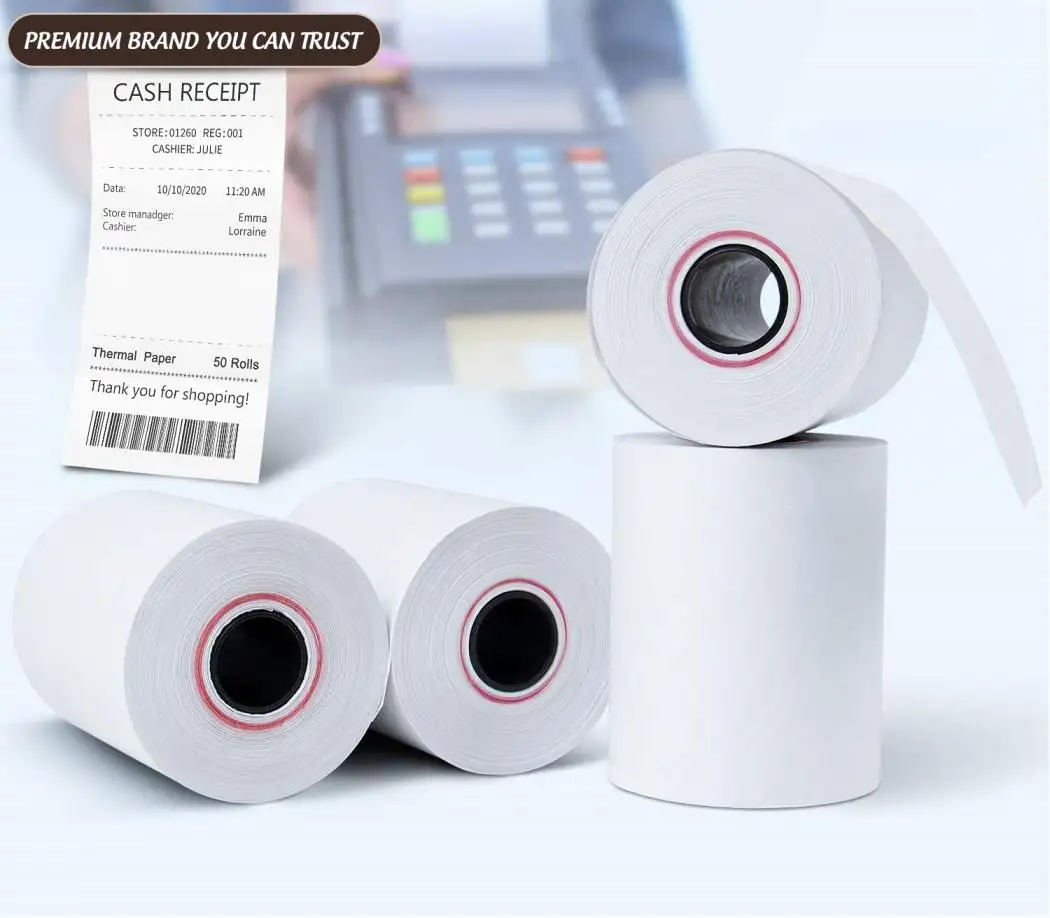
When obtaining thermal register paper for your business, you will be faced with a certification acronym puzzle: FSC, FDA, RoHS, REACH, ISO9001, and ISO14001. They are not simply marketing labels. Each certification pertains to a specific standard and each will impact product safety, the environment, and your legal obligations in various markets around the world.
Here we aim to clarify the certification acronyms, especially with thermal paper rolls. We will explain them and show how you can confirm that your supplier incorporates them.
FSC Certification: From Where is Your Paper Sourced?
FSC (Forest Stewardship Council) Certification guarantees that the thermal paper sourced is from wood pulp that comes from sustainably managed forests. This is not a paper's chemical concern, but the integrity of your supply chain for the raw material.
What FSC guarantees:
- The forests meet the Council's rigorous standards for environmental and social responsibility.
- The Chain of Custody (CoC) Certification ensures that the wood pulp used in the production process comes from an FSC-certified managed sustainable forest.
- Third party audits ensure compliance of all supply chain entities with FSC Certification.
What this means to you, the thermal register paper customer:
FSC Certification has become a requirement of many large global retailers and manufacturers most especially for the sustainability targets in their sourcing policies. In the absence of FSC Certification, your thermal paper rolls will likely face sourcing challenges and/or be excluded from competitive offers.
FDA Food Contact Compliance: Safety for Food-Related Applications
FDA compliance under 21 CFR 176.170 addresses a critical question: Is this thermal paper safe to come into contact with food?
This regulation identifies substances that may be safely used as components of the food-contact surface of paper and paperboard intended for packaging, processing, or holding aqueous and fatty foods.
What FDA compliance means for thermal paper:
The thermal coating and paperboard components must not migrate harmful substances into food.
Manufacturers must maintain records proving that only FDA-listed substances are present in the food-contact surface.
Compliance covers both direct food contact (e.g., wrapping deli items) and indirect contact (e.g., labels on food packaging).
Application scenarios:
Thermal register paper with FDA food-grade certification is required for:
- Restaurant order tickets and kitchen workstation tickets
- Food packages and takeout labels
- Supermarket deli and bakery counter receipts
- Any application where the paper directly or indirectly contacts food
RoHS Compliance: Restriction of Hazardous Substances
RoHS (Restriction of Hazardous Substances Directive 2011/65/EU, as amended by 2015/863) limits the use of ten hazardous substances in the scope of electrical and electronic equipment.
Why RoHS is important for thermal paper:
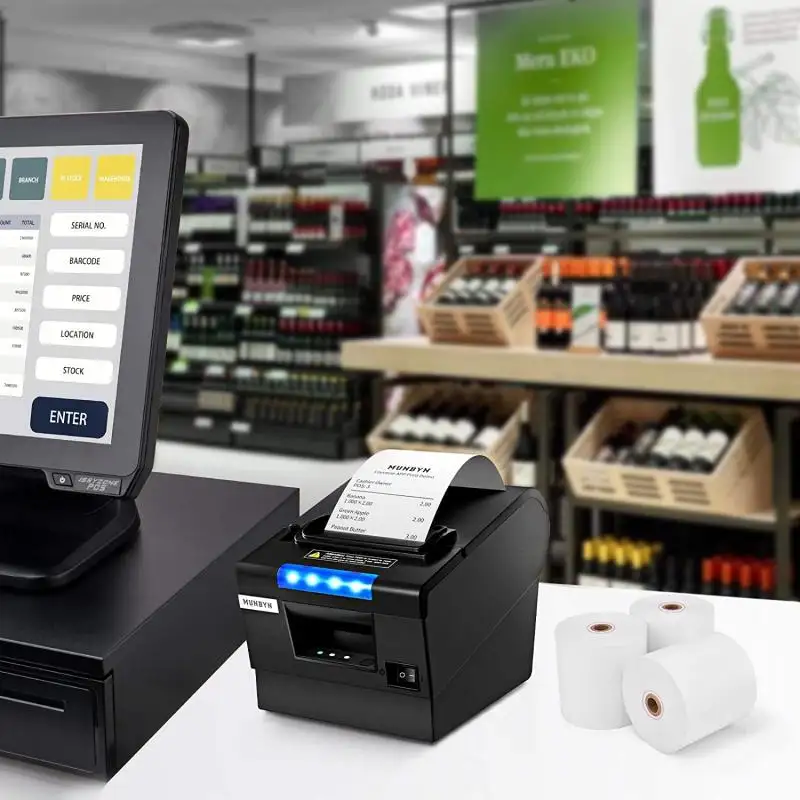
Even though thermal paper is not an electrical device, RoHS compliance has become an informal requirement for products used in or sold with electronic devices and equipment such as POS systems and thermal printers and ATM receipt rolls.
What substances does RoHS restrict:
The directive restricts, among others, lead, mercury, cadmium, hexavalent chromium, and certain flame retardants. RoHS compliant thermal paper rolls do not contain any of the above substances in excess of the permitted thresholds.
Market consequences:
For thermal register paper sold to the EU and global electronic retailers, RoHS compliance is frequently a requirement for procurement. Non-compliance is likely to result in rejection of shipments or removal from supplier lists.
REACH Compliance: EU's Chemical Safety System
REACH (Registration, Evaluation, Authorisation and Restriction of Chemicals, Regulation EC 1907/2006) is the EU's regulation on chemicals and assessment of their safety. For thermal paper, the most relevant provision is Annex XVII, entry 66 on the restriction of bisphenol A (BPA) in thermal paper.
The BPA restriction:
Since January 2, 2020, thermal paper with a BPA concentration of 0.02 % by weight (200 mg/kg) and above is prohibited from the EU market.
Why BPA is restricted:
As a Substance of Very High Concern (SVHC) and an endocrine disruptor, BPA poses a risk of everyday exposure when thermal paper containing BPA is frequently handled. Cashiers and consumers are the most affected. The restriction was based on a French dossier indicating risks to workers, consumers, and unborn children.
The BPS question:
Many manufacturers replaced BPA with bisphenol S (BPS), but BPS is also under scrutiny. The U.S. has moved toward regulating the entire bisphenol class—California's Proposition 65 now lists both BPA and BPS, and Washington State has banned all bisphenols in thermal paper effective January 2026. The INERIS “BPA Free -No Phenols Added” certification now tests for fifteen phenolic compounds, not just BPA.
ISO 9001 & ISO 14001: Quality and Environmental Management
These are not product certifications—they are management system certifications that tell you how a manufacturer operates.
ISO 9001:2015 (Quality Management):
- Indicates a documented quality management system of the manufacturer.
- Keeps product quality consistent by systemizing all processes from the acceptance of raw materials to the acceptance of the final batch.
- Participated in the R&D, manufacturing, distribution, and marketing of thermal paper.
ISO 14001:2015 (Environmental Management):
- Indicates an organization has developed an Environmental Management System.
- Shows the manufacturer is focused on decreasing the negative impacts on the environment during the production process.
Importance for thermal register paper buyers:
In addition to showing the manufacturer is focused on quality and improving their environmental performance, the presence of the ISO certifications decreases the risks of quality and supply chain issues, as well as regulatory compliance.
Jinbao Brother's credentials:
Jinbao Brother is ISO9001 and ISO14001 certified, thus guaranteeing the quality and the production of their products in an environmentally friendly manner, compliant with the strictest international standards.
What makes Jinbao Brother Different
Jinbao Brother is a thermal paper rolls and self-adhesive label papers manufacturing company with over 30 years of experience. Our thermal register paper is compliant with all major certifications:
- ISO9001 & ISO14001 Certified – Strict international standards for stable quality and production in an environmentally friendly manner.
- BPA/BPS Free – SGS tested for safe and environmentally friendly use
- RoHS & REACH Compliant – Global trade compliant and free of hazardous substances
- FDA Food Contact Grade – Models compliant with direct food contact.
Restaurants, supermarkets, hotels, pharmacies, and multiple logistics companies are customers of Jinbao Brother all over the world. Jinbao Brother has the capability of producing paper in any custom size, as well as printing and designing private labels, and has custom packaging. Free samples of products are available.
Final Thought
Certifications you receive guarantee safety and quality while confirming regulatory compliance—they aren't just pieces of paper. Whether you purchase thermal paper rolls for a restaurant chain, a hospital, or an e-commerce fulfillment center, confirming those certifications protects your company from legal risks, disruptions in the supply chain, and damage to your company's good name. Select a supplier who can validate every assertion.
Are you in the market for certified thermal register paper rolls? Contact Jinbao Brother for no-cost quotes, with shipping available within 3 days and design and printing complimentary.
FAQs
Q1. What is FDA food contact grade concerning thermal paper?
This grade means the thermal paper adheres to the requirements of 21 CFR 176.170, and is therefore safe for direct or indirect food contact, without concern for chemical migration.
Q2. If thermal paper is BPA-Free, does that mean it is Free of BPS as well?
No. BPA-Free means that only BPA has been removed from the thermal paper, while Free of BPS means that bisphenol S has been removed, which is also becoming restricted in the US and EU.
Q3. Why do thermal papers need to be REACH compliant in order to be sold in Europe?
REACH requires a restriction for BPA to be less than 0.02% by weight, and therefore, rolls which do not meet this standard cannot be sold in the EU.
Q4. Will obtaining an FSC certification impact the print quality or the durability of the thermal rolls?
No. FSC certification only ensures that the wood has been sourced sustainably and does not impact the coating of the rolls. Therefore, it does not impact the sharpness of print or the imaging permanence.
Q5. Does Jinbao Brother provide custom measurements other than 57mm and 80mm thermal paper?
Yes. Jinbao Brother provides OEM/ODM with varying widths, core diameters, lengths, and custom private label packaging.
We'll Get Back Within 24 Hours
Related Articles
Cash Register Roll Quality Testing: 7 Technical Parameters Buyers Should Check
2026-09-30

Custom Carbon Copy Paper Technology | Jinbao Brother
2026-09-30
How Long Do A4 Thermal Paper Rolls Last? Image Durability and Storage Explained
2026-09-29
Eco-Friendly A4 Thermal Printing Paper: Sustainability Trends and Recyclability
2026-09-29
